
Your Complete Peptide Research Resource
Research Vials is a USA-based peptide research and education site. Every batch comes from US-managed synthesis. US-accredited labs check each batch with HPLC and mass spec. All shipping uses domestic cold-chain logistics. We cover 28 peptides with more than 100 peer-reviewed articles. A COA ships with every batch.
Research Vials research, in plain language. We read the studies, gather the data, and lay them out so you can see the evidence at a glance. Each link points back to the source so you can check the work.
Last updated Reviewed by the Research Vials Editorial Team
 100% USA-Based
Managed, Tested & Shipped Domestically
100% USA-Based
Managed, Tested & Shipped Domestically
Research Vials at a glance
This site is a research hub for Research Vials. We read the studies, sort the data, and write it up in plain words. Each page links back to the original paper so you can check the work.
You will find what Research Vials is, how it works in the body, and what trials show. We list the dosing data, the side-effect notes, and the storage rules. We also list what we do not yet know.
Use this site to start your reading. Click a study to read the full paper. Click a peptide name to see the next layer of detail. Nothing here is medical advice.
If you spot a paper we missed, the contact page is open. We update the site as new work lands.
Featured Research
In-depth profiles with mechanisms of action, key findings, and peer-reviewed citations.
Latest Research Articles
129 deep-dive articles from the System Peptides Research Network.
Research Applications
Key research categories and applications studied in the scientific literature.
Tissue Repair & Regeneration
BPC-157, TB-500, and Wolverine Blend researched in 100+ preclinical models for wound healing, tendon repair, and cytoprotection via VEGF upregulation and NO system modulation.
Growth Hormone Research
CJC-1295, Ipamorelin, and Tesamorelin studied for GH axis modulation — from pulsatile GHRH signaling to selective GHS-R activation without cortisol or prolactin disruption.
Metabolic & Weight Research
GLP-1 agonists (Semaglutide, Tirzepatide analogs), AOD-9604, 5-Amino-1MQ, and MOTS-c investigated for fat metabolism, AMPK activation, and incretin pathway research.
Neuroprotection & Cognition
Selank, Semax, and BPC-157 studied for anxiolytic effects, BDNF modulation, neuroprotective properties, and cognitive enhancement in preclinical models.
Anti-Aging & Longevity
Epitalon (telomerase activation), GHK-Cu (gene expression modulation), NAD+ (sirtuin/PARP pathways), and SS-31 (mitochondrial-targeted antioxidant) in aging research.
Immune & Antimicrobial
LL-37, KPV, and Thymalin researched for antimicrobial activity, immune modulation, anti-inflammatory signaling, and thymic peptide restoration.

100% USA-Based Peptide Research
Managed, tested, and shipped entirely within the United States
Why US-Sourced Research Peptides Matter
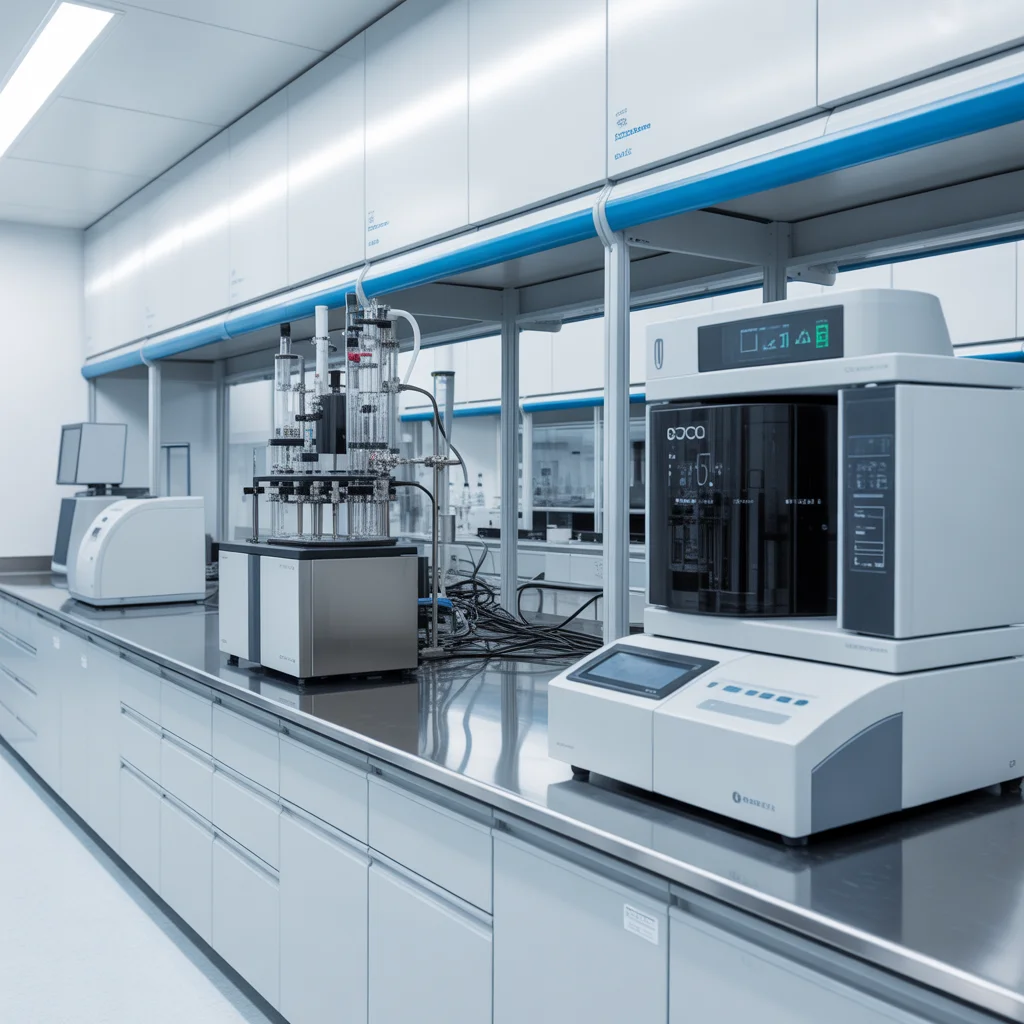
Research Vials is a 100% USA-managed peptide research supplier. We test and ship every product inside the United States. The quality chain stays domestic at every step. That covers synthesis oversight, third-party HPLC testing, lyophilization, climate-controlled storage, and cold-chain delivery. No overseas middlemen broker our inventory. No imported product is relabeled as domestic. Researchers get a clear US chain of custody. Each vial moves from factory to lab bench without leaving the country.
US-Accredited Lab Testing
US-accredited third-party labs verify every batch. These labs are independent. They have no financial ties to the manufacturer. Each Certificate of Analysis comes from a domestic lab. That lab works under ISO 17025-aligned quality standards. The FDA uses the same framework for its referenced testing facilities. Overseas suppliers often share self-reported purity numbers. Our US-accredited COAs are different. Each one carries a chain-of-custody record, signed analyst credentials, and calibrated HPLC data. Researchers can cross-reference each COA against batch numbers and production dates.
98-99%+ Purity Standard
HPLC-verified purity of 98-99%+ is the Research Vials standard. Every lot is also confirmed by mass spectrometry against the expected molecular mass. Imported peptides commonly test at 85-95%. That 3-14 percentage-point gap corrupts research data. Residual synthesis byproducts at that level cause real problems. They confound dose-response curves. They trigger off-target receptor binding. They can invalidate dozens of treatment conditions in a single study. Batch purity data appears on every Certificate of Analysis before shipment. You see the numbers before problems emerge in the lab.
Domestic Cold-Chain Shipping
Temperature-controlled US logistics moves every vial from cold storage to your research lab. Shipments never cross an international border. International peptide shipments often sit in customs for 5-14 days. They face uncontrolled warehouse temperatures above 40°C. Many arrive with degraded active compound. Domestic cold-chain shipping keeps lyophilized peptides below 4°C the whole way. That preserves the disulfide bonds and tertiary structure. Those structures determine biological activity. Vials reach the lab bench in 2-5 business days.
Best Value for Premium Grade
US-tested peptides win on price once you count the cost of failed experiments. A single invalidated 12-sample dose-response study can cost more than a full year of premium peptides. Research Vials prices are transparent. We charge no hidden customs fees. We pass on no import delays. We add no relabeling surcharges. Verified 98-99% purity at a fixed US price means predictable experiment budgets. That is the opposite of the lot-to-lot variability you see with imported peptides.
Transparent COA Verification
Each Research Vials shipment includes a batch-specific Certificate of Analysis. US-accredited independent laboratories issue every COA. Researchers can view the document before purchase. Each COA publishes three things. First, the full HPLC chromatogram with peak retention time and integration area. Second, the mass spectrometry fragmentation pattern that confirms molecular identity. Third, the endotoxin concentration in EU/mg. We never substitute self-certified paperwork from unaccredited overseas labs. The lot number on every vial matches the COA batch identifier. That makes chain-of-custody verification a two-minute task.
Never Imported, Never Compromised
Every Research Vials product stays inside the United States. We manage, quality-control, store, and fulfill domestically. No foreign intermediaries touch the inventory. No relabeled imports enter the fulfillment pipeline. Each vial has a batch number that links to two records. The first is a US-tested purity report. The second is a climate-controlled storage history. Researchers see a single verifiable provenance record. That includes the country of synthesis, the lot of analysis, and the shipment temperature log. Overseas-sourced peptides usually arrive with opaque reshipment chains instead.
Frequently Asked Questions
Common questions about research vials research, purity standards, and sourcing.
Why should I choose US-sourced peptides for research?
US-sourced peptides are synthesized under stricter quality controls, verified by accredited independent laboratories (not in-house self-testing), and shipped via domestic cold-chain logistics that maintain compound integrity. Imported peptides frequently arrive at 85-95% purity with COAs from unaccredited overseas labs, risking confounded research results.
What does '98%+ purity' mean and why does it matter?
Purity is measured via HPLC (High-Performance Liquid Chromatography) and represents the percentage of the target compound versus impurities. At 98%+, contaminants are minimized to levels that won't confound dose-response curves or trigger off-target effects. Many imported peptides test at 85-95%, where impurities can invalidate entire studies.
How do I verify a Certificate of Analysis (COA)?
A legitimate COA should include: the testing laboratory's name and accreditation, HPLC chromatogram, mass spectrometry data confirming molecular identity, batch number matching your product, and a date of analysis. Research Vials provides COAs from US-accredited third-party labs with all of these elements for every batch.
What is cold-chain shipping and why does it matter?
Cold-chain shipping maintains temperature-controlled conditions (2-8°C / 36-46°F) from warehouse to delivery. Peptides are temperature-sensitive proteins that degrade when exposed to heat. International shipments that cross customs and sit in uncontrolled warehouses can degrade peptide integrity. All Research Vials orders ship domestically within the US with cold-chain packaging.
What peptides does Research Vials offer?
Research Vials offers 28 research compounds including BPC-157, TB-500, GHK-Cu, Ipamorelin, CJC-1295, Tesamorelin, Epitalon, Selank, Semax, MOTS-c, AOD-9604, NAD+, and multi-peptide blends (Wolverine, Glow, KLOW). All are available in lyophilized powder form with 98%+ purity verification.
Are these peptides approved for human use?
No. All products sold by Research Vials are strictly for laboratory and research use only (RUO). They are not approved by the FDA or any regulatory body for human consumption, therapeutic use, or clinical application. Purchasers must be qualified researchers operating within applicable regulations.
Research Resources
Internal references and authoritative external resources for research vials research design.
On this site
- Research methodology overview
- How to read a peptide COA
- Dosing reference calculator
- Frequently asked questions
- About this resource
- Research-use disclaimer
- Peptides and cancer part 1 cancer biology foundations
- Peptides and cancer part 2 pathways and peptides
- Peptides and cancer part 3 risk strategy and future
- Peptide syringe compatibility research reference
- Peptide reference manual researchers guide
- Slu pp 332 reconstitution research protocol
- Trt cream hcg timing research reference
- Epitalon vs epitalon amidate n acetyl forms compared
- Peptides liver function research
- Peptide synergy conflict map
- Ipamorelin selective growth hormone secretagogue
- Epitalon telomerase activation longevity research
- Mots c mitochondrial peptide metabolic research
- Ampk activation metabolic peptide research
- Nad plus longevity research 2026
- Peptide research trends 2026
- What is aod 9604 growth hormone fragment research
- What is 5 amino 1mq nnmt inhibitor research
- What is ss 31 elamipretide mitochondrial peptide
- What is tesamorelin ghrh analog research
- What is slu pp 332 exercise mimetic research
- What is nad plus cellular energy research
- Nad plus vs mots c mitochondrial peptides
- 5 amino 1mq vs slu pp 332 metabolic compounds
- Preclinical vs clinical peptide research explained
- Mass spectrometry peptide analysis guide
- Growth hormone secretagogues complete research guide
- Essential peptides anti aging longevity research
- Mitochondrial targeted peptides research frontier
- Growth hormone releasing pathways ghrh vs ghs r
- Ai peptide discovery machine learning research
- Future of metabolic peptide research
- Reading pubmed researchers guide peptide literature
- Cjc 1295 ipamorelin combination research protocol
- Sirt1 nad axis peptide longevity research
- Weight loss peptides research 2026
- Research chemicals metabolic studies 2026
- What is bpc 157 complete research guide
- What is tb 500 thymosin beta 4 research
- What is ghk cu copper peptide research
- Selank nootropic anxiolytic peptide research
- Semax acth fragment neurotrophic research
- Bpc 157 vs tb 500 tissue repair peptides compared
- Selank vs semax nootropic peptides compared
- Cjc 1295 with dac vs without dac research comparison
- How to read certificate of analysis coa
- What is hplc why peptide purity matters
- Peptide reconstitution complete protocol
- Where to buy peptides after peptide sciences shutdown
- How to verify legitimate peptide supplier
- Best peptides for tissue repair research 2026
- Top nootropic peptides cognitive research
- Vegf pathway peptide mediated tissue repair
- Glp 1 receptor agonists research guide 2026
- What is ll 37 cathelicidin antimicrobial peptide
- What is kpv tripeptide alpha msh research
- What is kisspeptin reproductive endocrinology research
- What is thymalin thymic bioregulator research
- What is glutathione master antioxidant research
- Ipamorelin vs cjc 1295 growth hormone research
- Ghk cu vs bpc 157 wound healing research
- Epitalon vs thymalin bioregulator peptides
- Single peptides vs blends research protocols
- Understanding peptide purity 95 vs 98 vs 99
- Proper peptide storage temperature light humidity
- Understanding lyophilization freeze dried peptides
- Peptide sequences amino acid chains explained
- How peptides differ from proteins small molecules
- What are peptide bonds chemistry fundamentals
- Understanding cas numbers peptide research
- In vivo vs in vitro peptide research models
- Top 5 peptide sciences alternatives 2026
- Usa based peptide suppliers why location matters
- Third party testing why independent verification matters
- Gmp standards peptide manufacturing explained
- Research peptide industry what changed 2026
- How to transition research from peptide sciences
- Best peptides immune system research
- Top antimicrobial peptides infection research
- Peptide blends multi peptide formulations research
- Best peptides musculoskeletal research 2026
- Nitric oxide pathways peptide modulation
- Gut brain axis gastric peptides neural function
- Telomerase aging science behind epitalon
- Role of angiogenesis peptide mediated healing
- Nf kb pathway modulation peptides
- Rise of peptide blends research protocols 2026
- Bpc 157 new studies emerging applications 2026
- What to look for research peptide supplier
- Understanding research use only ruo labeling
- Peptide quality assurance synthesis to delivery
- Bulk research peptides scaling your protocol
- Peptide stability factors degradation prevention
- Bacteriostatic water vs sterile water peptides
- Peptide dosing calculations research guide
- Lab safety best practices peptide research
- Wolverine blend bpc 157 tb500 combination research
- Glow blend ghk cu bpc 157 tb500 research
- Klow blend four peptide anti inflammatory research
- Free shipping research peptides how research vials delivers
- Customer reviews trust signals peptide procurement
- Reconstitution calculator how to use guide
- Research protocols getting started peptide research
- Glp 2 intestinal growth factor research
- Glp 3 next generation metabolic peptide research
- B12 methylation neurological research
- Peptide solubility guide choosing right solvent
- Peptide shipping cold chain logistics
- Research vials vs peptide sciences product comparison
- What is pt 141 bremelanotide research
- What is melanotan melanocortin peptide research
- Fak paxillin pathway peptide cell migration
- Actin dynamics tb500 cell biology
- Dopaminergic system bpc 157 research
- Bioregulator peptides khavinson research program
- Peptide research glossary terms definitions
- Glp 1 vs glp 2 vs glp 3 comparison
- Semaglutide research guide
- Retatrutide triple agonist research
- Best research peptide companies 2026
- Buy research peptides online guide
- Third party tested peptides verification
- Highest purity research peptides explained
- Semaglutide vs tirzepatide research 2026
- Bpc 157 buyers guide purity dosing
- Tb 500 research guide thymosin beta 4
- Pt 141 research peptide mechanism studies
- Peptide research starter guide new scientists
- Aod 9604 vs semaglutide metabolic research
External peer-reviewed sources
Ready to Start Your Research?
Browse our complete research library or source US-tested peptides at competitive rates from Research Vials.
100% USA-managed. US-accredited lab COAs. Domestic cold-chain shipping. Best value for premium grade.
Explore the System Peptides Research Network