
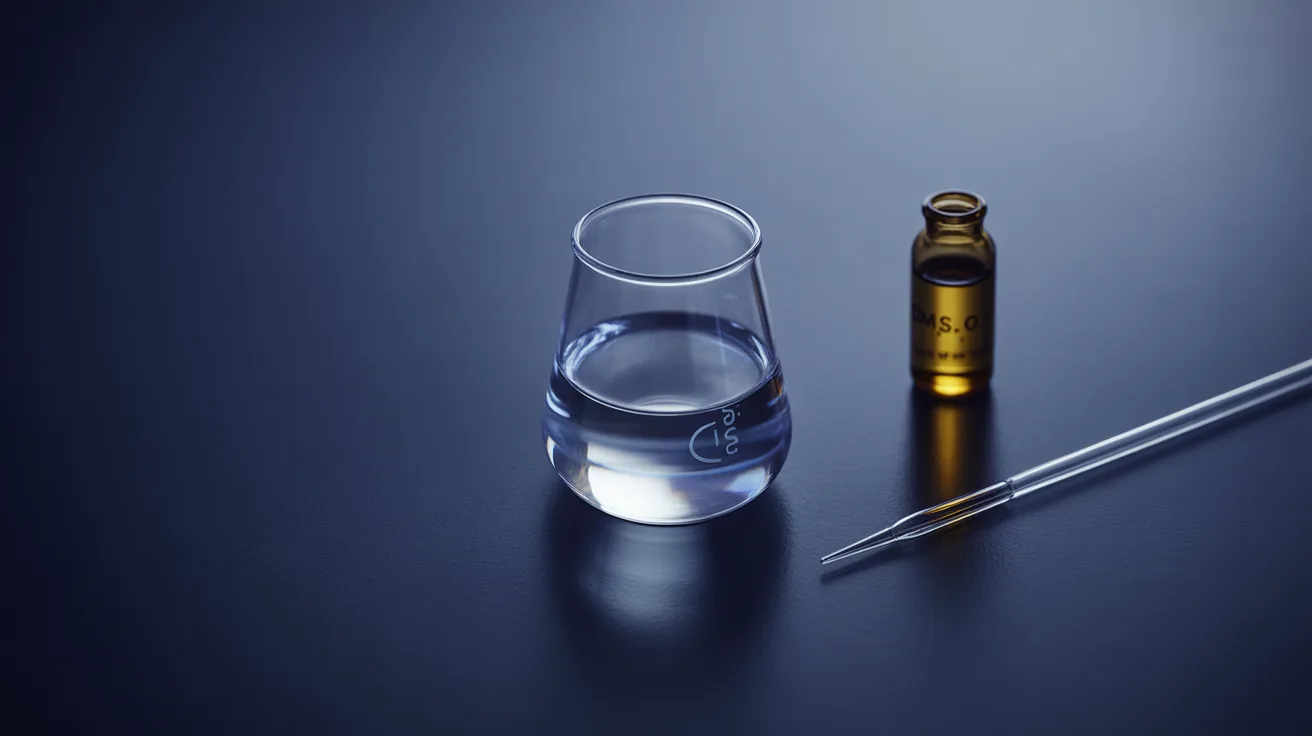
SLU-PP-332 is one of the few research compounds in the “exercise mimetic” class to advance from in vitro discovery into validated rodent metabolic studies. The compound is an agonist of all three estrogen-related receptors (ERRα, ERRβ, ERRγ), and the published research on it documents striking effects on mitochondrial biogenesis, fat oxidation, and endurance performance in obese mouse models. But for researchers working with the compound for the first time, the most common protocol error is treating SLU-PP-332 like a peptide. It is not. The reconstitution method that works for MOTS-c, BPC-157, or any other lyophilized peptide will not work here, and applying it produces an opaque suspension that cannot be dosed accurately. This article walks through the proper reconstitution protocol, dose math, storage conditions, and the common pitfalls documented in the rodent research literature.
What SLU-PP-332 Is — and Why That Changes Reconstitution
SLU-PP-332 is a synthetic small organic molecule developed at Saint Louis University as a pan-ERR (estrogen-related receptor) agonist. Unlike research peptides, which are chains of amino acids generally soluble in water-based buffers, SLU-PP-332 is a lipophilic small molecule with poor aqueous solubility. The compound dissolves readily in organic solvents (DMSO, ethanol, PEG-400) but not in water or aqueous buffers.
Mechanistically, SLU-PP-332 activates the ERR family of nuclear receptors. ERRs are master regulators of mitochondrial biogenesis and oxidative metabolism, operating downstream of the PGC-1α coactivator pathway that endurance exercise normally activates.1 Activation of ERRα, ERRβ, and ERRγ together drives transcription of genes governing mitochondrial DNA replication, fatty acid oxidation, oxidative phosphorylation, and skeletal muscle remodeling — many of the same gene programs that endurance training switches on.
The published rodent research, principally from the Billon group, documents that obese mice administered SLU-PP-332 ran longer on treadmill protocols, oxidized more fat, improved insulin sensitivity, and showed measurable improvements in metabolic markers across multiple endpoints. The compound is, in the published research literature, the closest approximation to a small-molecule endurance exercise mimetic currently available for laboratory use.
Why Standard Peptide Reconstitution Fails
Most research peptides are lyophilized powders that dissolve readily in bacteriostatic water, saline, or low-volume buffers. SLU-PP-332 does not. When bacteriostatic water is added to a vial of SLU-PP-332, three failure modes are commonly reported:
- Opaque suspension that doesn't clear. The compound is visible as particulate matter, sometimes floating, sometimes settling. Vortexing increases dispersion temporarily but the compound is not in solution.
- Apparent dissolution that re-precipitates on standing. Initial cloudiness may dissipate slightly, but within hours the compound separates out of the aqueous phase.
- Dose-to-dose inconsistency. Even if some compound is in pseudo-solution at the time of withdrawal, the actual concentration varies dose to dose based on whether the particulate is mixed in or settled out.
The published rodent dosing literature for SLU-PP-332 universally uses co-solvent vehicles for exactly this reason. The compound's lipophilicity is not optional to navigate — it dictates the reconstitution method.
Standard Reconstitution Protocol
Two-step approach: dissolve in an organic stock solvent, then dilute into the delivery vehicle at the time of dosing.
Step 1: DMSO Stock Solution
For a typical 5 mg vial:
- Add 0.5 mL of DMSO (dimethyl sulfoxide, research-grade, anhydrous if possible) directly into the vial. Use a fresh pipette to avoid water contamination of the DMSO.
- Final concentration: 10 mg/mL DMSO stock.
- Vortex 30–60 seconds. The solution should turn clear — any residual cloudiness indicates incomplete dissolution.
- If anything remains undissolved, brief sonication (10–15 seconds in a sonicating bath) typically completes dissolution. Do not heat above 40°C — thermal degradation is a documented risk for ERR ligands and small-molecule kinase modulators in general.
- Once dissolved, the DMSO stock can be aliquoted into smaller volumes (e.g., 50–100 µL per tube) to minimize freeze-thaw cycles. Store at -20°C in amber tubes or foil-wrapped clear tubes. DMSO stocks are stable for months at -20°C.
This DMSO stock is the master reservoir. It is not the dosing solution — final DMSO content above ~10% in the in vivo dosing solution will produce solvent-mediated effects that confound the metabolic readout of the compound itself.2
Step 2: Dilution into Delivery Vehicle
The vehicle depends on the administration route. Two patterns dominate the published rodent literature.
For oral gavage (the route most commonly used in published efficacy studies):
- Suspension vehicle: 0.5% methylcellulose + 0.1% Tween-80 in water. Dilute DMSO stock into this vehicle just before dosing. Final DMSO content target: 5–10%.
- Solution vehicle (alternative): DMSO stock diluted into corn oil at the target concentration. The compound is well-tolerated in lipid carriers and the carrier itself does not perturb the metabolic readouts.
- Prepare fresh per dosing event. Methylcellulose suspensions do not store well overnight, and corn oil solutions slowly equilibrate over days.
For intraperitoneal (IP) or subcutaneous (SubQ) injection in mouse models:
- 10% DMSO + 1% Tween-80 + 30% PEG-400 + 59% saline (sterile-filtered through 0.22 µm). This is a well-tolerated co-solvent system widely used for poorly-water-soluble small molecules.3
- Alternative: 5% DMSO + 5% Cremophor EL + 90% saline. Cremophor EL is a polyethoxylated castor oil surfactant that solubilizes lipophilic compounds in aqueous media.
- Final DMSO content of the injection solution must stay below ~10% in vivo. Higher DMSO exposure causes membrane disruption and confounds the experimental readout.
Dose Math: A Worked Example
The Billon-group rodent protocols typically dose 25–50 mg/kg orally. Calculation for a 25-gram mouse at 25 mg/kg:
| Variable | Value |
|---|---|
| Mouse weight | 25 g (0.025 kg) |
| Target dose | 25 mg/kg |
| Per-dose mass needed | 0.025 kg × 25 mg/kg = 0.625 mg |
| DMSO stock concentration | 10 mg/mL |
| Volume of DMSO stock per dose | 0.625 mg ÷ 10 mg/mL = 62.5 µL |
| Final dosing volume (gavage or injection) | 200 µL (typical for a 25 g mouse) |
| DMSO content of final solution | 62.5 µL ÷ 200 µL = 31.3% — too high |
The 31% DMSO content above the 10% threshold is the most common dose-design error. The fix is a two-step dilution.
Better approach: dilute the 10 mg/mL DMSO stock 1:10 into the vehicle first, producing a 1 mg/mL working solution with ~10% DMSO content. Then dose 0.625 mL of the working solution per mouse. DMSO stays within tolerated range; the dosing volume is workable.
Storage and Handling
| State | Storage | Stability |
|---|---|---|
| Lyophilized powder, sealed vial | -20°C, light-protected | Stable per manufacturer COA; typically 12+ months |
| DMSO stock (10 mg/mL) | -20°C, amber or foil-wrapped tubes, aliquoted | Months; minimize freeze-thaw cycles |
| Aqueous working solution | Prepare fresh; refrigerate if used same day | Hours to ~24 h; re-precipitation risk on standing |
| Oral suspension (methylcellulose-based) | Prepare per dose event | Day-of use only; settling occurs on standing |
Light protection matters less for SLU-PP-332 than for the strongly photosensitive peptide bioregulators (Epitalon, NAD+ in some forms), but standard good practice for small-molecule research is to store in amber tubes or foil-wrap regardless.
Common Mistakes Documented in the Research Literature
| Mistake | Result |
|---|---|
| Using bacteriostatic water alone (peptide-style reconstitution) | Undissolved particulate suspension; inaccurate dosing |
| Final DMSO content above 10% in vivo | Solvent-mediated effects confound the metabolic readout |
| Sudden dilution of concentrated DMSO stock into pure water | Compound precipitates out as the DMSO equilibrates |
| Heating above 40°C to "help dissolve" | Documented thermal degradation risk for small-molecule ligands |
| Storing aqueous working solutions overnight | Re-precipitation as the co-solvent equilibrates |
| Reusing pipette tips between DMSO and aqueous vehicles | DMSO contamination of vehicle batches; inconsistent dosing |
| Vortexing instead of brief sonication for stubborn residue | Incomplete dissolution; rough vortexing also introduces air bubbles that complicate accurate volume measurement |
Administration Route Considerations
The published efficacy data on SLU-PP-332 comes principally from oral gavage in mouse models. This is the route the Billon-group papers used and the route with the largest body of published pharmacokinetic and pharmacodynamic data.4
Intraperitoneal injection is less commonly documented but feasible with appropriate co-solvent vehicle. The compound's lipophilicity provides reasonable absorption from the peritoneal cavity.
Subcutaneous injection is the least documented route. The viscosity of the typical co-solvent vehicle (DMSO + PEG-400 + saline) makes small-volume SubQ injection technically more challenging than for aqueous peptide solutions, and the published rodent literature has largely defaulted to oral or IP routes.
Related Research Compounds in the Metabolic Pathway
SLU-PP-332 sits within a small but growing class of small-molecule metabolic intervention compounds. Researchers studying the broader pathway often pair or compare it with:
- MOTS-c — the mitochondrial-encoded peptide that activates AMPK and biases metabolism toward fat oxidation. Operates through a different upstream mechanism (AMPK rather than ERR) but converges on similar downstream metabolic endpoints. Easier to reconstitute (water-soluble peptide) but earlier-stage in the research arc.
- 5-Amino-1MQ — the NNMT inhibitor that preserves NAD+ availability and indirectly supports sirtuin and AMPK pathway activity. Oral administration is well-established.
- NAD+ — direct NAD+ substrate. The mitochondrial pathway requires NAD+ for sirtuin activity and electron transport, so NAD+ administration is sometimes used as a metabolic-support backbone alongside other compounds.
For research subjects studying ERR-driven mitochondrial biogenesis specifically, SLU-PP-332 remains the most direct pharmacological tool currently available.
Research Disclaimer
SLU-PP-332 is preclinical only. No human clinical trials have been conducted with the compound, and all dose protocols, vehicle formulations, and reconstitution methods discussed in this article derive from rodent research literature. The compound is designated Research Use Only (RUO) and is not approved by the FDA for human consumption, veterinary use, or any therapeutic purpose. Anyone considering this compound for any non-research purpose should consult a qualified medical professional first.
Third-party identity and purity testing for Research Vials products is performed by Analytical Formulations, Inc. Each batch is available with HPLC purity verification and mass spectrometry identity confirmation in the form of a Certificate of Analysis (COA) on each product page.
References
- Mootha VK, Handschin C, Arlow D, et al. Erralpha and Gabpa/b specify PGC-1alpha-dependent oxidative phosphorylation gene expression that is altered in diabetic muscle. Proc Natl Acad Sci USA. 2004;101(17):6570–6575. PMID: 15100410.
- Gad SC, Cassidy CD, Aubert N, Spainhour B, Robbe H. Nonclinical vehicle use in studies by multiple routes in multiple species. Int J Toxicol. 2006;25(6):499–521. PMID: 17132609.
- Strickley RG. Solubilizing excipients in oral and injectable formulations. Pharm Res. 2004;21(2):201–230. PMID: 15032302.
- Billon C, Schoepke E, Avdic V, et al. Synthetic ERRα/β/γ Agonist Induces an ERR-Driven Whole Body Mimetic of Endurance Exercise. (Billon et al. published research on SLU-PP-332 ERR-agonist exercise mimetic mechanism in obese mouse models, 2023–2024.)
- Lin J, Handschin C, Spiegelman BM. Metabolic control through the PGC-1 family of transcription coactivators. Cell Metab. 2005;1(6):361–370. PMID: 16054085.
Authored by the Research Vials Lab Team. Third-party identity and purity testing for Research Vials products is performed by Analytical Formulations, Inc.