
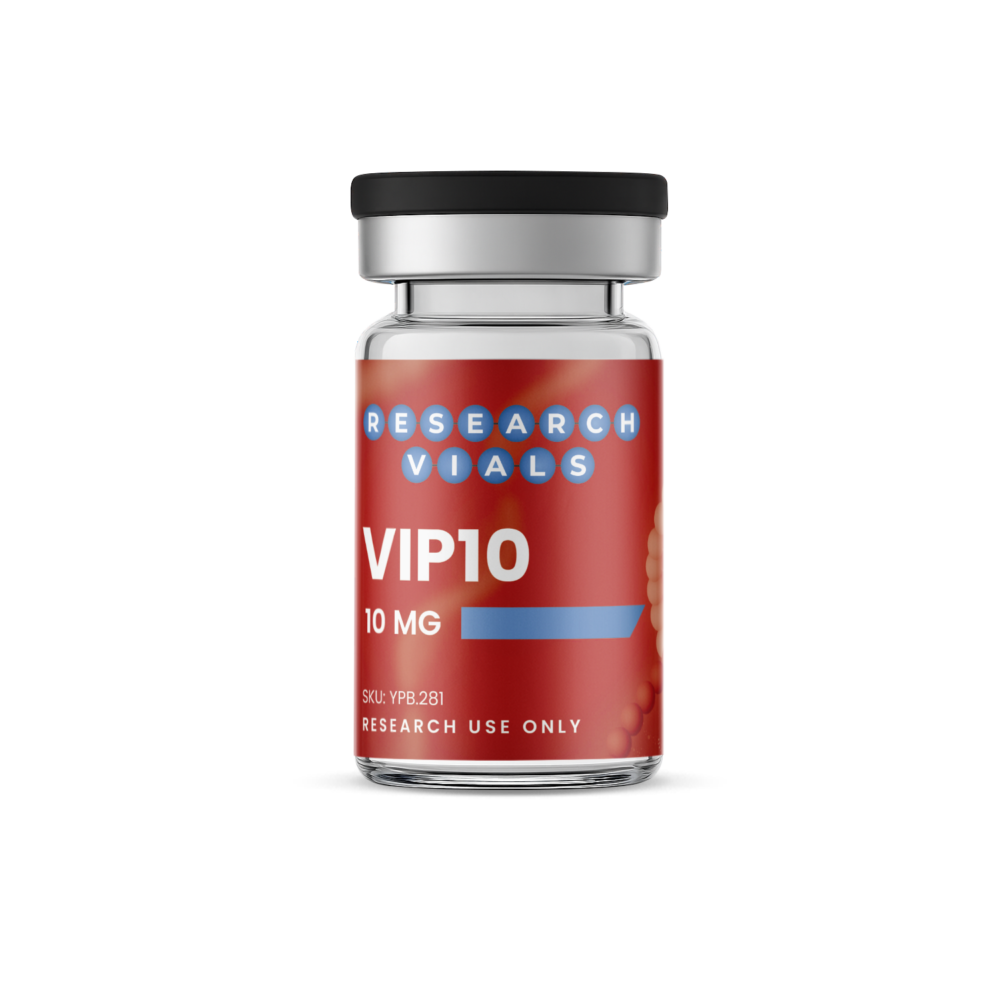
VIP10 10mg
Vasoactive Intestinal Peptide (VIP)
His-Ser-Asp-Ala-Val-Phe-Thr-Asp-Asn-Tyr-Thr-Arg-Leu-Arg-Lys-Gln-Met-Ala-Val-Lys-Lys-Tyr-Leu-Asn-Ser-Ile-Leu-Asn
Overview
Vasoactive intestinal peptide (VIP) is a 28-amino-acid neuropeptide that was first isolated from porcine small intestine by Said and Mutt in 1970. It is widely distributed throughout the central and peripheral nervous systems, functioning as a neurotransmitter and neuromodulator. VIP signals through two G-protein coupled receptors: VPAC1 and VPAC2, both of which activate adenylyl cyclase and the cAMP/PKA signaling cascade. VIP has potent anti-inflammatory activity. It inhibits the production of pro-inflammatory cytokines (TNF-alpha, IL-6, IL-12) by macrophages and dendritic cells while promoting anti-inflammatory IL-10 production. It achieves this by inhibiting NF-kB and promoting CREB-dependent transcription. This immunomodulatory profile has made VIP a subject of intense research in autoimmune and inflammatory conditions. In pulmonary research, VIP acts as a natural bronchodilator and pulmonary vasodilator. It also has surfactant-promoting activity in alveolar type II cells. Said demonstrated that VIP-knockout mice develop spontaneous pulmonary arterial hypertension, and VIP administration reverses pulmonary hypertension in animal models. VIP also has cardioprotective, neuroprotective, and anti-fibrotic properties, reflecting the wide distribution of VPAC receptors throughout the body.
Mechanism of Action
Vasoactive intestinal peptide (VIP) is a 28-amino-acid neuropeptide that was first isolated from porcine small intestine by Said and Mutt in 1970. It is widely distributed throughout the central and peripheral nervous systems, functioning as a neurotransmitter and neuromodulator. VIP signals through two G-protein coupled receptors: VPAC1 and VPAC2, both of which activate adenylyl cyclase and the cAMP/PKA signaling cascade. VIP has potent anti-inflammatory activity. It inhibits the production of pro-inflammatory cytokines (TNF-alpha, IL-6, IL-12) by macrophages and dendritic cells while promoting anti-inflammatory IL-10 production. It achieves this by inhibiting NF-kB and promoting CREB-dependent transcription. This immunomodulatory profile has made VIP a subject of intense research in autoimmune and inflammatory conditions. In pulmonary research, VIP acts as a natural bronchodilator and pulmonary vasodilator. It also has surfactant-promoting activity in alveolar type II cells. Said demonstrated that VIP-knockout mice develop spontaneous pulmonary arterial hypertension, and VIP administration reverses pulmonary hypertension in animal models. VIP also has cardioprotective, neuroprotective, and anti-fibrotic properties, reflecting the wide distribution of VPAC receptors throughout the body.
Key Research Findings
- Said & Mutt (1970) first isolated VIP from porcine intestine and characterized its potent vasodilatory activity.
- Delgado et al. (2004) demonstrated VIP potently inhibits NF-kB-mediated inflammatory responses in macrophages and promotes regulatory T-cell development.
- Said et al. (2007) showed VIP prevents and reverses pulmonary arterial hypertension in a monocrotaline rat model.
- Gonzalez-Rey et al. (2006) demonstrated VIP has therapeutic efficacy in mouse models of septic shock, rheumatoid arthritis, and Crohn's disease.
Citations & References
Polypeptide with broad biological activity: isolation from small intestine
Said SI, Mutt V. — Science (1970)
The significance of vasoactive intestinal peptide in immunomodulation
Delgado M, Pozo D, Ganea D. — Pharmacol Rev (2004)
Moderate pulmonary arterial hypertension in male mice lacking the vasoactive intestinal peptide gene
Said SI, Hamidi SA, Dickman KG, et al. — Circulation (2007)
Therapeutic action of ghrelin in a mouse model of colitis
Gonzalez-Rey E, Chorny A, Delgado M. — Gastroenterology (2006)
Dosage in Research
Pulmonary studies use inhaled VIP at 100-200 mcg. IV doses of 1-6 pmol/kg/min have been studied for hemodynamic effects. Anti-inflammatory studies in mice use 1-5 nmol IP.
Dosage information is derived from published research literature and is presented for educational purposes only. This is not medical advice. All products are for laboratory research use only.
Storage & Handling
Store lyophilized (freeze-dried) powder at -20°C to 4°C in a dry environment protected from light. Unreconstituted peptide is stable for extended periods when stored properly.
Once reconstituted with bacteriostatic water or an appropriate solvent, store at 2-8°C and use within the timeframe specified on the Certificate of Analysis. Avoid repeated freeze-thaw cycles.
A Certificate of Analysis documenting purity, identity, and recommended storage conditions is included with every order.
Frequently Asked Questions
What is VIP10 10mg?
What purity is your VIP10 10mg?
How should I store VIP10 10mg?
Is VIP10 10mg for human use?
Where can I buy VIP10 10mg?
Research Use Only
All products are intended for laboratory research and educational purposes only. Products have not been evaluated by the FDA and are not intended for human consumption, diagnosis, treatment, or prevention of any disease. Purchasers must be 21+ and confirm research use intent.