
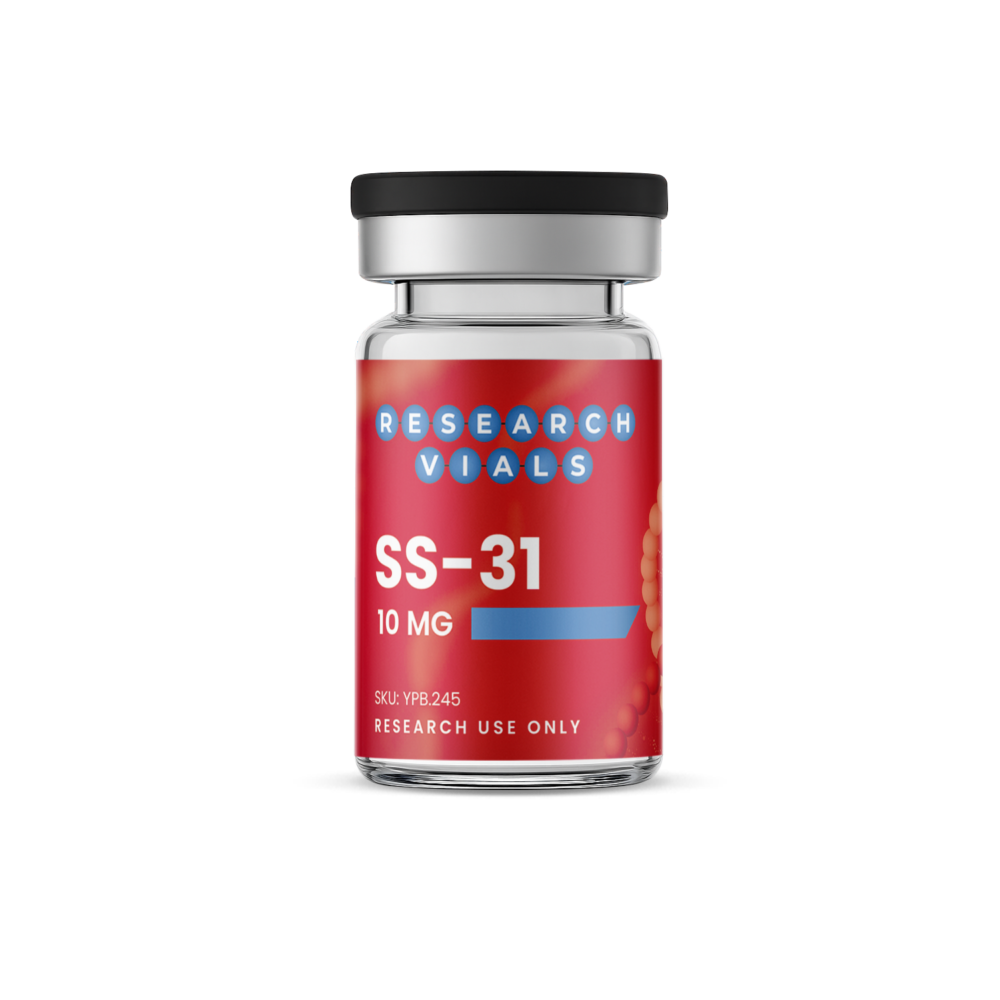
SS-31 10mg
SS-31 (Elamipretide)
D-Arg-2',6'-dimethyltyrosine-Lys-Phe-NH2
Overview
SS-31 (elamipretide) is a synthetic cell-permeable tetrapeptide developed by Hazel Szeto at Weill Cornell Medical College. It is designed to target the inner mitochondrial membrane by selectively binding to cardiolipin, a unique phospholipid found almost exclusively in the inner mitochondrial membrane. Cardiolipin plays a critical structural role in organizing electron transport chain (ETC) complexes into supercomplexes (respirasomes) that enable efficient electron transfer. By binding cardiolipin, SS-31 stabilizes the cristae structure and ETC supercomplex organization, improving the efficiency of oxidative phosphorylation. This reduces electron leak and consequently decreases mitochondrial reactive oxygen species (ROS) production. Importantly, SS-31 does not act as a conventional antioxidant that scavenges ROS after they are produced — instead, it prevents excess ROS generation at the source by optimizing ETC function. SS-31 has shown therapeutic potential across multiple organ systems in preclinical and clinical studies. It reduces infarct size in cardiac ischemia-reperfusion injury, protects renal tubular cells from ischemic damage, improves skeletal muscle function in aged animals, and reverses age-related mitochondrial dysfunction. It has advanced to Phase II/III clinical trials for heart failure (Barth syndrome, primary mitochondrial myopathy, and heart failure with preserved ejection fraction).
Mechanism of Action
SS-31 (elamipretide) is a synthetic cell-permeable tetrapeptide developed by Hazel Szeto at Weill Cornell Medical College. It is designed to target the inner mitochondrial membrane by selectively binding to cardiolipin, a unique phospholipid found almost exclusively in the inner mitochondrial membrane. Cardiolipin plays a critical structural role in organizing electron transport chain (ETC) complexes into supercomplexes (respirasomes) that enable efficient electron transfer. By binding cardiolipin, SS-31 stabilizes the cristae structure and ETC supercomplex organization, improving the efficiency of oxidative phosphorylation. This reduces electron leak and consequently decreases mitochondrial reactive oxygen species (ROS) production. Importantly, SS-31 does not act as a conventional antioxidant that scavenges ROS after they are produced — instead, it prevents excess ROS generation at the source by optimizing ETC function. SS-31 has shown therapeutic potential across multiple organ systems in preclinical and clinical studies. It reduces infarct size in cardiac ischemia-reperfusion injury, protects renal tubular cells from ischemic damage, improves skeletal muscle function in aged animals, and reverses age-related mitochondrial dysfunction. It has advanced to Phase II/III clinical trials for heart failure (Barth syndrome, primary mitochondrial myopathy, and heart failure with preserved ejection fraction).
Key Research Findings
- Szeto (2006) demonstrated SS-31 concentrates >1000-fold in mitochondria and selectively reduces mitochondrial ROS without affecting cytosolic signaling ROS.
- Birk et al. (2014) showed SS-31 binds cardiolipin and stabilizes cytochrome c function, improving electron transport efficiency and reducing oxidative damage.
- Siegel et al. (2013) demonstrated SS-31 reduced infarct size by 50% in a canine model of ischemia-reperfusion injury.
- Campbell et al. (2019) reported that SS-31 improved 6-minute walk distance in patients with primary mitochondrial myopathy in a Phase II trial.
Citations & References
Cell-permeable, mitochondrial-targeted, peptide antioxidants
Szeto HH. — AAPS J (2006)
Targeting mitochondrial cardiolipin and the cytochrome c/cardiolipin complex to promote electron transport and optimize mitochondrial ATP synthesis
Birk AV, Chao WM, Bracken C, et al. — Br J Pharmacol (2014)
Mitochondrial-targeted peptide rapidly improves mitochondrial energetics and skeletal muscle performance in aged mice
Siegel MP, Kruse SE, Percival JM, et al. — Aging Cell (2013)
Randomized dose-escalation trial of elamipretide in adults with primary mitochondrial myopathy
Karaa A, Haas R, Goldstein A, et al. — Neurology (2018)
Dosage in Research
Clinical trials used 0.01-0.25 mg/kg IV or 4-40 mg SC daily. Mouse studies used 1-3 mg/kg IP. The typical research dose in preclinical cardiac studies is 0.1-3 mg/kg.
Dosage information is derived from published research literature and is presented for educational purposes only. This is not medical advice. All products are for laboratory research use only.
Storage & Handling
Store lyophilized (freeze-dried) powder at -20°C to 4°C in a dry environment protected from light. Unreconstituted peptide is stable for extended periods when stored properly.
Once reconstituted with bacteriostatic water or an appropriate solvent, store at 2-8°C and use within the timeframe specified on the Certificate of Analysis. Avoid repeated freeze-thaw cycles.
A Certificate of Analysis documenting purity, identity, and recommended storage conditions is included with every order.
Frequently Asked Questions
What is SS-31 10mg?
What purity is your SS-31 10mg?
How should I store SS-31 10mg?
Is SS-31 10mg for human use?
Where can I buy SS-31 10mg?
Research Use Only
All products are intended for laboratory research and educational purposes only. Products have not been evaluated by the FDA and are not intended for human consumption, diagnosis, treatment, or prevention of any disease. Purchasers must be 21+ and confirm research use intent.