
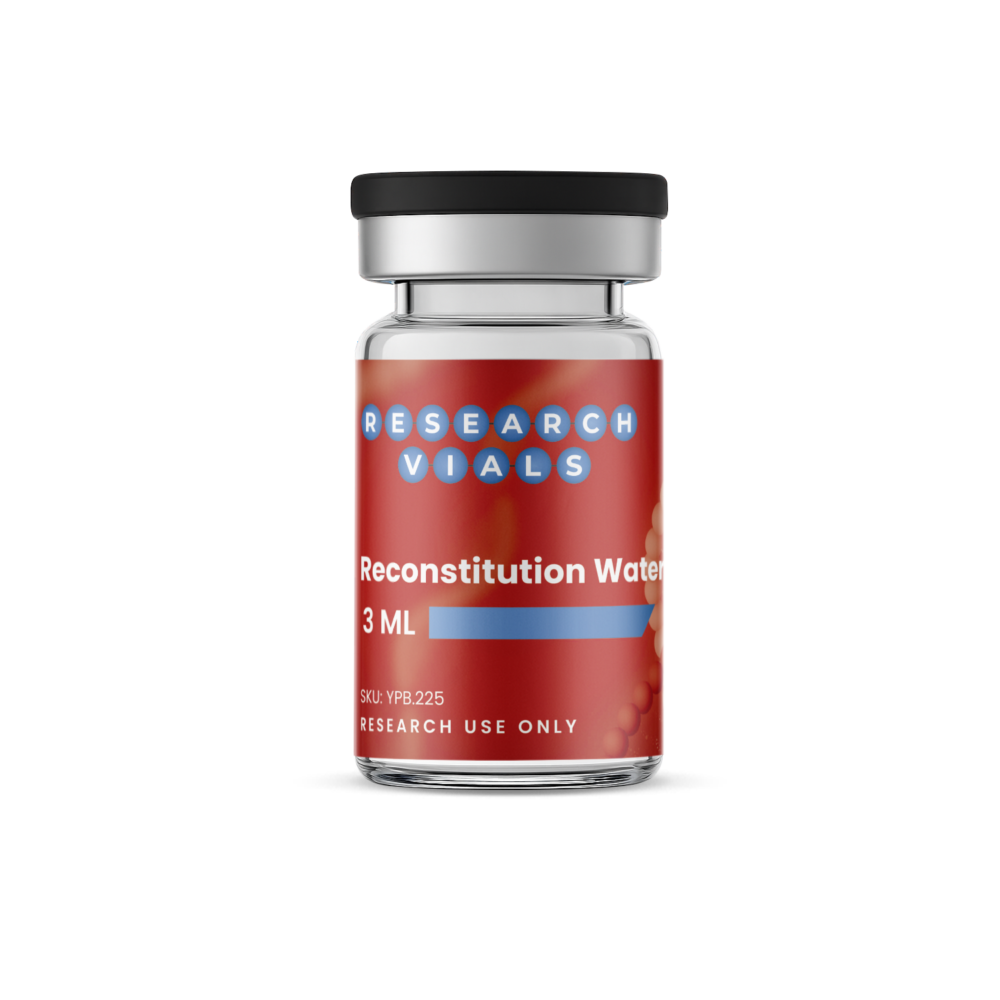
Reconstitution water
Bacteriostatic Water for Injection (Reconstitution Water)
N/A - Not a peptide
Overview
Bacteriostatic water for injection is sterile water that contains 0.9% benzyl alcohol as a preservative. The benzyl alcohol inhibits microbial growth, allowing the solution to be used for multiple reconstitutions over a period of time — unlike sterile water for injection, which must be used immediately after opening and cannot be stored. The benzyl alcohol preservative works by disrupting bacterial cell membranes through its amphipathic structure, which inserts into and disorganizes the lipid bilayer. At the 0.9% concentration used in bacteriostatic water, it is bacteriostatic (inhibits growth) rather than bactericidal (kills). This level is sufficient to prevent microbial contamination during the multi-use period while being well-tolerated in research applications. Bacteriostatic water is the standard diluent for reconstituting lyophilized peptides in research settings. When added to lyophilized peptide vials, it dissolves the peptide while the benzyl alcohol preservative maintains sterility for the use period. The water is isotonic-compatible and has a neutral pH, making it suitable for peptide reconstitution without affecting peptide stability or activity.
Mechanism of Action
Bacteriostatic water for injection is sterile water that contains 0.9% benzyl alcohol as a preservative. The benzyl alcohol inhibits microbial growth, allowing the solution to be used for multiple reconstitutions over a period of time — unlike sterile water for injection, which must be used immediately after opening and cannot be stored. The benzyl alcohol preservative works by disrupting bacterial cell membranes through its amphipathic structure, which inserts into and disorganizes the lipid bilayer. At the 0.9% concentration used in bacteriostatic water, it is bacteriostatic (inhibits growth) rather than bactericidal (kills). This level is sufficient to prevent microbial contamination during the multi-use period while being well-tolerated in research applications. Bacteriostatic water is the standard diluent for reconstituting lyophilized peptides in research settings. When added to lyophilized peptide vials, it dissolves the peptide while the benzyl alcohol preservative maintains sterility for the use period. The water is isotonic-compatible and has a neutral pH, making it suitable for peptide reconstitution without affecting peptide stability or activity.
Key Research Findings
- USP General Chapter 797 establishes standards for sterile compounding including the use of bacteriostatic water for multi-dose reconstitution.
- Nema et al. (2011) reviewed antimicrobial preservatives in injectable formulations, including benzyl alcohol's mechanism and safety profile.
- Meyer et al. (1992) demonstrated benzyl alcohol's antimicrobial efficacy at 0.9% concentration against common environmental contaminants.
Citations & References
Excipients and their use in injectable products
Nema S, Washkuhn RJ, Brendel RJ. — PDA J Pharm Sci Technol (1997)
USP General Chapter 797: Pharmaceutical Compounding — Sterile Preparations
United States Pharmacopeia. — USP/NF (2008)
Dosage in Research
Used as a diluent, not a therapeutic agent. Typical reconstitution volumes are 1-3 mL per peptide vial, adjusted to achieve desired concentration.
Dosage information is derived from published research literature and is presented for educational purposes only. This is not medical advice. All products are for laboratory research use only.
Storage & Handling
Store at 2-8°C (refrigerated). Keep away from direct light. Do not freeze unless specified. Check the Certificate of Analysis for batch-specific storage recommendations and expiration dating.
Frequently Asked Questions
What is Reconstitution water?
What purity is your Reconstitution water?
How should I store Reconstitution water?
Is Reconstitution water for human use?
Where can I buy Reconstitution water?
Research Use Only
All products are intended for laboratory research and educational purposes only. Products have not been evaluated by the FDA and are not intended for human consumption, diagnosis, treatment, or prevention of any disease. Purchasers must be 21+ and confirm research use intent.