
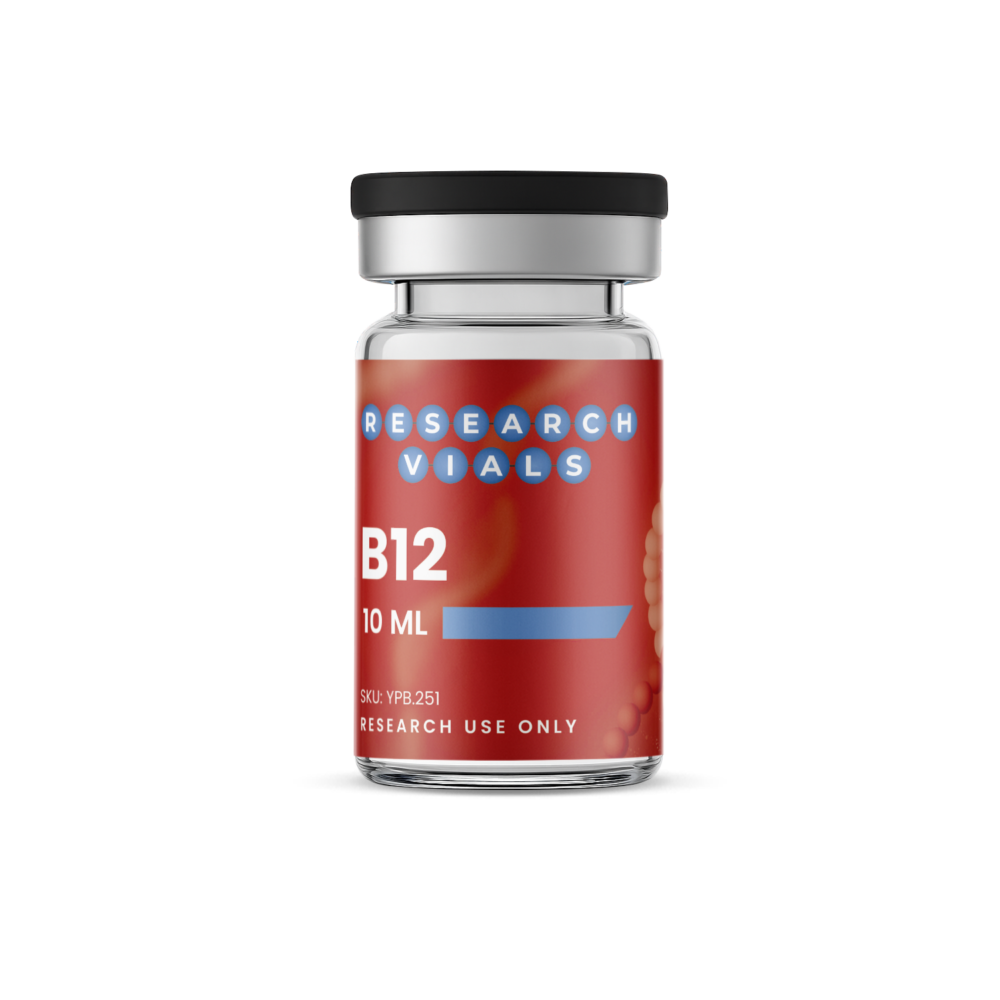
B12 (10ml)
Vitamin B12 (Cyanocobalamin/Methylcobalamin)
Non-peptide cobalt-containing vitamin
Overview
Vitamin B12 (cobalamin) is an essential water-soluble vitamin that functions as a coenzyme in two critical enzymatic reactions in human metabolism. First, as methylcobalamin, it serves as a cofactor for methionine synthase, which converts homocysteine to methionine — a reaction critical for DNA methylation, neurotransmitter synthesis, and prevention of homocysteine accumulation. Second, as adenosylcobalamin, it serves as a cofactor for methylmalonyl-CoA mutase, which converts methylmalonyl-CoA to succinyl-CoA in the propionate catabolism pathway, feeding into the citric acid cycle. B12 deficiency impairs both reactions, leading to megaloblastic anemia (from disrupted DNA synthesis in rapidly dividing hematopoietic cells), neurological damage (from impaired myelin synthesis and possible methylation defects), and elevated homocysteine (a cardiovascular risk factor). The neurological manifestations can include peripheral neuropathy, subacute combined degeneration of the spinal cord, cognitive decline, and depression. The 10ml solution format allows for direct use without reconstitution. B12 is often included alongside peptide research protocols because many peptide-active metabolic pathways depend on adequate methylation status and mitochondrial function, both of which require B12.
Mechanism of Action
Vitamin B12 (cobalamin) is an essential water-soluble vitamin that functions as a coenzyme in two critical enzymatic reactions in human metabolism. First, as methylcobalamin, it serves as a cofactor for methionine synthase, which converts homocysteine to methionine — a reaction critical for DNA methylation, neurotransmitter synthesis, and prevention of homocysteine accumulation. Second, as adenosylcobalamin, it serves as a cofactor for methylmalonyl-CoA mutase, which converts methylmalonyl-CoA to succinyl-CoA in the propionate catabolism pathway, feeding into the citric acid cycle. B12 deficiency impairs both reactions, leading to megaloblastic anemia (from disrupted DNA synthesis in rapidly dividing hematopoietic cells), neurological damage (from impaired myelin synthesis and possible methylation defects), and elevated homocysteine (a cardiovascular risk factor). The neurological manifestations can include peripheral neuropathy, subacute combined degeneration of the spinal cord, cognitive decline, and depression. The 10ml solution format allows for direct use without reconstitution. B12 is often included alongside peptide research protocols because many peptide-active metabolic pathways depend on adequate methylation status and mitochondrial function, both of which require B12.
Key Research Findings
- Stabler (2013) comprehensively reviewed B12 deficiency epidemiology, showing that subclinical deficiency affects 2.5-26% of the general population depending on the diagnostic threshold used.
- Watanabe et al. (2014) reviewed the biochemistry of B12 as a coenzyme and the metabolic consequences of its deficiency.
- Andrès et al. (2004) demonstrated that B12 deficiency is common in the elderly and is associated with neuropsychiatric symptoms that may be reversible with supplementation.
- Obeid et al. (2019) reviewed the role of B12 in homocysteine metabolism and cardiovascular risk.
Citations & References
Clinical practice. Vitamin B12 deficiency
Stabler SP. — N Engl J Med (2013)
Vitamin B12-containing plant food sources for vegetarians
Watanabe F, Yabuta Y, Bito T, Teng F. — Nutrients (2014)
Vitamin B12 (cobalamin) deficiency in elderly patients
Andres E, Loukili NH, Noel E, et al. — CMAJ (2004)
Dosage in Research
Standard supplementation doses range from 250 mcg to 1000 mcg. Therapeutic doses for deficiency are 1000 mcg IM or SC. The 10ml solution provides a ready-to-use injectable research preparation.
Dosage information is derived from published research literature and is presented for educational purposes only. This is not medical advice. All products are for laboratory research use only.
Storage & Handling
Store at 2-8°C (refrigerated). Keep away from direct light. Do not freeze unless specified. Check the Certificate of Analysis for batch-specific storage recommendations and expiration dating.
Frequently Asked Questions
What is B12 (10ml)?
What purity is your B12 (10ml)?
How should I store B12 (10ml)?
Is B12 (10ml) for human use?
Where can I buy B12 (10ml)?
Research Use Only
All products are intended for laboratory research and educational purposes only. Products have not been evaluated by the FDA and are not intended for human consumption, diagnosis, treatment, or prevention of any disease. Purchasers must be 21+ and confirm research use intent.