
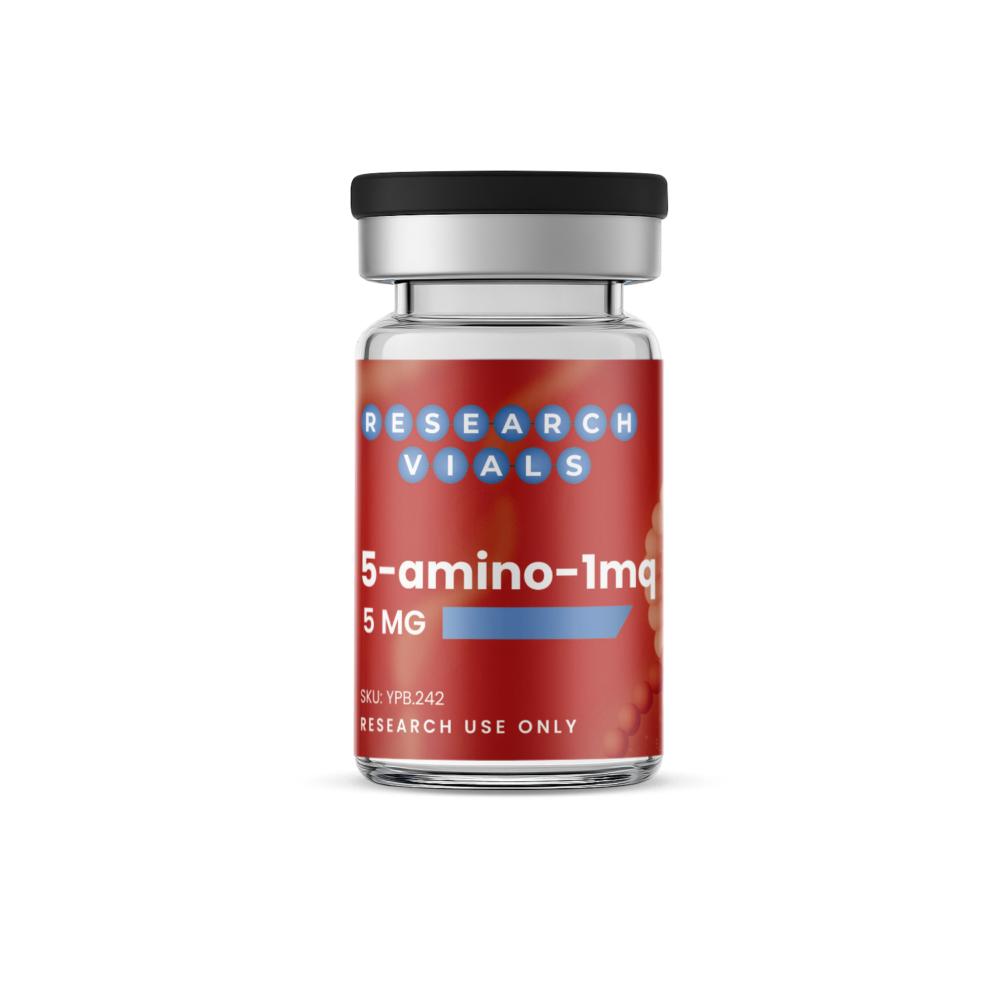
5-amino-1mq
5-Amino-1-Methylquinolinium
Non-peptide small molecule
Overview
5-Amino-1MQ is a small molecule inhibitor of nicotinamide N-methyltransferase (NNMT), a cytoplasmic enzyme that methylates nicotinamide (a form of vitamin B3) using S-adenosylmethionine (SAM) as a methyl donor. NNMT is highly expressed in adipose tissue and liver, and its activity increases with obesity. By consuming nicotinamide, NNMT reduces the availability of substrate for NAD+ biosynthesis through the salvage pathway. Inhibiting NNMT with 5-Amino-1MQ has two beneficial metabolic consequences. First, it increases the pool of nicotinamide available for NAD+ synthesis, thereby boosting cellular NAD+ levels. Since NAD+ is essential for sirtuin activity and mitochondrial function, this effectively enhances metabolic efficiency. Second, NNMT inhibition reduces the consumption of SAM, increasing the SAM/SAH (S-adenosylhomocysteine) ratio, which influences cellular methylation reactions broadly. Naughton et al. at the University of Texas demonstrated that NNMT inhibition with 5-Amino-1MQ reduced adiposity in diet-induced obese mice without affecting food intake, suggesting direct metabolic effects on fat tissue rather than appetite suppression. The compound also reduced adipocyte size, decreased lipid accumulation, and increased energy expenditure, consistent with the expected effects of enhanced NAD+ availability and improved metabolic efficiency.
Mechanism of Action
5-Amino-1MQ is a small molecule inhibitor of nicotinamide N-methyltransferase (NNMT), a cytoplasmic enzyme that methylates nicotinamide (a form of vitamin B3) using S-adenosylmethionine (SAM) as a methyl donor. NNMT is highly expressed in adipose tissue and liver, and its activity increases with obesity. By consuming nicotinamide, NNMT reduces the availability of substrate for NAD+ biosynthesis through the salvage pathway. Inhibiting NNMT with 5-Amino-1MQ has two beneficial metabolic consequences. First, it increases the pool of nicotinamide available for NAD+ synthesis, thereby boosting cellular NAD+ levels. Since NAD+ is essential for sirtuin activity and mitochondrial function, this effectively enhances metabolic efficiency. Second, NNMT inhibition reduces the consumption of SAM, increasing the SAM/SAH (S-adenosylhomocysteine) ratio, which influences cellular methylation reactions broadly. Naughton et al. at the University of Texas demonstrated that NNMT inhibition with 5-Amino-1MQ reduced adiposity in diet-induced obese mice without affecting food intake, suggesting direct metabolic effects on fat tissue rather than appetite suppression. The compound also reduced adipocyte size, decreased lipid accumulation, and increased energy expenditure, consistent with the expected effects of enhanced NAD+ availability and improved metabolic efficiency.
Key Research Findings
- Naughton et al. (2021) showed 5-Amino-1MQ reduced body weight and adiposity in diet-induced obese mice without affecting food intake, indicating direct metabolic effects.
- Kraus et al. (2014) demonstrated that NNMT knockdown in adipose tissue protects against diet-induced obesity in mice, genetically validating NNMT as an anti-obesity target.
- Pissios (2017) reviewed NNMT as a regulatory node connecting nicotinamide metabolism, one-carbon metabolism, and energy expenditure.
- Alston et al. (2020) showed NNMT inhibition increases NAD+ levels in adipose tissue, providing a mechanistic link between NNMT and metabolic efficiency.
Citations & References
Pharmacological disruption of NNMT with 5-amino-1MQ decreases body weight and adiposity in diet-induced obese mice
Naughton BJ, Duncan FJ, Murrey DA, et al. — Biochem Pharmacol (2021)
Nicotinamide N-methyltransferase knockdown protects against diet-induced obesity
Kraus D, Yang Q, Kong D, et al. — Nature (2014)
Nicotinamide N-methyltransferase: more than a vitamin B3 clearance enzyme
Pissios P. — Trends Endocrinol Metab (2017)
Dosage in Research
Mouse studies used 2-20 mg/kg IP daily. Cell culture studies use 1-100 micromolar concentrations. Human dosing protocols are not established.
Dosage information is derived from published research literature and is presented for educational purposes only. This is not medical advice. All products are for laboratory research use only.
Storage & Handling
Store lyophilized (freeze-dried) powder at -20°C to 4°C in a dry environment protected from light. Unreconstituted peptide is stable for extended periods when stored properly.
Once reconstituted with bacteriostatic water or an appropriate solvent, store at 2-8°C and use within the timeframe specified on the Certificate of Analysis. Avoid repeated freeze-thaw cycles.
A Certificate of Analysis documenting purity, identity, and recommended storage conditions is included with every order.
Frequently Asked Questions
What is 5-amino-1mq?
What purity is your 5-amino-1mq?
How should I store 5-amino-1mq?
Is 5-amino-1mq for human use?
Where can I buy 5-amino-1mq?
Research Use Only
All products are intended for laboratory research and educational purposes only. Products have not been evaluated by the FDA and are not intended for human consumption, diagnosis, treatment, or prevention of any disease. Purchasers must be 21+ and confirm research use intent.