
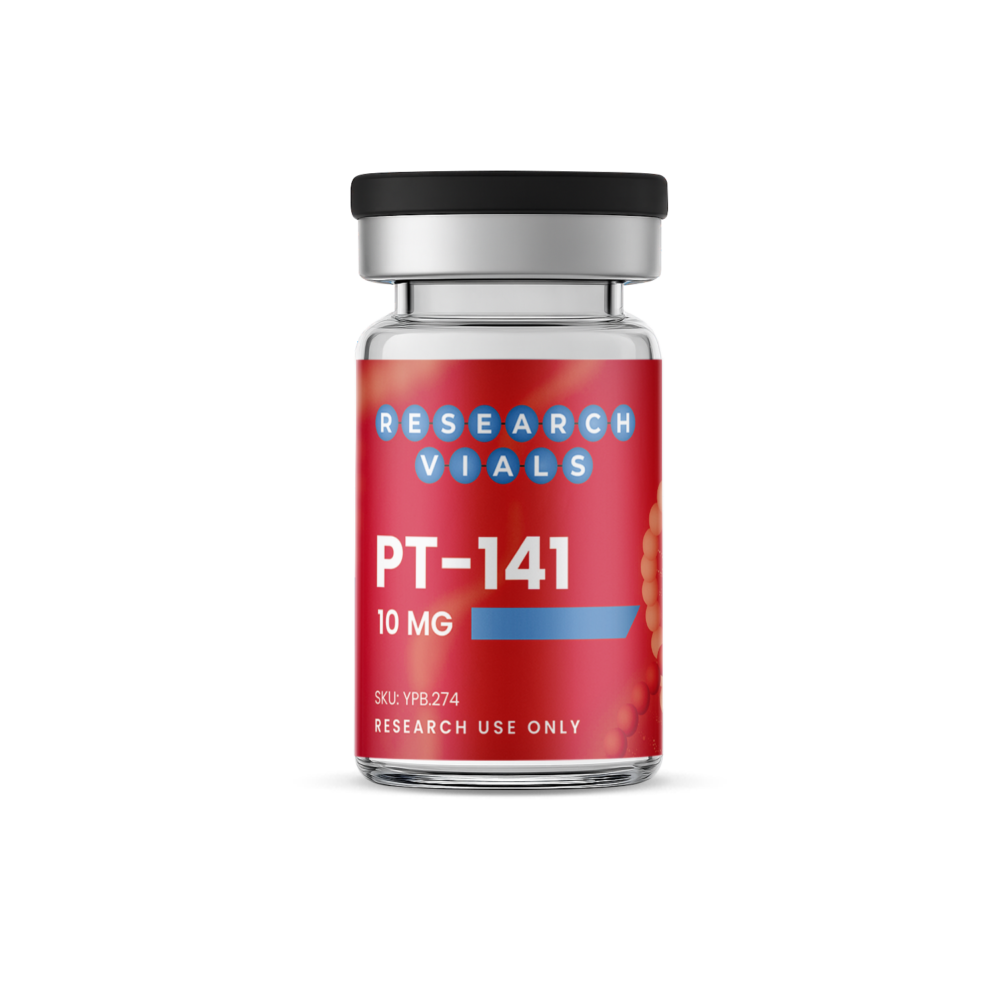
PT-141 10mg
Bremelanotide (PT-141)
Ac-Nle-cyclo[Asp-His-D-Phe-Arg-Trp-Lys]-OH
Overview
PT-141 (bremelanotide) is a cyclic heptapeptide melanocortin receptor agonist that was derived from melanotan II research. It is the first and only FDA-approved melanocortin-based therapeutic, approved in 2019 under the brand name Vyleesi for hypoactive sexual desire disorder (HSDD) in premenopausal women. PT-141 differs from MT-II by a single modification — the C-terminal amide is replaced with a free carboxylic acid — which alters its receptor selectivity and pharmacokinetic profile. PT-141's mechanism of action for sexual function is mediated primarily through MC4R activation in the central nervous system, particularly in hypothalamic regions involved in sexual arousal and desire. Unlike phosphodiesterase-5 inhibitors (sildenafil, etc.) which act peripherally on vascular smooth muscle, PT-141 acts centrally to modulate sexual desire and arousal pathways. This represents a fundamentally different pharmacological approach — it targets the 'wanting' component of sexual response rather than the mechanical erectile response. The peptide crosses the blood-brain barrier and activates MC4R-expressing neurons in the medial preoptic area and paraventricular nucleus of the hypothalamus. Downstream signaling involves oxytocin release and modulation of dopaminergic pathways. The 10mg vial provides a larger quantity for extended research protocols.
Mechanism of Action
PT-141 (bremelanotide) is a cyclic heptapeptide melanocortin receptor agonist that was derived from melanotan II research. It is the first and only FDA-approved melanocortin-based therapeutic, approved in 2019 under the brand name Vyleesi for hypoactive sexual desire disorder (HSDD) in premenopausal women. PT-141 differs from MT-II by a single modification — the C-terminal amide is replaced with a free carboxylic acid — which alters its receptor selectivity and pharmacokinetic profile. PT-141's mechanism of action for sexual function is mediated primarily through MC4R activation in the central nervous system, particularly in hypothalamic regions involved in sexual arousal and desire. Unlike phosphodiesterase-5 inhibitors (sildenafil, etc.) which act peripherally on vascular smooth muscle, PT-141 acts centrally to modulate sexual desire and arousal pathways. This represents a fundamentally different pharmacological approach — it targets the 'wanting' component of sexual response rather than the mechanical erectile response. The peptide crosses the blood-brain barrier and activates MC4R-expressing neurons in the medial preoptic area and paraventricular nucleus of the hypothalamus. Downstream signaling involves oxytocin release and modulation of dopaminergic pathways. The 10mg vial provides a larger quantity for extended research protocols.
Key Research Findings
- Kingsberg et al. (2019) reported Phase III results (RECONNECT trials) showing bremelanotide significantly increased sexual desire and reduced distress in premenopausal women with HSDD.
- Diamond et al. (2006) demonstrated PT-141 induced erections in men with erectile dysfunction who had failed sildenafil, confirming its central mechanism of action.
- Pfaus et al. (2004) showed PT-141 facilitated sexual behavior in female rats through central melanocortin pathways.
- Clayton et al. (2016) reported positive results from a Phase IIb study showing dose-dependent improvement in sexual desire with bremelanotide.
Citations & References
Bremelanotide for the treatment of hypoactive sexual desire disorder: two randomized phase 3 trials
Kingsberg SA, Clayton AH, Portman D, et al. — Obstet Gynecol (2019)
Double-blind, placebo-controlled evaluation of the safety, pharmacokinetic properties and pharmacodynamic effects of intranasal PT-141
Diamond LE, Earle DC, Rosen RC, et al. — Int J Impot Res (2006)
Bremelanotide for female sexual dysfunctions in premenopausal women: a randomized, placebo-controlled dose-finding trial
Clayton AH, Althof SE, Kingsberg S, et al. — Womens Health (Lond) (2016)
Dosage in Research
The FDA-approved dose of bremelanotide is 1.75 mg subcutaneously. Clinical trials studied doses from 0.75 mg to 4 mg. The 10mg vial provides sufficient material for extended research protocols.
Dosage information is derived from published research literature and is presented for educational purposes only. This is not medical advice. All products are for laboratory research use only.
Storage & Handling
Store lyophilized (freeze-dried) powder at -20°C to 4°C in a dry environment protected from light. Unreconstituted peptide is stable for extended periods when stored properly.
Once reconstituted with bacteriostatic water or an appropriate solvent, store at 2-8°C and use within the timeframe specified on the Certificate of Analysis. Avoid repeated freeze-thaw cycles.
A Certificate of Analysis documenting purity, identity, and recommended storage conditions is included with every order.
Frequently Asked Questions
What is PT-141 10mg?
What purity is your PT-141 10mg?
How should I store PT-141 10mg?
Is PT-141 10mg for human use?
Where can I buy PT-141 10mg?
Research Use Only
All products are intended for laboratory research and educational purposes only. Products have not been evaluated by the FDA and are not intended for human consumption, diagnosis, treatment, or prevention of any disease. Purchasers must be 21+ and confirm research use intent.