
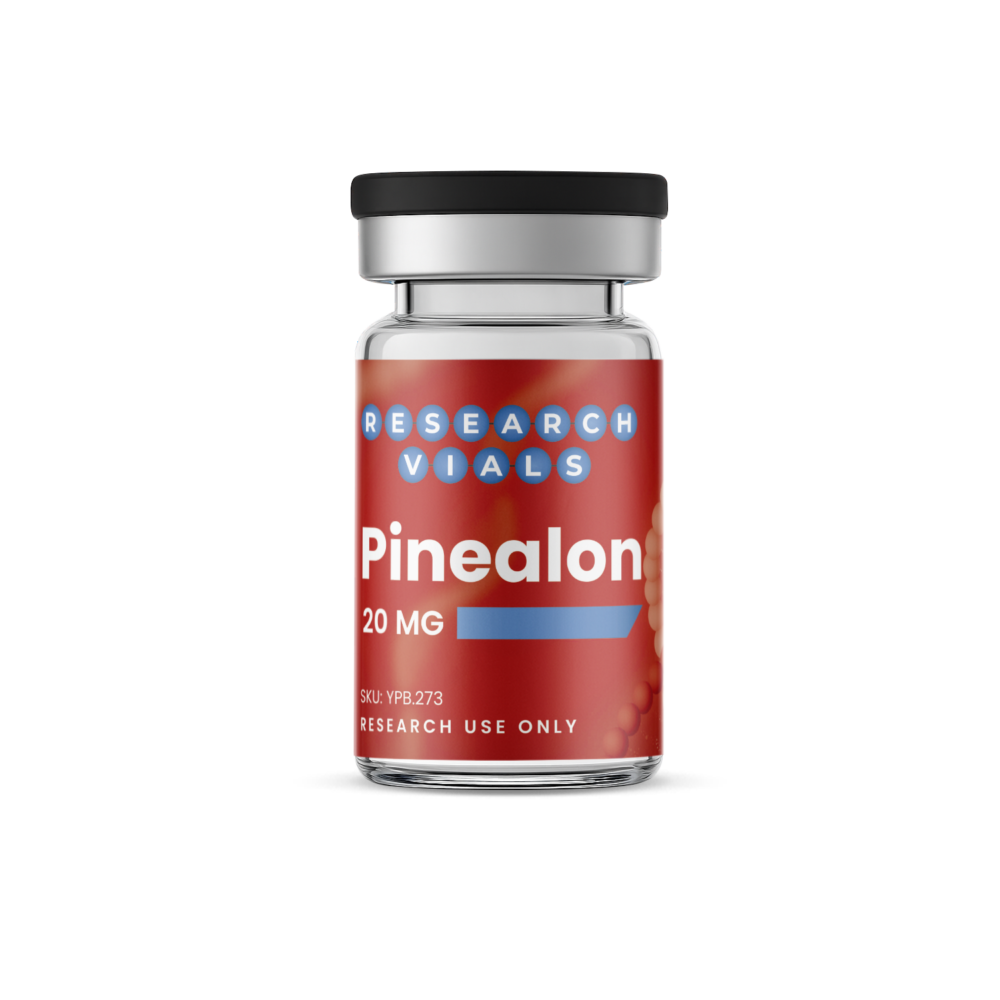
Pinealon 20mg
Pinealon
Glu-Asp-Arg
Overview
Pinealon is a synthetic tripeptide (Glu-Asp-Arg) developed by Vladimir Khavinson as a brain-specific bioregulator. It belongs to the class of short peptide bioregulators that Khavinson's group has studied for over three decades. Pinealon is derived from the amino acid sequence analysis of brain tissue extracts and is designed to penetrate cells and interact directly with DNA to modulate gene expression. The proposed mechanism involves the peptide's ability to bind to specific DNA sequences in gene promoter regions, influencing transcription of genes involved in neuroprotection, antioxidant defense, and circadian regulation. Khavinson's group has demonstrated that short peptides (2-4 amino acids) can penetrate cell membranes and nuclear envelopes without receptor-mediated endocytosis, directly accessing chromatin. In vitro studies have shown pinealon protects cortical neurons against hypoxia-induced damage and oxidative stress. It has also been reported to normalize melatonin synthesis in pinealocytes and to regulate expression of genes involved in cell differentiation and apoptosis in neural tissue. However, it should be noted that much of the primary research originates from Khavinson's group in St. Petersburg, and the gene-regulatory mechanisms proposed for these short peptides remain somewhat controversial in the broader scientific community.
Mechanism of Action
Pinealon is a synthetic tripeptide (Glu-Asp-Arg) developed by Vladimir Khavinson as a brain-specific bioregulator. It belongs to the class of short peptide bioregulators that Khavinson's group has studied for over three decades. Pinealon is derived from the amino acid sequence analysis of brain tissue extracts and is designed to penetrate cells and interact directly with DNA to modulate gene expression. The proposed mechanism involves the peptide's ability to bind to specific DNA sequences in gene promoter regions, influencing transcription of genes involved in neuroprotection, antioxidant defense, and circadian regulation. Khavinson's group has demonstrated that short peptides (2-4 amino acids) can penetrate cell membranes and nuclear envelopes without receptor-mediated endocytosis, directly accessing chromatin. In vitro studies have shown pinealon protects cortical neurons against hypoxia-induced damage and oxidative stress. It has also been reported to normalize melatonin synthesis in pinealocytes and to regulate expression of genes involved in cell differentiation and apoptosis in neural tissue. However, it should be noted that much of the primary research originates from Khavinson's group in St. Petersburg, and the gene-regulatory mechanisms proposed for these short peptides remain somewhat controversial in the broader scientific community.
Key Research Findings
- Khavinson et al. (2011) showed pinealon penetrates cell membranes and interacts with DNA in neuronal cells, modulating expression of genes involved in cell differentiation.
- Khavinson & Linkova (2021) reported pinealon protects cortical neurons from hypoxia and oxidative stress in cell culture models.
- Khavinson et al. (2014) demonstrated that short peptides including pinealon can bind DNA and modulate gene expression without receptor-mediated signaling.
- Ilina et al. (2020) showed pinealon normalizes melatonin synthesis in cultured pinealocytes exposed to stress conditions.
Citations & References
Short peptides regulate gene expression
Khavinson VKh, Linkova NS, Tarnovskaya SI. — Bull Exp Biol Med (2016)
Peptide regulation of cell differentiation
Khavinson V, Linkova N, Diatlova A, et al. — Stem Cell Rev Rep (2020)
Peptides and ageing
Khavinson VKh. — Neuroendocrinol Lett (2002)
Dosage in Research
In vitro neuroprotection studies use nanomolar to micromolar concentrations. Russian clinical protocols use 10-20 mg per course. Specific dosing regimens vary by application.
Dosage information is derived from published research literature and is presented for educational purposes only. This is not medical advice. All products are for laboratory research use only.
Storage & Handling
Store lyophilized (freeze-dried) powder at -20°C to 4°C in a dry environment protected from light. Unreconstituted peptide is stable for extended periods when stored properly.
Once reconstituted with bacteriostatic water or an appropriate solvent, store at 2-8°C and use within the timeframe specified on the Certificate of Analysis. Avoid repeated freeze-thaw cycles.
A Certificate of Analysis documenting purity, identity, and recommended storage conditions is included with every order.
Frequently Asked Questions
What is Pinealon 20mg?
What purity is your Pinealon 20mg?
How should I store Pinealon 20mg?
Is Pinealon 20mg for human use?
Where can I buy Pinealon 20mg?
Research Use Only
All products are intended for laboratory research and educational purposes only. Products have not been evaluated by the FDA and are not intended for human consumption, diagnosis, treatment, or prevention of any disease. Purchasers must be 21+ and confirm research use intent.