
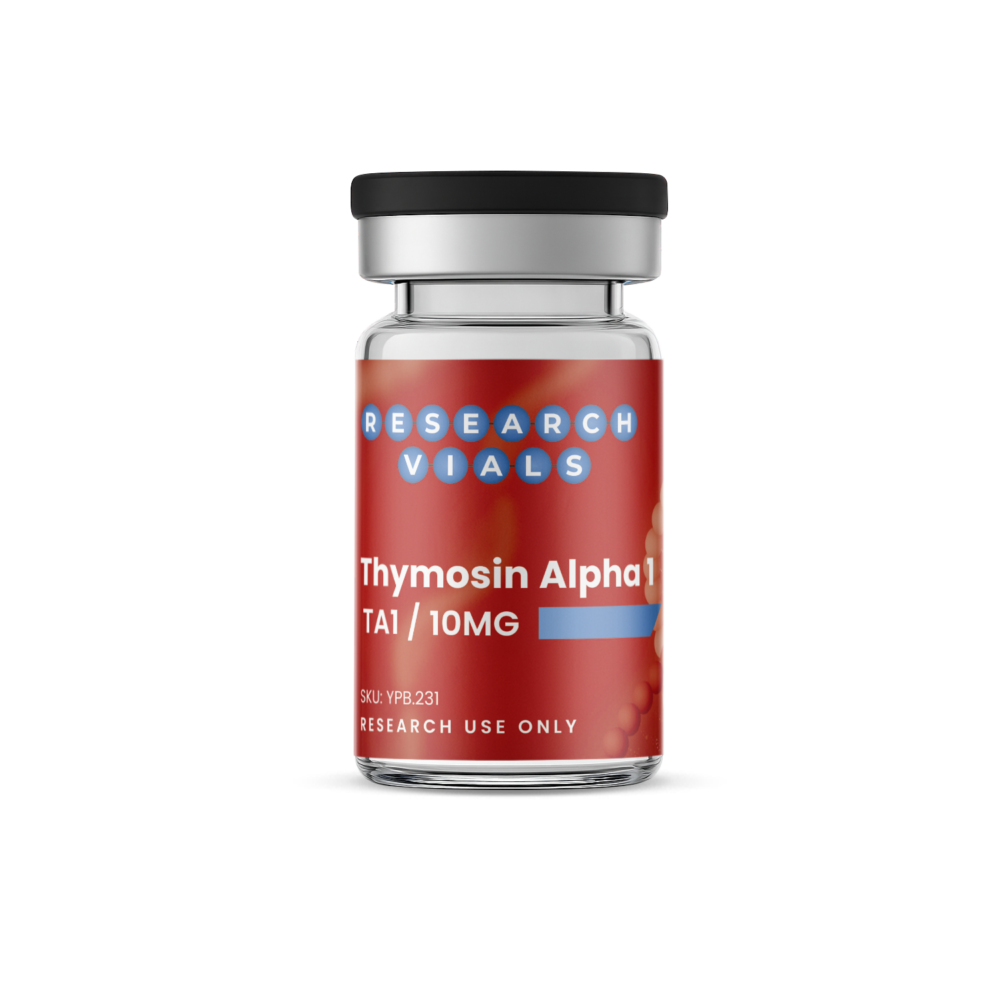
Thymosin Alpha-1 10mg
Thymosin Alpha-1
Ac-Ser-Asp-Ala-Ala-Val-Asp-Thr-Ser-Ser-Glu-Ile-Thr-Thr-Lys-Asp-Leu-Lys-Glu-Lys-Lys-Glu-Val-Val-Glu-Glu-Ala-Glu-Asn
Overview
Thymosin alpha-1 (Ta1) is a 28-amino-acid peptide originally isolated from thymic tissue (thymosin fraction 5) by Allan Goldstein at George Washington University in the 1970s. It is approved in over 35 countries under the brand name Zadaxin for hepatitis B and as an immune adjuvant, making it one of the most clinically validated immunomodulatory peptides in existence. Ta1 acts as a potent immune modulator through multiple mechanisms. It activates dendritic cells via Toll-like receptor 9 (TLR9), enhancing their ability to present antigens and stimulate T-cell responses. It promotes differentiation of CD4+ and CD8+ T-cells, enhances natural killer (NK) cell cytotoxicity, and increases MHC class I expression on tumor cells, making them more visible to the immune system. Importantly, Ta1 modulates rather than simply stimulates immunity — it can upregulate suppressed immune responses while dampening excessive inflammatory reactions. Clinically, Ta1 has been most extensively studied in chronic hepatitis B, where it has shown the ability to increase seroconversion rates and suppress viral replication. It has also been investigated as a vaccine adjuvant (particularly for influenza in the elderly), in combination with interferon-alpha for hepatitis C, and as an immunomodulator in cancer treatment protocols. More recently, it was investigated during the COVID-19 pandemic for its ability to restore lymphocyte counts in severely lymphopenic patients.
Mechanism of Action
Thymosin alpha-1 (Ta1) is a 28-amino-acid peptide originally isolated from thymic tissue (thymosin fraction 5) by Allan Goldstein at George Washington University in the 1970s. It is approved in over 35 countries under the brand name Zadaxin for hepatitis B and as an immune adjuvant, making it one of the most clinically validated immunomodulatory peptides in existence. Ta1 acts as a potent immune modulator through multiple mechanisms. It activates dendritic cells via Toll-like receptor 9 (TLR9), enhancing their ability to present antigens and stimulate T-cell responses. It promotes differentiation of CD4+ and CD8+ T-cells, enhances natural killer (NK) cell cytotoxicity, and increases MHC class I expression on tumor cells, making them more visible to the immune system. Importantly, Ta1 modulates rather than simply stimulates immunity — it can upregulate suppressed immune responses while dampening excessive inflammatory reactions. Clinically, Ta1 has been most extensively studied in chronic hepatitis B, where it has shown the ability to increase seroconversion rates and suppress viral replication. It has also been investigated as a vaccine adjuvant (particularly for influenza in the elderly), in combination with interferon-alpha for hepatitis C, and as an immunomodulator in cancer treatment protocols. More recently, it was investigated during the COVID-19 pandemic for its ability to restore lymphocyte counts in severely lymphopenic patients.
Key Research Findings
- Garaci et al. (2012) reviewed 30+ years of clinical research on thymosin alpha-1, documenting its efficacy in hepatitis, cancer immunotherapy, and vaccine enhancement across dozens of clinical trials.
- Romani et al. (2007) demonstrated Ta1 activates dendritic cells through TLR9, providing a molecular mechanism for its immunostimulatory effects.
- Tuthill et al. (2000) showed Ta1 enhanced immune response to influenza vaccination in elderly subjects, a population with documented immunosenescence.
- Camerini & Garaci (2015) reviewed Ta1's mechanism of action through TLR signaling on dendritic cells and its role in bridging innate and adaptive immunity.
Citations & References
Thymosin alpha1: a historical overview
Garaci E. — Ann N Y Acad Sci (2007)
Thymosin alpha 1 activates dendritic cells for antifungal Th1 resistance through toll-like receptor signaling
Romani L, Bistoni F, Gaziano R, et al. — Blood (2004)
Thymalfasin: clinical pharmacology and antiviral applications
Tuthill C, Rios I, McBeath R. — Int J Immunopharmacol (2000)
Historical review of thymosin alpha 1 in infectious diseases
Camerini R, Garaci E. — Expert Opin Biol Ther (2015)
Dosage in Research
Clinical protocols typically use 1.6 mg subcutaneously twice weekly. Hepatitis B trials used 1.6 mg SC twice weekly for 6-12 months. Vaccine adjuvant studies used single 1.6 mg doses before vaccination.
Dosage information is derived from published research literature and is presented for educational purposes only. This is not medical advice. All products are for laboratory research use only.
Storage & Handling
Store lyophilized (freeze-dried) powder at -20°C to 4°C in a dry environment protected from light. Unreconstituted peptide is stable for extended periods when stored properly.
Once reconstituted with bacteriostatic water or an appropriate solvent, store at 2-8°C and use within the timeframe specified on the Certificate of Analysis. Avoid repeated freeze-thaw cycles.
A Certificate of Analysis documenting purity, identity, and recommended storage conditions is included with every order.
Frequently Asked Questions
What is Thymosin Alpha-1 10mg?
What purity is your Thymosin Alpha-1 10mg?
How should I store Thymosin Alpha-1 10mg?
Is Thymosin Alpha-1 10mg for human use?
Where can I buy Thymosin Alpha-1 10mg?
Research Use Only
All products are intended for laboratory research and educational purposes only. Products have not been evaluated by the FDA and are not intended for human consumption, diagnosis, treatment, or prevention of any disease. Purchasers must be 21+ and confirm research use intent.