
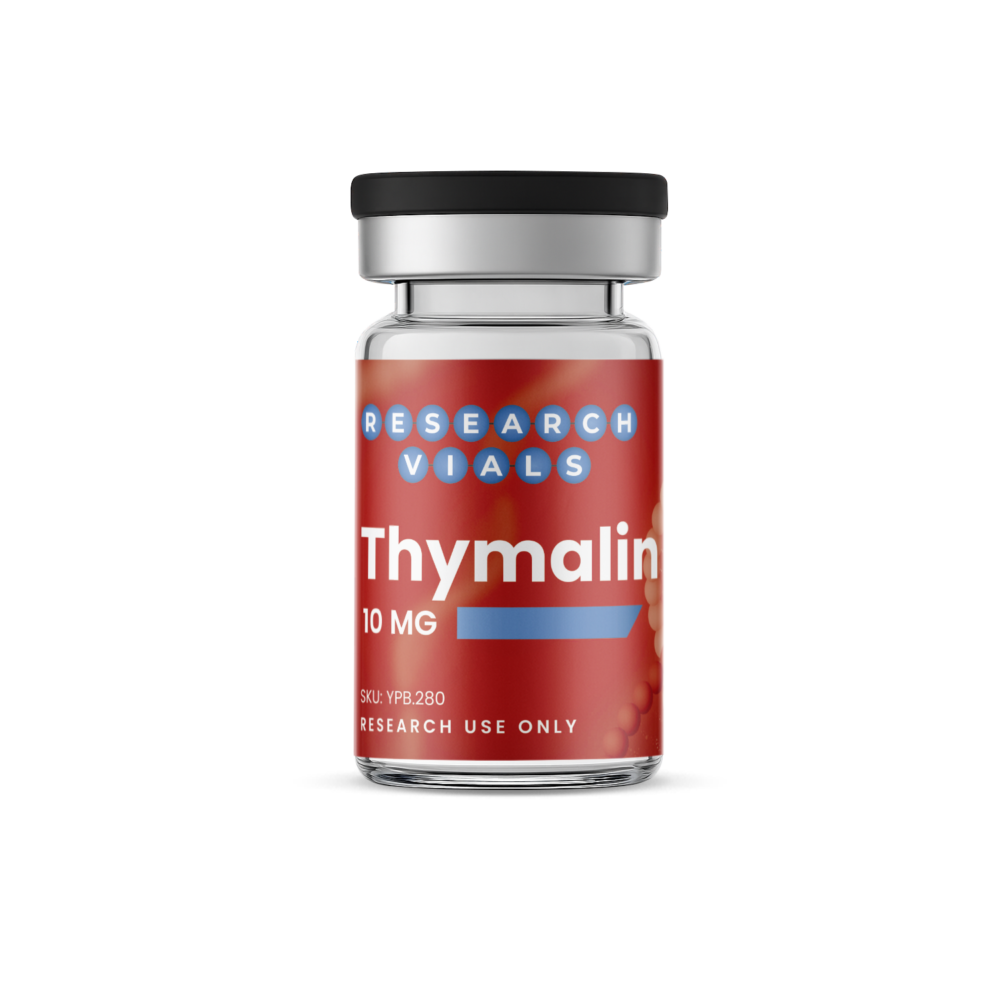
Thymalin 20mg
Thymalin
Complex of thymic peptide bioregulators (Glu-Trp primary component)
Overview
Thymalin is a polypeptide preparation originally isolated from calf thymus glands, developed by Vladimir Khavinson and colleagues at the St. Petersburg Institute of Bioregulation and Gerontology. It consists of a complex of small peptides that have been studied extensively in Russian clinical practice for immunomodulatory and geroprotective properties. The primary bioactive component is believed to be the dipeptide Glu-Trp, which has been studied independently as a thymic bioregulator. The mechanism of action involves modulation of T-cell maturation and differentiation pathways. The thymus is the primary organ responsible for T-cell development and education, but it undergoes progressive involution (shrinkage) with age, leading to diminished output of naive T-cells and gradual immune decline (immunosenescence). Thymalin research focuses on its ability to partially restore thymic function and improve T-cell populations. Khavinson et al. conducted a landmark 15-year longitudinal study in elderly patients (60-80 years) who received annual cycles of thymalin combined with epithalamin (the precursor of synthetic epitalon). The treated group showed significantly improved immune function, reduced incidence of acute respiratory infections, ischemic heart disease, hypertension, osteoporosis, and osteoarthritis, and remarkably, a 2-fold reduction in mortality rate compared to controls. While these results are striking, the study was conducted in Russia and may not have been subject to the same peer review standards as Western clinical trials.
Mechanism of Action
Thymalin is a polypeptide preparation originally isolated from calf thymus glands, developed by Vladimir Khavinson and colleagues at the St. Petersburg Institute of Bioregulation and Gerontology. It consists of a complex of small peptides that have been studied extensively in Russian clinical practice for immunomodulatory and geroprotective properties. The primary bioactive component is believed to be the dipeptide Glu-Trp, which has been studied independently as a thymic bioregulator. The mechanism of action involves modulation of T-cell maturation and differentiation pathways. The thymus is the primary organ responsible for T-cell development and education, but it undergoes progressive involution (shrinkage) with age, leading to diminished output of naive T-cells and gradual immune decline (immunosenescence). Thymalin research focuses on its ability to partially restore thymic function and improve T-cell populations. Khavinson et al. conducted a landmark 15-year longitudinal study in elderly patients (60-80 years) who received annual cycles of thymalin combined with epithalamin (the precursor of synthetic epitalon). The treated group showed significantly improved immune function, reduced incidence of acute respiratory infections, ischemic heart disease, hypertension, osteoporosis, and osteoarthritis, and remarkably, a 2-fold reduction in mortality rate compared to controls. While these results are striking, the study was conducted in Russia and may not have been subject to the same peer review standards as Western clinical trials.
Key Research Findings
- Khavinson & Morozov (2003) reported that combined thymalin/epithalamin treatment over 6 years in elderly patients reduced mortality by approximately 50% compared to untreated controls.
- Khavinson et al. (2002) demonstrated that thymic peptides restored T-cell subset ratios and natural killer cell activity in elderly subjects with impaired immune function.
- Kuznik et al. (2015) showed thymalin peptides modulated gene expression patterns in aging human fibroblast cultures, influencing genes involved in immune regulation and cellular stress responses.
- Khavinson (2002) reviewed 30 years of research on peptide bioregulators from various tissues, positioning thymalin within a broader framework of organ-specific short peptides with geroprotective activity.
Citations & References
Peptides of pineal gland and thymus prolong human life
Khavinson VKh, Morozov VG. — Neuroendocrinol Lett (2003)
Peptides and ageing
Khavinson VKh. — Neuroendocrinol Lett (2002)
Peptide regulation of cell differentiation
Khavinson V, Linkova N, Diatlova A, et al. — Stem Cell Rev Rep (2020)
Dosage in Research
Russian clinical protocols used 10 mg daily intramuscularly for 5-10 day courses, often repeated annually. The 20mg vial provides material for research protocols.
Dosage information is derived from published research literature and is presented for educational purposes only. This is not medical advice. All products are for laboratory research use only.
Storage & Handling
Store lyophilized (freeze-dried) powder at -20°C to 4°C in a dry environment protected from light. Unreconstituted peptide is stable for extended periods when stored properly.
Once reconstituted with bacteriostatic water or an appropriate solvent, store at 2-8°C and use within the timeframe specified on the Certificate of Analysis. Avoid repeated freeze-thaw cycles.
A Certificate of Analysis documenting purity, identity, and recommended storage conditions is included with every order.
Frequently Asked Questions
What is Thymalin 20mg?
What purity is your Thymalin 20mg?
How should I store Thymalin 20mg?
Is Thymalin 20mg for human use?
Where can I buy Thymalin 20mg?
Research Use Only
All products are intended for laboratory research and educational purposes only. Products have not been evaluated by the FDA and are not intended for human consumption, diagnosis, treatment, or prevention of any disease. Purchasers must be 21+ and confirm research use intent.