
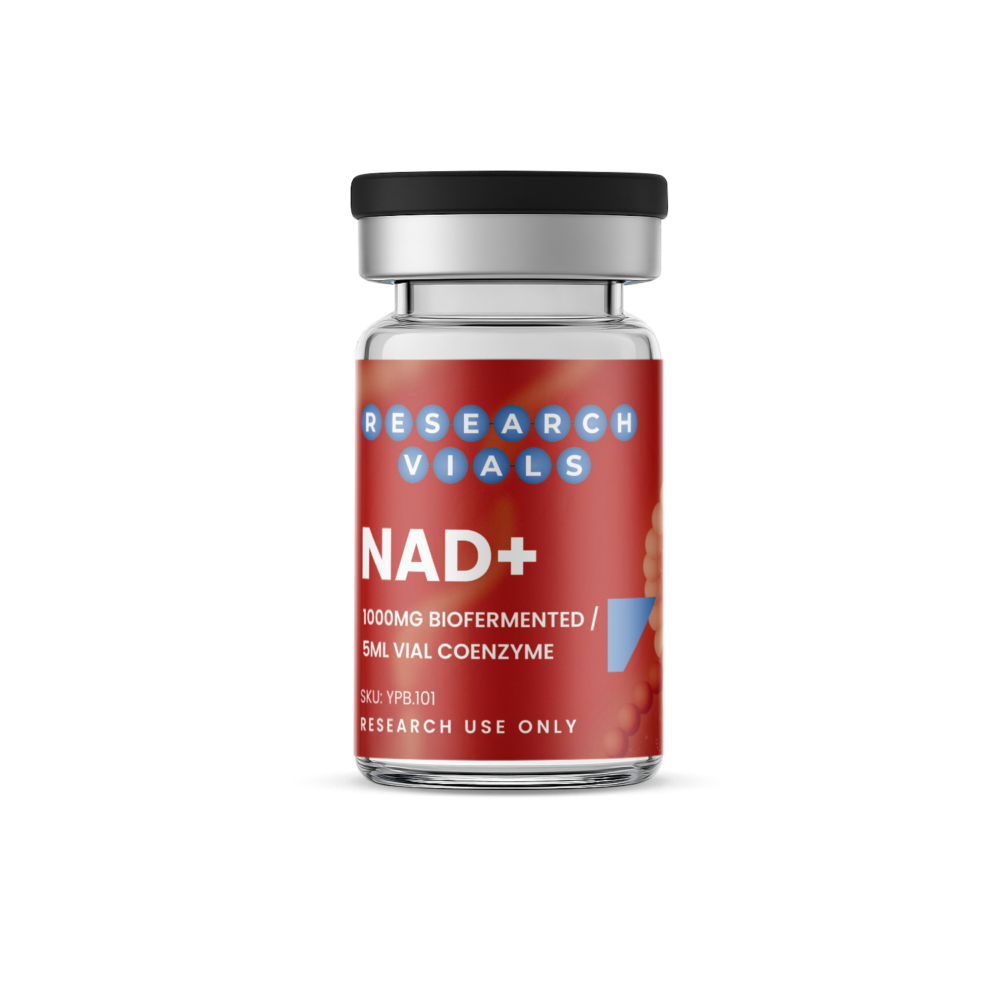
NAD 1000mg Biofermented
Nicotinamide Adenine Dinucleotide (Biofermented)
Non-peptide dinucleotide
Overview
NAD+ (nicotinamide adenine dinucleotide) is a coenzyme found in every living cell, serving as a critical electron carrier in mitochondrial oxidative phosphorylation and as a substrate for key regulatory enzymes. It exists in oxidized (NAD+) and reduced (NADH) forms, and the NAD+/NADH ratio is a fundamental indicator of cellular metabolic state. Beyond its role in energy metabolism, NAD+ serves as an essential substrate for three classes of enzymes with major regulatory significance: sirtuins (SIRT1-7), poly(ADP-ribose) polymerases (PARPs), and CD38/CD157 ectoenzymes. Sirtuins are NAD+-dependent deacetylases that regulate gene expression, DNA repair, metabolic efficiency, and stress resistance. SIRT1 activation through adequate NAD+ levels promotes mitochondrial biogenesis, enhances fatty acid oxidation, and activates stress-response pathways. PARPs consume NAD+ during DNA damage repair, linking NAD+ availability directly to genomic maintenance. NAD+ levels decline significantly with age — studies show approximately 50% reduction between ages 40 and 60 in human tissues. This decline impairs sirtuin activity, reduces mitochondrial function, and compromises DNA repair capacity. Research into NAD+ restoration has become a major focus of aging biology, with Sinclair and colleagues at Harvard demonstrating that raising NAD+ levels in aged mice restores mitochondrial function and reverses multiple biomarkers of aging. The biofermented form uses enzymatic production methods to generate NAD+ with high purity.
Mechanism of Action
NAD+ (nicotinamide adenine dinucleotide) is a coenzyme found in every living cell, serving as a critical electron carrier in mitochondrial oxidative phosphorylation and as a substrate for key regulatory enzymes. It exists in oxidized (NAD+) and reduced (NADH) forms, and the NAD+/NADH ratio is a fundamental indicator of cellular metabolic state. Beyond its role in energy metabolism, NAD+ serves as an essential substrate for three classes of enzymes with major regulatory significance: sirtuins (SIRT1-7), poly(ADP-ribose) polymerases (PARPs), and CD38/CD157 ectoenzymes. Sirtuins are NAD+-dependent deacetylases that regulate gene expression, DNA repair, metabolic efficiency, and stress resistance. SIRT1 activation through adequate NAD+ levels promotes mitochondrial biogenesis, enhances fatty acid oxidation, and activates stress-response pathways. PARPs consume NAD+ during DNA damage repair, linking NAD+ availability directly to genomic maintenance. NAD+ levels decline significantly with age — studies show approximately 50% reduction between ages 40 and 60 in human tissues. This decline impairs sirtuin activity, reduces mitochondrial function, and compromises DNA repair capacity. Research into NAD+ restoration has become a major focus of aging biology, with Sinclair and colleagues at Harvard demonstrating that raising NAD+ levels in aged mice restores mitochondrial function and reverses multiple biomarkers of aging. The biofermented form uses enzymatic production methods to generate NAD+ with high purity.
Key Research Findings
- Yoshino et al. (2011) demonstrated that restoring NAD+ levels in aged mice normalized glucose tolerance and improved mitochondrial function, establishing NAD+ decline as a reversible feature of metabolic aging.
- Gomes et al. (2013) showed that declining NAD+ levels with age disrupt the SIRT1-HIF1alpha axis, leading to pseudohypoxia and mitochondrial dysfunction that could be reversed by raising NAD+.
- Verdin (2015) reviewed NAD+ as a central metabolic regulator, detailing how its decline with age impacts sirtuins, PARPs, and CD38 to drive multiple aging phenotypes.
- Rajman et al. (2018) comprehensively reviewed therapeutic potential of boosting NAD+ in age-related diseases including neurodegeneration, cardiovascular disease, and metabolic syndrome.
Citations & References
Nicotinamide mononucleotide, a key NAD+ intermediate, treats the pathophysiology of diet- and age-induced diabetes in mice
Yoshino J, Mills KF, Yoon MJ, Imai S. — Cell Metab (2011)
Declining NAD+ induces a pseudohypoxic state disrupting nuclear-mitochondrial communication during aging
Gomes AP, Price NL, Ling AJ, et al. — Cell (2013)
NAD+ in aging, metabolism, and neurodegeneration
Verdin E. — Science (2015)
Therapeutic potential of NAD-boosting molecules: the in vivo evidence
Rajman L, Chwalek K, Sinclair DA. — Cell Metab (2018)
Dosage in Research
Human studies of NAD+ precursors (NMN, NR) have used 250-2000 mg/day orally. Direct IV NAD+ protocols in clinical settings have used 250-750 mg infusions. Biofermented NAD+ at 1000 mg provides a high-concentration research-grade preparation.
Dosage information is derived from published research literature and is presented for educational purposes only. This is not medical advice. All products are for laboratory research use only.
Storage & Handling
Store lyophilized (freeze-dried) powder at -20°C to 4°C in a dry environment protected from light. Unreconstituted peptide is stable for extended periods when stored properly.
Once reconstituted with bacteriostatic water or an appropriate solvent, store at 2-8°C and use within the timeframe specified on the Certificate of Analysis. Avoid repeated freeze-thaw cycles.
A Certificate of Analysis documenting purity, identity, and recommended storage conditions is included with every order.
Frequently Asked Questions
What is NAD 1000mg Biofermented?
What purity is your NAD 1000mg Biofermented?
How should I store NAD 1000mg Biofermented?
Is NAD 1000mg Biofermented for human use?
Where can I buy NAD 1000mg Biofermented?
Research Use Only
All products are intended for laboratory research and educational purposes only. Products have not been evaluated by the FDA and are not intended for human consumption, diagnosis, treatment, or prevention of any disease. Purchasers must be 21+ and confirm research use intent.