
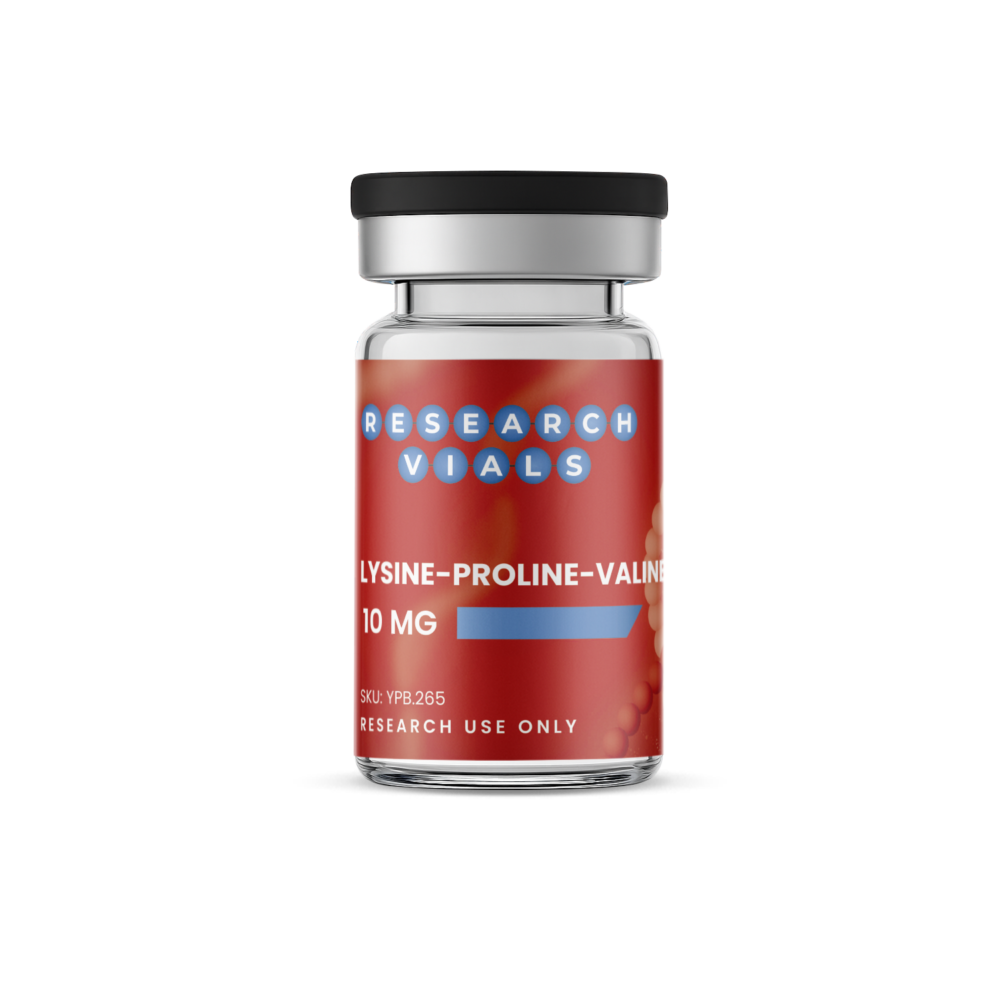
Lysine Proline Valine 10mg
KPV (Lysine-Proline-Valine)
Lys-Pro-Val
Overview
KPV is the C-terminal tripeptide (amino acids 11-13) of alpha-melanocyte-stimulating hormone (alpha-MSH). Despite being the smallest anti-inflammatory fragment of alpha-MSH, KPV retains potent anti-inflammatory activity through a unique mechanism that does not require melanocortin receptor binding. This distinguishes it from full-length alpha-MSH and melanotan peptides, which act through MC1R-MC5R receptors. KPV enters cells and directly inhibits NF-kB activation by preventing the phosphorylation of IkB-alpha and the subsequent nuclear translocation of the NF-kB p65 subunit. By blocking this master inflammatory transcription factor, KPV suppresses the production of a broad array of pro-inflammatory mediators including TNF-alpha, IL-1beta, IL-6, IL-8, and nitric oxide. Brzoska et al. demonstrated this intracellular mechanism is independent of cell-surface melanocortin receptor engagement. KPV also exhibits direct antimicrobial activity against several pathogens including Staphylococcus aureus and Candida albicans. In gastrointestinal research, Kannengiesser et al. showed KPV reduces colonic inflammation in murine colitis models, protecting mucosal integrity and reducing tissue damage. This dual anti-inflammatory and antimicrobial profile makes KPV relevant to IBD research and wound healing applications where infection and inflammation coexist.
Mechanism of Action
KPV is the C-terminal tripeptide (amino acids 11-13) of alpha-melanocyte-stimulating hormone (alpha-MSH). Despite being the smallest anti-inflammatory fragment of alpha-MSH, KPV retains potent anti-inflammatory activity through a unique mechanism that does not require melanocortin receptor binding. This distinguishes it from full-length alpha-MSH and melanotan peptides, which act through MC1R-MC5R receptors. KPV enters cells and directly inhibits NF-kB activation by preventing the phosphorylation of IkB-alpha and the subsequent nuclear translocation of the NF-kB p65 subunit. By blocking this master inflammatory transcription factor, KPV suppresses the production of a broad array of pro-inflammatory mediators including TNF-alpha, IL-1beta, IL-6, IL-8, and nitric oxide. Brzoska et al. demonstrated this intracellular mechanism is independent of cell-surface melanocortin receptor engagement. KPV also exhibits direct antimicrobial activity against several pathogens including Staphylococcus aureus and Candida albicans. In gastrointestinal research, Kannengiesser et al. showed KPV reduces colonic inflammation in murine colitis models, protecting mucosal integrity and reducing tissue damage. This dual anti-inflammatory and antimicrobial profile makes KPV relevant to IBD research and wound healing applications where infection and inflammation coexist.
Key Research Findings
- Brzoska et al. (2008) demonstrated KPV enters cells and directly inhibits NF-kB nuclear translocation independently of melanocortin receptors.
- Kannengiesser et al. (2008) showed KPV attenuates colonic inflammation in murine colitis models with reduced tissue damage and inflammatory cytokine levels.
- Luger et al. (2003) reviewed the anti-inflammatory and antimicrobial properties of alpha-MSH C-terminal tripeptide KPV.
- Dalmasso et al. (2008) demonstrated KPV-loaded nanoparticles reduced colonic inflammation when delivered orally in a murine colitis model.
Citations & References
Alpha-melanocyte-stimulating hormone and related tripeptides: biochemistry, antiinflammatory and protective effects
Brzoska T, Luger TA, Maaser C, et al. — Endocr Rev (2008)
Melanocortin-derived tripeptide KPV has anti-inflammatory potential in murine models of inflammatory bowel disease
Kannengiesser K, Maaser C, Heidemann J, et al. — Inflamm Bowel Dis (2008)
PepT1-mediated tripeptide KPV uptake reduces intestinal inflammation
Dalmasso G, Charrier-Hisamuddin L, Nguyen HT, et al. — Gastroenterology (2008)
Dosage in Research
In vitro anti-inflammatory studies use 10-100 micromolar. Colitis studies in mice used 0.5-2 mg/kg. Antimicrobial activity observed at 50-200 micromolar.
Dosage information is derived from published research literature and is presented for educational purposes only. This is not medical advice. All products are for laboratory research use only.
Storage & Handling
Store lyophilized (freeze-dried) powder at -20°C to 4°C in a dry environment protected from light. Unreconstituted peptide is stable for extended periods when stored properly.
Once reconstituted with bacteriostatic water or an appropriate solvent, store at 2-8°C and use within the timeframe specified on the Certificate of Analysis. Avoid repeated freeze-thaw cycles.
A Certificate of Analysis documenting purity, identity, and recommended storage conditions is included with every order.
Frequently Asked Questions
What is Lysine Proline Valine 10mg?
What purity is your Lysine Proline Valine 10mg?
How should I store Lysine Proline Valine 10mg?
Is Lysine Proline Valine 10mg for human use?
Where can I buy Lysine Proline Valine 10mg?
Research Use Only
All products are intended for laboratory research and educational purposes only. Products have not been evaluated by the FDA and are not intended for human consumption, diagnosis, treatment, or prevention of any disease. Purchasers must be 21+ and confirm research use intent.