
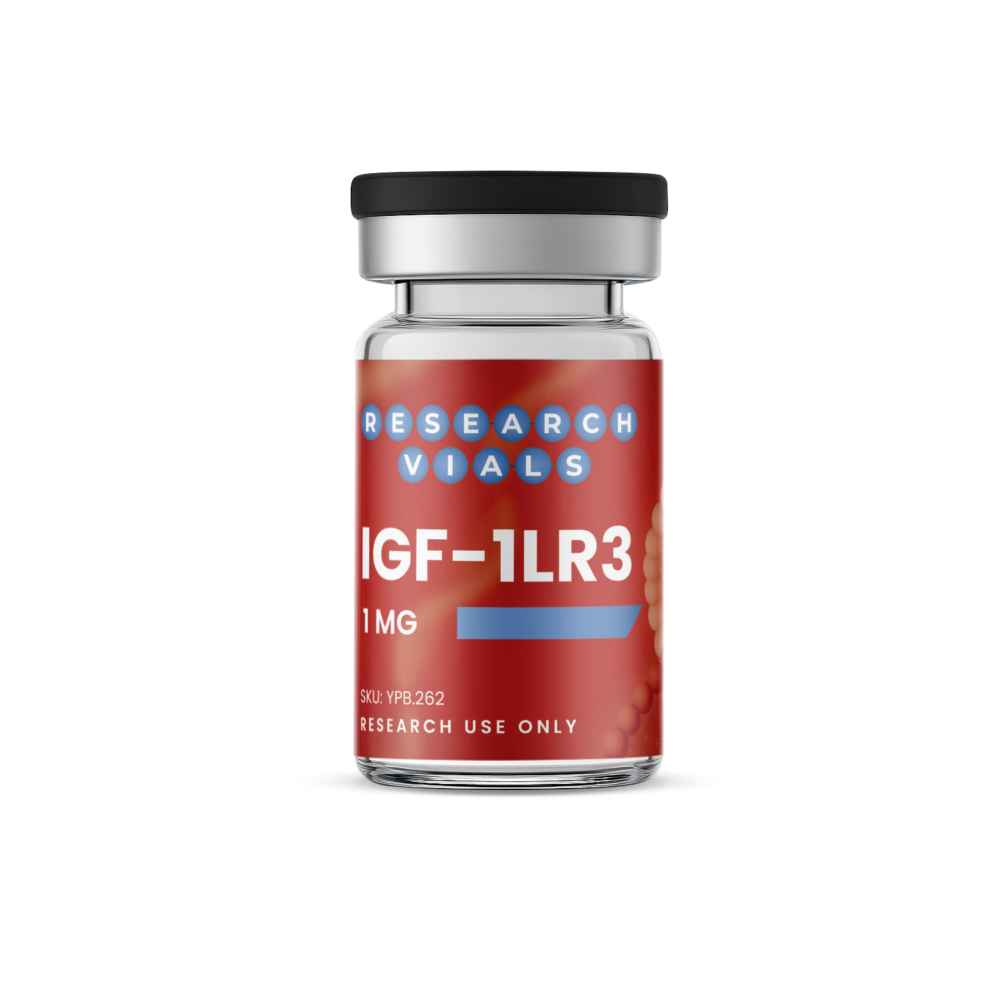
IGF-1 LR3 1mg
Insulin-like Growth Factor 1 Long R3
Modified 83-amino-acid IGF-1 with N-terminal extension and Arg3 substitution
Overview
IGF-1 LR3 (Long Arginine 3 Insulin-like Growth Factor 1) is a synthetic analogue of human IGF-1 with two key modifications: the glutamic acid at position 3 is replaced with arginine (R3), and a 13-amino-acid N-terminal extension peptide is added. These modifications dramatically reduce binding to IGF-binding proteins (IGFBPs), which normally sequester over 95% of circulating IGF-1. The result is a form of IGF-1 with greatly enhanced bioavailability and potency. Like native IGF-1, IGF-1 LR3 binds and activates the IGF-1 receptor (IGF-1R), a receptor tyrosine kinase that signals through the PI3K/Akt and Ras/MAPK pathways to promote cell survival, proliferation, and growth. The PI3K/Akt pathway is particularly important for muscle protein synthesis (via mTOR activation) and anti-apoptotic signaling. The Ras/MAPK pathway drives cell proliferation and differentiation. Because IGF-1 LR3 has dramatically reduced IGFBP binding, a much larger fraction of the administered peptide remains free and biologically active. In cell culture, IGF-1 LR3 is significantly more potent than native IGF-1 at promoting cell proliferation. This property makes it widely used as a cell culture supplement and a research tool for studying IGF-1 receptor signaling. In vivo, the reduced IGFBP binding gives IGF-1 LR3 an extended effective half-life and greater tissue distribution compared to native IGF-1.
Mechanism of Action
IGF-1 LR3 (Long Arginine 3 Insulin-like Growth Factor 1) is a synthetic analogue of human IGF-1 with two key modifications: the glutamic acid at position 3 is replaced with arginine (R3), and a 13-amino-acid N-terminal extension peptide is added. These modifications dramatically reduce binding to IGF-binding proteins (IGFBPs), which normally sequester over 95% of circulating IGF-1. The result is a form of IGF-1 with greatly enhanced bioavailability and potency. Like native IGF-1, IGF-1 LR3 binds and activates the IGF-1 receptor (IGF-1R), a receptor tyrosine kinase that signals through the PI3K/Akt and Ras/MAPK pathways to promote cell survival, proliferation, and growth. The PI3K/Akt pathway is particularly important for muscle protein synthesis (via mTOR activation) and anti-apoptotic signaling. The Ras/MAPK pathway drives cell proliferation and differentiation. Because IGF-1 LR3 has dramatically reduced IGFBP binding, a much larger fraction of the administered peptide remains free and biologically active. In cell culture, IGF-1 LR3 is significantly more potent than native IGF-1 at promoting cell proliferation. This property makes it widely used as a cell culture supplement and a research tool for studying IGF-1 receptor signaling. In vivo, the reduced IGFBP binding gives IGF-1 LR3 an extended effective half-life and greater tissue distribution compared to native IGF-1.
Key Research Findings
- Francis et al. (1992) characterized IGF-1 LR3 and demonstrated its reduced IGFBP binding and enhanced biological potency compared to native IGF-1 in cell culture systems.
- Tomas et al. (1993) showed IGF-1 LR3 is approximately 3-fold more potent than native IGF-1 in promoting growth in rats, consistent with reduced IGFBP sequestration.
- Ballard et al. (1991) demonstrated that IGF-binding proteins regulate IGF bioavailability and that modifications reducing IGFBP affinity markedly increase biological activity.
- Clemmons (2007) reviewed the IGF/IGFBP system and the pharmacological rationale for developing IGFBP-resistant IGF analogues.
Citations & References
Novel recombinant fusion protein analogues of insulin-like growth factor (IGF)-I indicate the relative importance of IGF-binding protein and receptor binding for enhanced biological potency
Francis GL, Ross M, Ballard FJ, et al. — J Mol Endocrinol (1992)
Anabolic effects of insulin-like growth factor-I (IGF-I) and an IGF-I variant in normal female rats
Tomas FM, Knowles SE, Chandler CS, et al. — J Endocrinol (1993)
Modifying IGF1 activity: an approach to treat endocrine disorders, atherosclerosis and cancer
Clemmons DR. — Nat Rev Drug Discov (2007)
Dosage in Research
Cell culture: 50-100 ng/mL as a culture medium supplement. In vivo rodent studies: 1-10 mcg/animal SC or IP. The 1mg vial provides material for extensive cell culture or animal study protocols.
Dosage information is derived from published research literature and is presented for educational purposes only. This is not medical advice. All products are for laboratory research use only.
Storage & Handling
Store lyophilized (freeze-dried) powder at -20°C to 4°C in a dry environment protected from light. Unreconstituted peptide is stable for extended periods when stored properly.
Once reconstituted with bacteriostatic water or an appropriate solvent, store at 2-8°C and use within the timeframe specified on the Certificate of Analysis. Avoid repeated freeze-thaw cycles.
A Certificate of Analysis documenting purity, identity, and recommended storage conditions is included with every order.
Frequently Asked Questions
What is IGF-1 LR3 1mg?
What purity is your IGF-1 LR3 1mg?
How should I store IGF-1 LR3 1mg?
Is IGF-1 LR3 1mg for human use?
Where can I buy IGF-1 LR3 1mg?
Research Use Only
All products are intended for laboratory research and educational purposes only. Products have not been evaluated by the FDA and are not intended for human consumption, diagnosis, treatment, or prevention of any disease. Purchasers must be 21+ and confirm research use intent.