
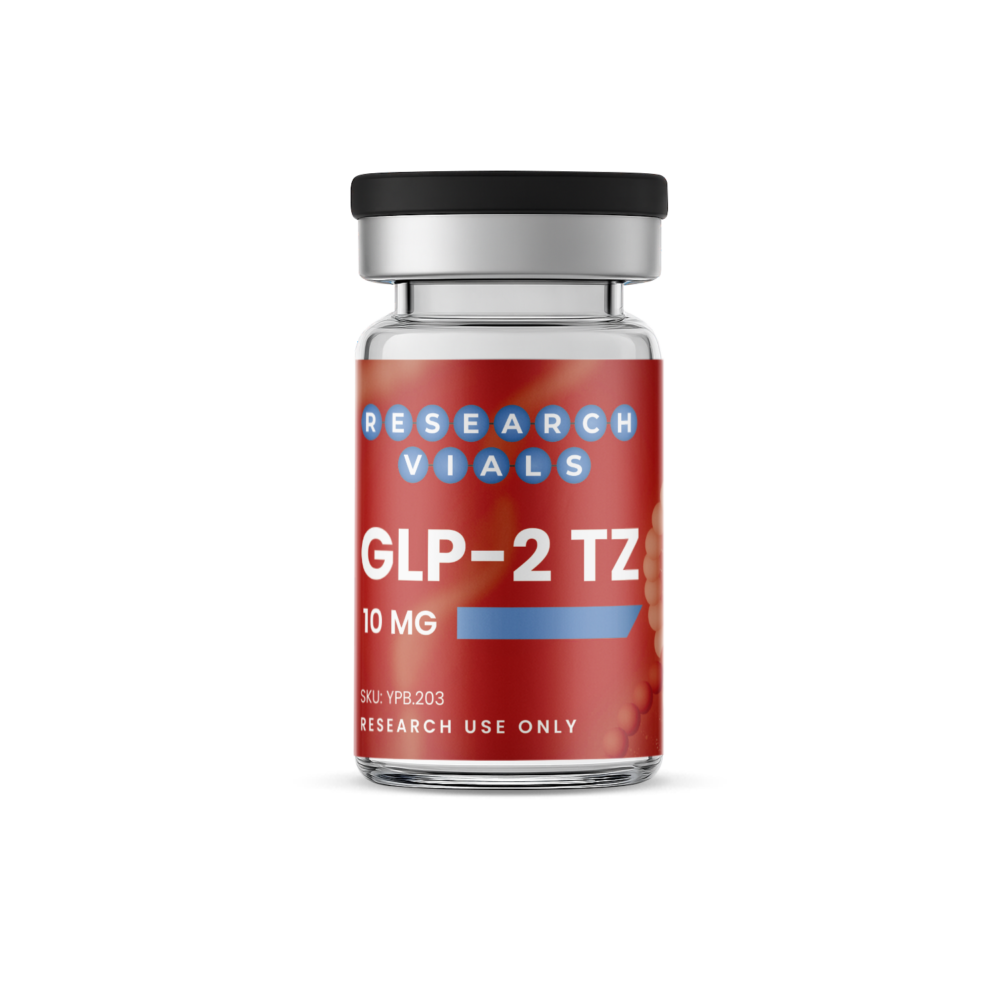
GLP-2 TZ
GLP-2 TZ (Teduglutide/GLP-2 Analogue)
Modified GLP-2 analogue (His-Ala substituted)
Overview
GLP-2 TZ is a research analogue related to glucagon-like peptide-2 (GLP-2), a 33-amino-acid hormone co-secreted with GLP-1 from intestinal L-cells. While GLP-1 is well known for its metabolic effects, GLP-2 has a distinct physiological role: it is the primary endogenous intestinotrophic growth factor, meaning it specifically promotes growth and repair of the intestinal mucosa. Native GLP-2 binds to GLP-2 receptors expressed on intestinal subepithelial myofibroblasts and enteric neurons. Receptor activation triggers downstream signaling through IGF-1, ErbB ligands, and KGF (keratinocyte growth factor) that promotes crypt cell proliferation, villus elongation, and increased mucosal surface area. This leads to enhanced nutrient absorption capacity. GLP-2 also reduces intestinal permeability, suppresses mucosal inflammatory responses, and inhibits gastric acid secretion and gastric emptying. Teduglutide (Gattex/Revestive) is an FDA-approved DPP-4-resistant GLP-2 analogue with a single amino acid substitution (Ala for position 2 Ala to Gly) that extends the half-life from 7 minutes to approximately 2-3 hours. It is approved for short bowel syndrome (SBS) in adults and children. GLP-2 TZ builds on this pharmacological class for research applications.
Mechanism of Action
GLP-2 TZ is a research analogue related to glucagon-like peptide-2 (GLP-2), a 33-amino-acid hormone co-secreted with GLP-1 from intestinal L-cells. While GLP-1 is well known for its metabolic effects, GLP-2 has a distinct physiological role: it is the primary endogenous intestinotrophic growth factor, meaning it specifically promotes growth and repair of the intestinal mucosa. Native GLP-2 binds to GLP-2 receptors expressed on intestinal subepithelial myofibroblasts and enteric neurons. Receptor activation triggers downstream signaling through IGF-1, ErbB ligands, and KGF (keratinocyte growth factor) that promotes crypt cell proliferation, villus elongation, and increased mucosal surface area. This leads to enhanced nutrient absorption capacity. GLP-2 also reduces intestinal permeability, suppresses mucosal inflammatory responses, and inhibits gastric acid secretion and gastric emptying. Teduglutide (Gattex/Revestive) is an FDA-approved DPP-4-resistant GLP-2 analogue with a single amino acid substitution (Ala for position 2 Ala to Gly) that extends the half-life from 7 minutes to approximately 2-3 hours. It is approved for short bowel syndrome (SBS) in adults and children. GLP-2 TZ builds on this pharmacological class for research applications.
Key Research Findings
- Jeppesen et al. (2001) demonstrated teduglutide increased intestinal wet weight absorption and reduced fecal output in patients with short bowel syndrome.
- Drucker et al. (1996) first characterized GLP-2 as an intestinotrophic factor, showing it increases small bowel mass and villus height in mice.
- Jeppesen et al. (2012) reported Phase III results showing teduglutide reduced parenteral nutrition requirements by 20% or more in 63% of SBS patients.
- Brubaker et al. (1997) demonstrated GLP-2 enhances nutrient absorption, reduces gastric motility, and promotes mucosal barrier integrity.
Citations & References
Teduglutide (ALX-0600), a dipeptidyl peptidase IV resistant glucagon-like peptide 2 analogue, improves intestinal function in short bowel syndrome patients
Jeppesen PB, Sanguinetti EL, Buchman A, et al. — Gut (2005)
Induction of intestinal epithelial proliferation by glucagon-like peptide 2
Drucker DJ, Erlich P, Asa SL, Bhargava PK. — Proc Natl Acad Sci USA (1996)
Teduglutide reduces need for parenteral support among patients with short bowel syndrome with intestinal failure
Jeppesen PB, Pertkiewicz M, Messing B, et al. — Gastroenterology (2012)
Dosage in Research
The FDA-approved teduglutide dose is 0.05 mg/kg/day subcutaneously. Clinical trials used doses of 0.03-0.10 mg/kg/day. Animal studies used 25-250 mcg/kg.
Dosage information is derived from published research literature and is presented for educational purposes only. This is not medical advice. All products are for laboratory research use only.
Storage & Handling
Store lyophilized (freeze-dried) powder at -20°C to 4°C in a dry environment protected from light. Unreconstituted peptide is stable for extended periods when stored properly.
Once reconstituted with bacteriostatic water or an appropriate solvent, store at 2-8°C and use within the timeframe specified on the Certificate of Analysis. Avoid repeated freeze-thaw cycles.
A Certificate of Analysis documenting purity, identity, and recommended storage conditions is included with every order.
Frequently Asked Questions
What is GLP-2 TZ?
What purity is your GLP-2 TZ?
How should I store GLP-2 TZ?
Is GLP-2 TZ for human use?
Where can I buy GLP-2 TZ?
Research Use Only
All products are intended for laboratory research and educational purposes only. Products have not been evaluated by the FDA and are not intended for human consumption, diagnosis, treatment, or prevention of any disease. Purchasers must be 21+ and confirm research use intent.