
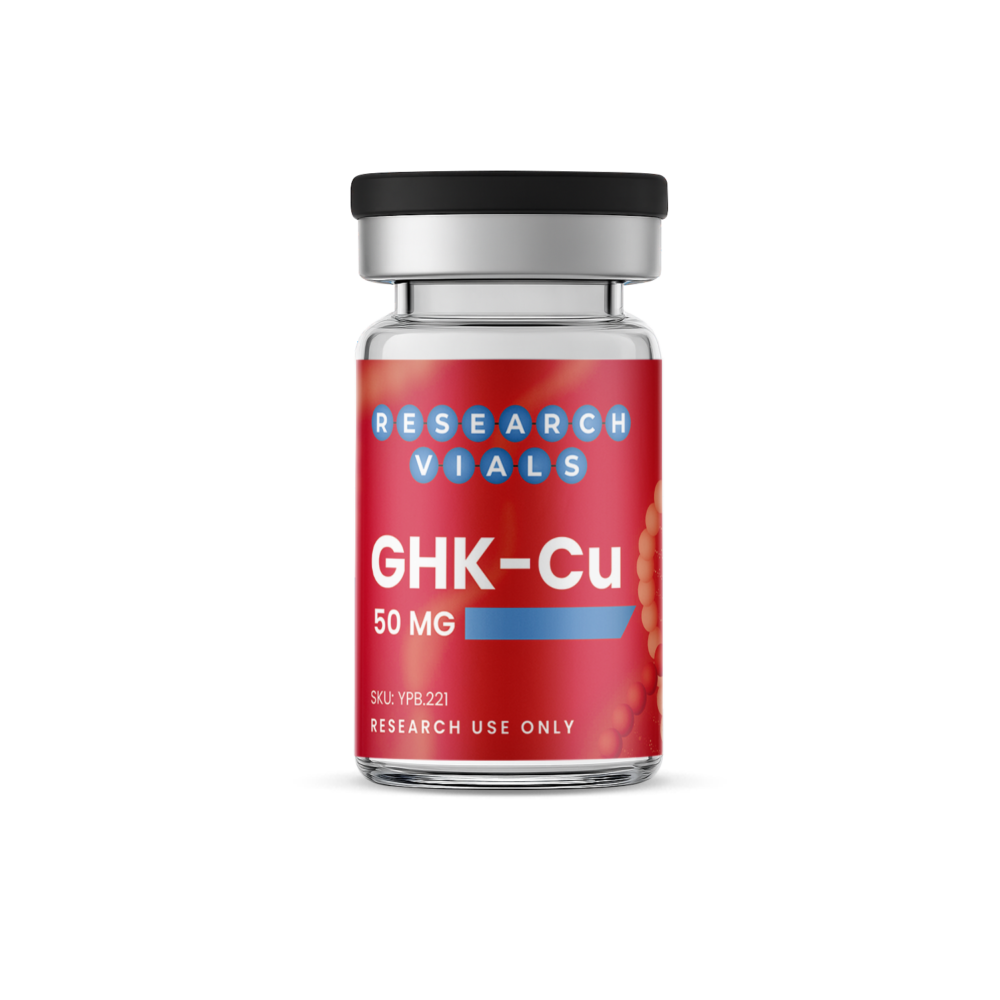
GHK-Cu
Copper Peptide GHK-Cu
Gly-His-Lys (with Cu2+ ion)
Overview
GHK-Cu is a naturally occurring copper-binding tripeptide first identified in human plasma by Loren Pickart in 1973. It is found in blood, saliva, and urine, with plasma levels declining from about 200 ng/mL at age 20 to 80 ng/mL by age 60. The copper ion is essential for its biological activity, as it enables the peptide to serve as a bioavailable copper delivery system. GHK-Cu exerts its biological effects through multiple well-characterized mechanisms. It powerfully stimulates collagen synthesis (types I and III), decorin, and glycosaminoglycan production in dermal fibroblasts. Simultaneously, it upregulates matrix metalloproteinases (MMPs) and their inhibitors (TIMPs), enabling coordinated tissue remodeling rather than simple collagen deposition. This remodeling capacity is key to its wound-healing effects — GHK-Cu promotes organized tissue repair rather than scar formation. Beyond structural matrix effects, GHK-Cu has potent antioxidant activity via SOD and glutathione pathway upregulation, suppresses inflammatory cytokines including TGF-beta and TNF-alpha, and promotes angiogenesis by inducing VEGF and FGF-2 expression. Gene expression studies by Pickart et al. using the Broad Institute Connectivity Map showed GHK can influence the expression of over 4,000 genes, with patterns suggesting suppression of fibrosis-related and inflammation-related gene networks.
Mechanism of Action
GHK-Cu is a naturally occurring copper-binding tripeptide first identified in human plasma by Loren Pickart in 1973. It is found in blood, saliva, and urine, with plasma levels declining from about 200 ng/mL at age 20 to 80 ng/mL by age 60. The copper ion is essential for its biological activity, as it enables the peptide to serve as a bioavailable copper delivery system. GHK-Cu exerts its biological effects through multiple well-characterized mechanisms. It powerfully stimulates collagen synthesis (types I and III), decorin, and glycosaminoglycan production in dermal fibroblasts. Simultaneously, it upregulates matrix metalloproteinases (MMPs) and their inhibitors (TIMPs), enabling coordinated tissue remodeling rather than simple collagen deposition. This remodeling capacity is key to its wound-healing effects — GHK-Cu promotes organized tissue repair rather than scar formation. Beyond structural matrix effects, GHK-Cu has potent antioxidant activity via SOD and glutathione pathway upregulation, suppresses inflammatory cytokines including TGF-beta and TNF-alpha, and promotes angiogenesis by inducing VEGF and FGF-2 expression. Gene expression studies by Pickart et al. using the Broad Institute Connectivity Map showed GHK can influence the expression of over 4,000 genes, with patterns suggesting suppression of fibrosis-related and inflammation-related gene networks.
Key Research Findings
- Pickart et al. (2012) demonstrated GHK-Cu affects expression of 4,048 human genes, resetting gene expression patterns associated with aggressive fibrosis and tissue destruction toward healthier profiles.
- Leyden et al. (2002) showed topical GHK-Cu cream significantly improved skin laxity, clarity, and reduced fine lines in a 12-week controlled facial study.
- Canapp et al. (2003) found GHK-Cu accelerated wound healing in dogs with open wound management, with significantly faster wound contraction.
- Siméon et al. (2000) demonstrated GHK-Cu stimulates decorin synthesis by fibroblasts, a proteoglycan critical for proper collagen fiber organization.
Citations & References
GHK peptide as a natural modulator of multiple cellular pathways in skin regeneration
Pickart L, Vasquez-Soltero JM, Margolina A. — Biomed Res Int (2015)
The human tripeptide GHK-Cu in prevention of oxidative stress and degenerative conditions of aging: implications for cognitive health
Pickart L, Vasquez-Soltero JM, Margolina A. — Oxid Med Cell Longev (2012)
Expression and activation of matrix metalloproteinases in wounds: modulation by the tripeptide-copper complex glycyl-L-histidyl-L-lysine-Cu2+
Siméon A, Monier F, Berthod F, et al. — J Invest Dermatol (1999)
Skin care benefits of copper peptide containing facial cream
Leyden JJ, Stevens T, Finkey MB. — Am J Cosmet Surg (2002)
Dosage in Research
Topical studies typically use 1-4% GHK-Cu solutions. In vitro studies use concentrations of 1-10 micromolar. Injectable research protocols are less standardized, with doses varying widely by application.
Dosage information is derived from published research literature and is presented for educational purposes only. This is not medical advice. All products are for laboratory research use only.
Storage & Handling
Store lyophilized (freeze-dried) powder at -20°C to 4°C in a dry environment protected from light. Unreconstituted peptide is stable for extended periods when stored properly.
Once reconstituted with bacteriostatic water or an appropriate solvent, store at 2-8°C and use within the timeframe specified on the Certificate of Analysis. Avoid repeated freeze-thaw cycles.
A Certificate of Analysis documenting purity, identity, and recommended storage conditions is included with every order.
Frequently Asked Questions
What is GHK-Cu?
What purity is your GHK-Cu?
How should I store GHK-Cu?
Is GHK-Cu for human use?
Where can I buy GHK-Cu?
Research Use Only
All products are intended for laboratory research and educational purposes only. Products have not been evaluated by the FDA and are not intended for human consumption, diagnosis, treatment, or prevention of any disease. Purchasers must be 21+ and confirm research use intent.