
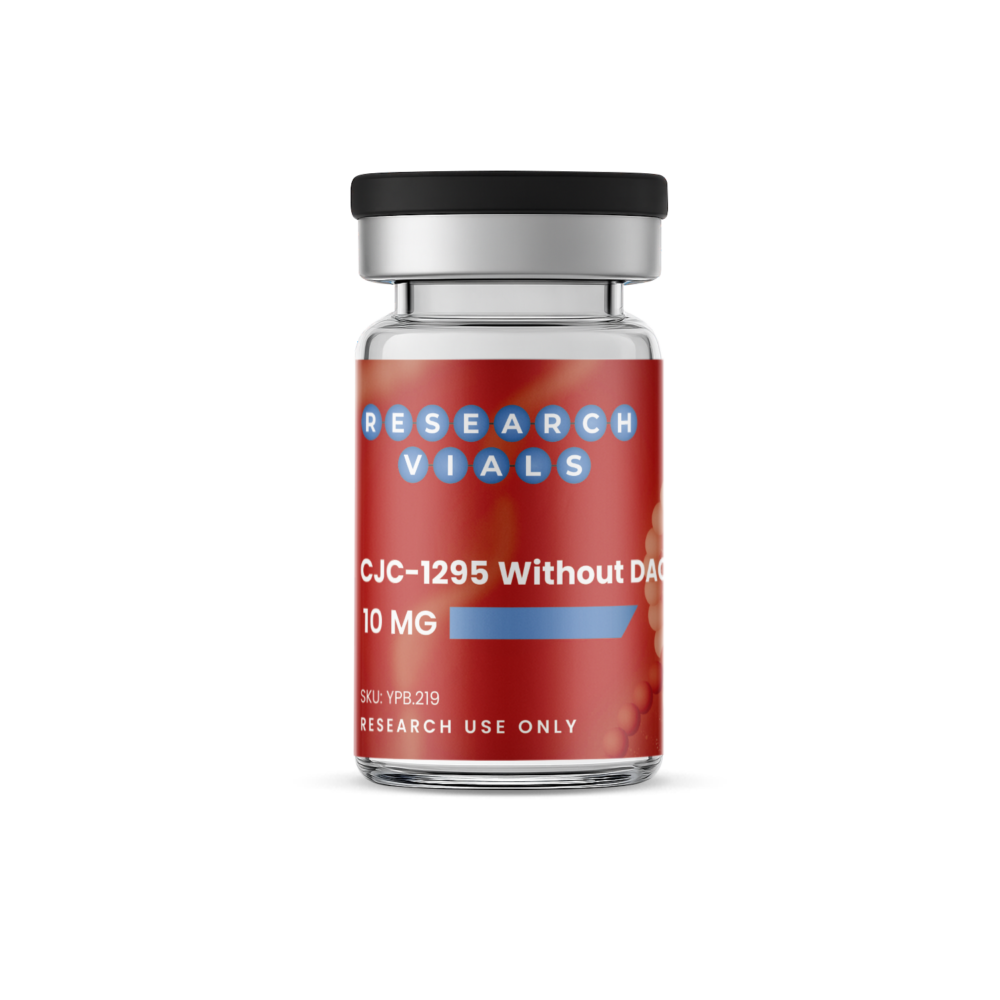
CJC-1295 Without DAC (10mg)
CJC-1295 Without DAC (Modified GRF 1-29)
Tyr-D-Ala-Asp-Ala-Ile-Phe-Thr-Gln-Ser-Tyr-Arg-Lys-Val-Leu-Ala-Gln-Leu-Ser-Ala-Arg-Lys-Leu-Leu-Gln-Asp-Ile-Leu-Ser-Arg-NH2
Overview
CJC-1295 without DAC, also known as Modified GRF(1-29), is a synthetic analogue of the first 29 amino acids of growth hormone-releasing hormone (GHRH) with four amino acid substitutions designed to improve metabolic stability. The modifications (Ala at position 2 to D-Ala, Asn at position 8 to Gln, Ala at position 15 to Ala (retained), and Met at position 27 to Leu) confer resistance to DPP-4 and other proteolytic enzymes while preserving full GHRH receptor binding affinity. The 'without DAC' designation distinguishes it from CJC-1295 with DAC (Drug Affinity Complex), which includes a maleimidopropionic acid linker that enables covalent binding to serum albumin. Without the DAC modification, this version has a shorter half-life of approximately 30 minutes, producing a more physiological acute GH pulse rather than the sustained GH elevation seen with the DAC version. CJC-1295 without DAC binds GHRH receptors on pituitary somatotrophs and activates the Gs-cAMP-PKA pathway to stimulate GH release. Its shorter-acting nature produces GH pulses that more closely mimic natural secretion patterns, which some researchers prefer for maintaining physiological feedback regulation. It is frequently studied in combination with ghrelin receptor agonists like ipamorelin for synergistic GH release.
Mechanism of Action
CJC-1295 without DAC, also known as Modified GRF(1-29), is a synthetic analogue of the first 29 amino acids of growth hormone-releasing hormone (GHRH) with four amino acid substitutions designed to improve metabolic stability. The modifications (Ala at position 2 to D-Ala, Asn at position 8 to Gln, Ala at position 15 to Ala (retained), and Met at position 27 to Leu) confer resistance to DPP-4 and other proteolytic enzymes while preserving full GHRH receptor binding affinity. The 'without DAC' designation distinguishes it from CJC-1295 with DAC (Drug Affinity Complex), which includes a maleimidopropionic acid linker that enables covalent binding to serum albumin. Without the DAC modification, this version has a shorter half-life of approximately 30 minutes, producing a more physiological acute GH pulse rather than the sustained GH elevation seen with the DAC version. CJC-1295 without DAC binds GHRH receptors on pituitary somatotrophs and activates the Gs-cAMP-PKA pathway to stimulate GH release. Its shorter-acting nature produces GH pulses that more closely mimic natural secretion patterns, which some researchers prefer for maintaining physiological feedback regulation. It is frequently studied in combination with ghrelin receptor agonists like ipamorelin for synergistic GH release.
Key Research Findings
- Teichman et al. (2006) showed CJC-1295 produced sustained dose-dependent increases in GH and IGF-1 levels following single subcutaneous injections in healthy adults.
- Ionescu & Bhisitkul (2000) reviewed the development of GHRH analogues with enhanced stability, establishing the structure-activity relationships that guided CJC-1295 design.
- Alba et al. (2006) demonstrated CJC-1295 (DAC version) produced 2-10 fold increases in mean GH levels sustained for up to 6 days after a single injection.
- Bowers et al. (1984) established the synergistic effect between GHRH pathway and GHRP pathway stimulation that underlies CJC-1295/ipamorelin combination protocols.
Citations & References
Prolonged stimulation of growth hormone (GH) and insulin-like growth factor I secretion by CJC-1295, a long-acting analog of GH-releasing hormone, in healthy adults
Teichman SL, Neale A, Lawrence B, et al. — J Clin Endocrinol Metab (2006)
Once-daily administration of CJC-1295, a long-acting growth hormone-releasing hormone (GHRH) analog, normalizes growth in the GHRH knockout mouse
Alba M, Fintini D, Sagazio A, et al. — Am J Physiol Endocrinol Metab (2006)
On the in vitro and in vivo activity of a new synthetic hexapeptide that acts on the pituitary to specifically release growth hormone
Bowers CY, Momany FA, Reynolds GA, Hong A. — Endocrinology (1984)
Dosage in Research
Clinical research used single doses of 15-60 mcg/kg subcutaneously. Research combination protocols with ipamorelin typically study both components simultaneously.
Dosage information is derived from published research literature and is presented for educational purposes only. This is not medical advice. All products are for laboratory research use only.
Storage & Handling
Store lyophilized (freeze-dried) powder at -20°C to 4°C in a dry environment protected from light. Unreconstituted peptide is stable for extended periods when stored properly.
Once reconstituted with bacteriostatic water or an appropriate solvent, store at 2-8°C and use within the timeframe specified on the Certificate of Analysis. Avoid repeated freeze-thaw cycles.
A Certificate of Analysis documenting purity, identity, and recommended storage conditions is included with every order.
Frequently Asked Questions
What is CJC-1295 Without DAC (10mg)?
What purity is your CJC-1295 Without DAC (10mg)?
How should I store CJC-1295 Without DAC (10mg)?
Is CJC-1295 Without DAC (10mg) for human use?
Where can I buy CJC-1295 Without DAC (10mg)?
Research Use Only
All products are intended for laboratory research and educational purposes only. Products have not been evaluated by the FDA and are not intended for human consumption, diagnosis, treatment, or prevention of any disease. Purchasers must be 21+ and confirm research use intent.