
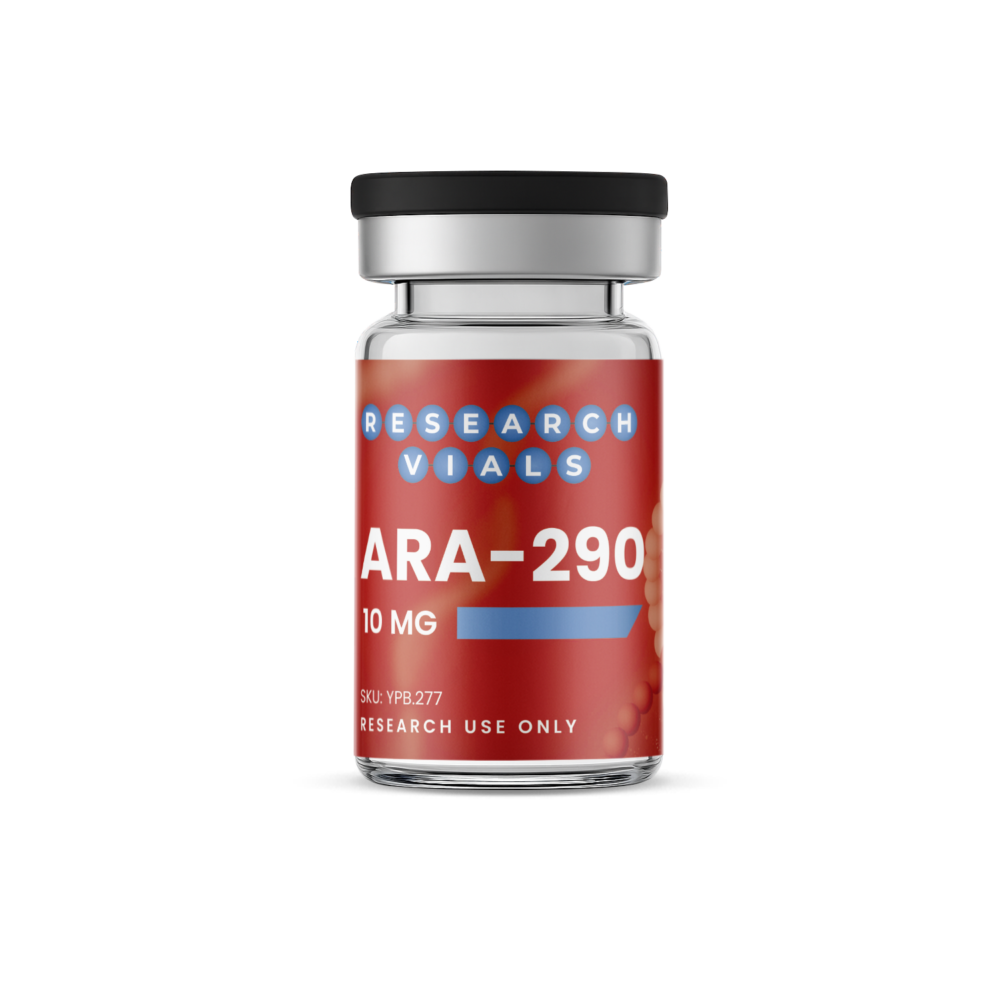
ARA-290 10mg
ARA-290 (Cibinetide)
Pyroglutamate-Glu-Leu-Glu-Arg-Ile-Ser-Arg-Glu-Asp-Leu (11 amino acids)
Overview
ARA-290 (cibinetide) is a synthetic 11-amino-acid peptide derived from the B-helix of erythropoietin (EPO) that activates the innate repair receptor (IRR), a heterodimer of EPO receptor and beta common receptor (betacR). Unlike EPO itself, ARA-290 does not bind the classical EPO receptor homodimer responsible for erythropoiesis, so it does not stimulate red blood cell production or carry the associated thrombotic risks. The innate repair receptor is expressed on a variety of cell types including neurons, endothelial cells, and immune cells, particularly in response to tissue damage and inflammation. Activation of the IRR by ARA-290 triggers anti-apoptotic signaling (PI3K/Akt and JAK2/STAT5 pathways), reduces inflammatory cytokine production, and promotes tissue repair. This tissue-protective activity was first recognized when EPO was shown to have neuroprotective effects independent of its hematopoietic function. ARA-290 has advanced through multiple Phase II clinical trials for diabetic neuropathy, sarcoidosis-related neuropathy, and chronic pain. Brines et al. demonstrated improvements in small nerve fiber regeneration in patients with sarcoid neuropathy, and subsequent studies showed improved corneal nerve density and reduced neuropathic pain in diabetic patients.
Mechanism of Action
ARA-290 (cibinetide) is a synthetic 11-amino-acid peptide derived from the B-helix of erythropoietin (EPO) that activates the innate repair receptor (IRR), a heterodimer of EPO receptor and beta common receptor (betacR). Unlike EPO itself, ARA-290 does not bind the classical EPO receptor homodimer responsible for erythropoiesis, so it does not stimulate red blood cell production or carry the associated thrombotic risks. The innate repair receptor is expressed on a variety of cell types including neurons, endothelial cells, and immune cells, particularly in response to tissue damage and inflammation. Activation of the IRR by ARA-290 triggers anti-apoptotic signaling (PI3K/Akt and JAK2/STAT5 pathways), reduces inflammatory cytokine production, and promotes tissue repair. This tissue-protective activity was first recognized when EPO was shown to have neuroprotective effects independent of its hematopoietic function. ARA-290 has advanced through multiple Phase II clinical trials for diabetic neuropathy, sarcoidosis-related neuropathy, and chronic pain. Brines et al. demonstrated improvements in small nerve fiber regeneration in patients with sarcoid neuropathy, and subsequent studies showed improved corneal nerve density and reduced neuropathic pain in diabetic patients.
Key Research Findings
- Brines et al. (2008) demonstrated that the EPO-derived tissue-protective peptide ARA-290 selectively activates the innate repair receptor without erythropoietic activity.
- Brines et al. (2015) showed ARA-290 improved small nerve fiber density and reduced pain in patients with sarcoidosis-related neuropathy in a Phase II trial.
- Dahan et al. (2013) demonstrated ARA-290 reduces neuropathic pain in a human experimental pain model without affecting red blood cell counts.
- Cerami et al. (2002) identified the tissue-protective receptor complex (EPO-R/betacR) distinct from the hematopoietic EPO receptor.
Citations & References
Nonerythropoietic, tissue-protective peptides derived from the tertiary structure of erythropoietin
Brines M, Patel NS, Villa P, et al. — Proc Natl Acad Sci USA (2008)
ARA 290, a nonerythropoietic peptide engineered from erythropoietin, improves metabolic control and neuropathic symptoms in patients with type 2 diabetes
Brines M, Dunne AN, van Bruggen N, et al. — Mol Med (2015)
ARA 290 improves symptoms in patients with sarcoidosis-associated small nerve fiber loss and increases corneal nerve fiber density
Dahan A, Dunne A, Swartjes M, et al. — Mol Med (2013)
Dosage in Research
Clinical trials used 2-4 mg SC daily or three times weekly. Neuropathy studies used 4 mg SC for 28 days. Animal neuroprotection studies used 10-30 mcg/kg.
Dosage information is derived from published research literature and is presented for educational purposes only. This is not medical advice. All products are for laboratory research use only.
Storage & Handling
Store lyophilized (freeze-dried) powder at -20°C to 4°C in a dry environment protected from light. Unreconstituted peptide is stable for extended periods when stored properly.
Once reconstituted with bacteriostatic water or an appropriate solvent, store at 2-8°C and use within the timeframe specified on the Certificate of Analysis. Avoid repeated freeze-thaw cycles.
A Certificate of Analysis documenting purity, identity, and recommended storage conditions is included with every order.
Frequently Asked Questions
What is ARA-290 10mg?
What purity is your ARA-290 10mg?
How should I store ARA-290 10mg?
Is ARA-290 10mg for human use?
Where can I buy ARA-290 10mg?
Research Use Only
All products are intended for laboratory research and educational purposes only. Products have not been evaluated by the FDA and are not intended for human consumption, diagnosis, treatment, or prevention of any disease. Purchasers must be 21+ and confirm research use intent.