
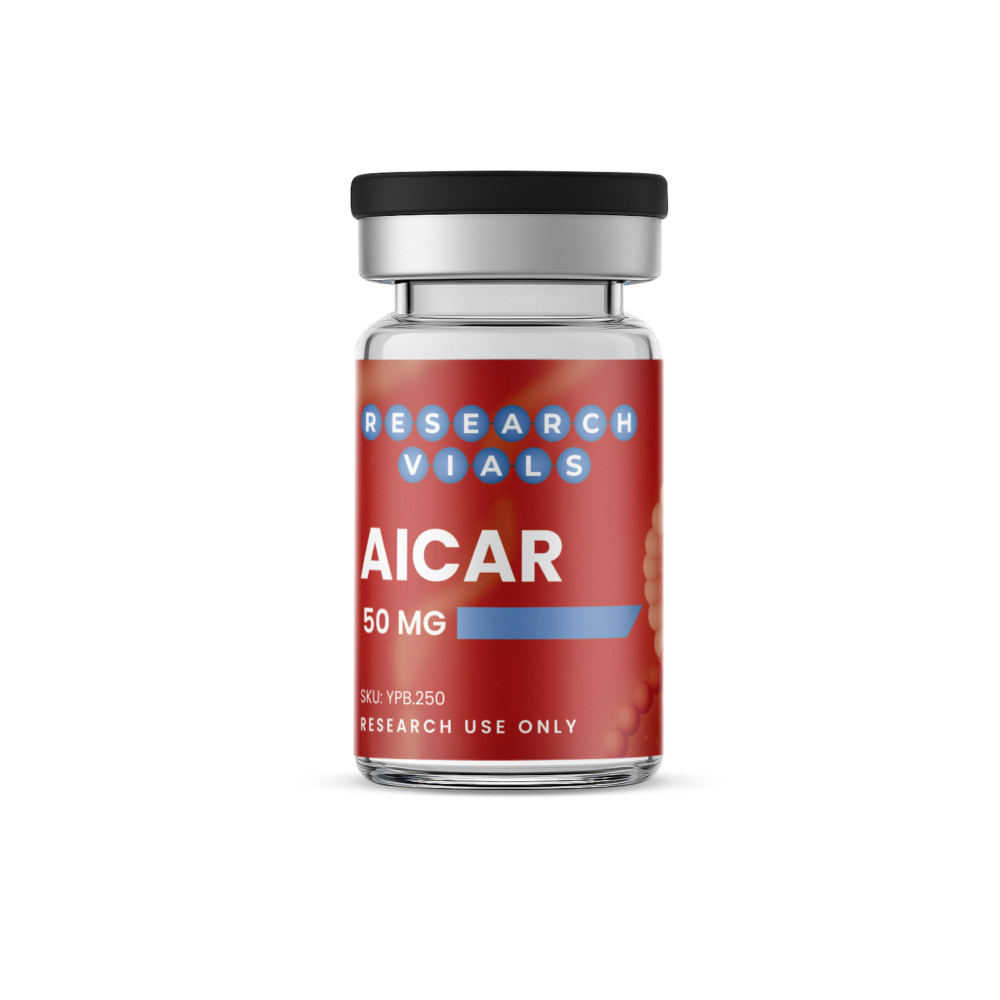
AICAR 50mg
AICAR (5-Aminoimidazole-4-Carboxamide Ribonucleotide)
Non-peptide nucleoside analogue
Overview
AICAR (5-aminoimidazole-4-carboxamide riboside, also known as acadesine) is a naturally occurring nucleoside that is an intermediate in de novo purine biosynthesis. When administered exogenously, AICAR is taken up by cells and phosphorylated by adenosine kinase to form ZMP (AICAR monophosphate), which is a direct allosteric activator of AMP-activated protein kinase (AMPK). AMPK is the master cellular energy sensor that responds to low ATP/high AMP ratios. When activated, AMPK switches on catabolic pathways that generate ATP (fatty acid oxidation, glucose uptake, autophagy) while switching off ATP-consuming anabolic pathways (protein synthesis, lipogenesis, gluconeogenesis). AICAR mimics a low-energy state in the cell, activating AMPK without actually depleting cellular ATP. Narkar et al. published a landmark paper in Cell (2008) showing that AICAR enhanced running endurance by 44% in sedentary mice without any exercise training. This was the first demonstration that a pharmacological AMPK activator could mimic specific endurance exercise benefits, earning AICAR the designation as an 'exercise mimetic.' AICAR also has clinical research history: it was studied in Phase III trials (AMISTAD) for reducing ischemia-reperfusion injury during cardiac surgery.
Mechanism of Action
AICAR (5-aminoimidazole-4-carboxamide riboside, also known as acadesine) is a naturally occurring nucleoside that is an intermediate in de novo purine biosynthesis. When administered exogenously, AICAR is taken up by cells and phosphorylated by adenosine kinase to form ZMP (AICAR monophosphate), which is a direct allosteric activator of AMP-activated protein kinase (AMPK). AMPK is the master cellular energy sensor that responds to low ATP/high AMP ratios. When activated, AMPK switches on catabolic pathways that generate ATP (fatty acid oxidation, glucose uptake, autophagy) while switching off ATP-consuming anabolic pathways (protein synthesis, lipogenesis, gluconeogenesis). AICAR mimics a low-energy state in the cell, activating AMPK without actually depleting cellular ATP. Narkar et al. published a landmark paper in Cell (2008) showing that AICAR enhanced running endurance by 44% in sedentary mice without any exercise training. This was the first demonstration that a pharmacological AMPK activator could mimic specific endurance exercise benefits, earning AICAR the designation as an 'exercise mimetic.' AICAR also has clinical research history: it was studied in Phase III trials (AMISTAD) for reducing ischemia-reperfusion injury during cardiac surgery.
Key Research Findings
- Narkar et al. (2008) demonstrated AICAR increased running endurance by 44% in sedentary mice without exercise, establishing it as the first proven pharmacological exercise mimetic.
- Winder & Hardie (1999) showed AICAR activates AMPK in skeletal muscle, increasing fatty acid oxidation and glucose uptake.
- Mangano et al. (1997) reported the AMISTAD Phase III trial showing IV acadesine (AICAR) reduced adverse cardiac outcomes after coronary artery bypass graft surgery.
- Merrill et al. (1997) demonstrated AICAR's cardioprotective effects during ischemia involve adenosine receptor-mediated mechanisms in addition to AMPK activation.
Citations & References
AMPK and PPARdelta agonists are exercise mimetics
Narkar VA, Downes M, Yu RT, et al. — Cell (2008)
AMP-activated protein kinase, a metabolic master switch: possible roles in type 2 diabetes
Winder WW, Hardie DG. — Am J Physiol (1999)
Post-reperfusion myocardial infarction: long-term survival improvement using adenosine regulation with acadesine
Mangano DT, Miao Y, Tudor IC, Dietzel C. — J Am Coll Cardiol (2006)
Dosage in Research
Mouse exercise studies used 500 mg/kg/day for 4 weeks. Cardiac surgery trials used IV infusions of 0.1 mg/kg/min. Cell culture studies use 0.5-2 mM.
Dosage information is derived from published research literature and is presented for educational purposes only. This is not medical advice. All products are for laboratory research use only.
Storage & Handling
Store lyophilized (freeze-dried) powder at -20°C to 4°C in a dry environment protected from light. Unreconstituted peptide is stable for extended periods when stored properly.
Once reconstituted with bacteriostatic water or an appropriate solvent, store at 2-8°C and use within the timeframe specified on the Certificate of Analysis. Avoid repeated freeze-thaw cycles.
A Certificate of Analysis documenting purity, identity, and recommended storage conditions is included with every order.
Frequently Asked Questions
What is AICAR 50mg?
What purity is your AICAR 50mg?
How should I store AICAR 50mg?
Is AICAR 50mg for human use?
Where can I buy AICAR 50mg?
Research Use Only
All products are intended for laboratory research and educational purposes only. Products have not been evaluated by the FDA and are not intended for human consumption, diagnosis, treatment, or prevention of any disease. Purchasers must be 21+ and confirm research use intent.