
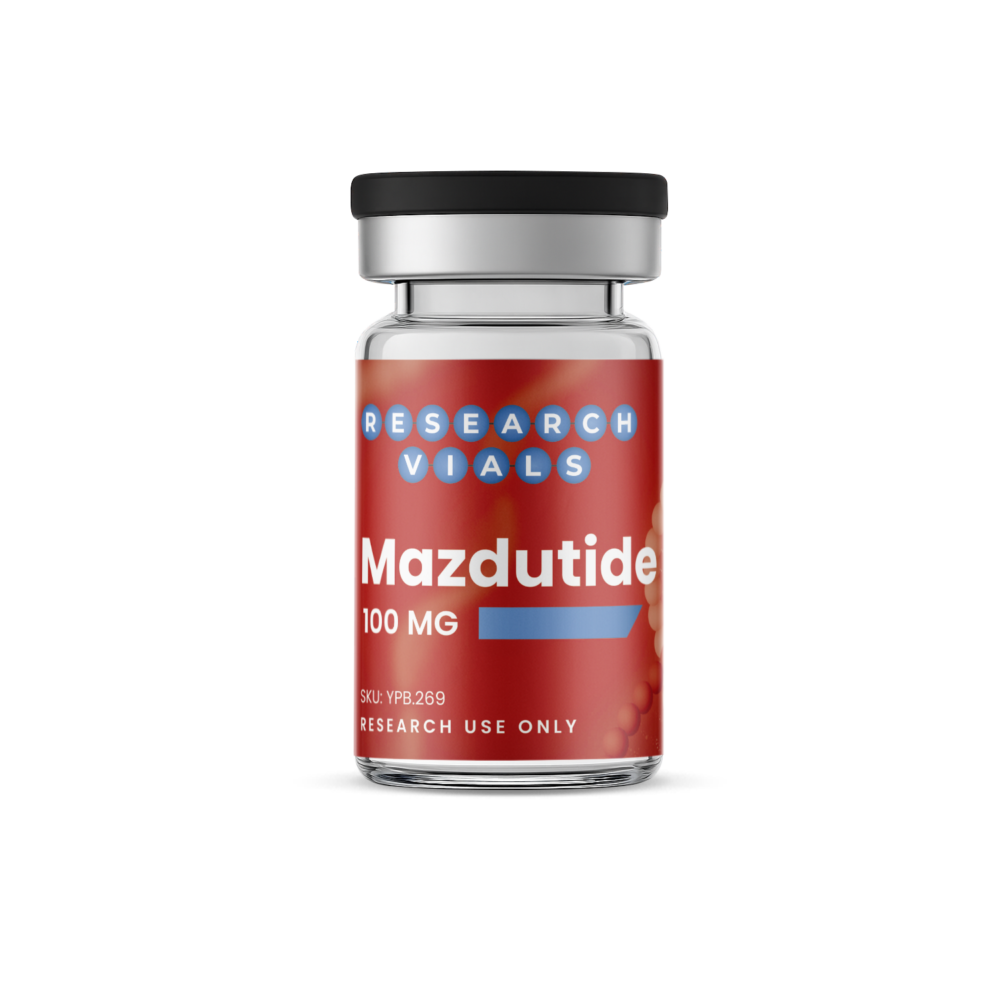
Mazdutide 100mg
Mazdutide (LY3305677)
Modified OXM-based GLP-1R/GCGR dual agonist
Overview
Mazdutide is a dual glucagon receptor (GCGR) and GLP-1 receptor (GLP-1R) agonist based on oxyntomodulin (OXM), a naturally occurring gut hormone that has inherent dual GLP-1R/GCGR activity. Developed by Innovent Biologics in collaboration with Eli Lilly, mazdutide incorporates fatty acid acylation for albumin binding and extended half-life. Like survodutide, mazdutide leverages the complementary metabolic effects of simultaneous GLP-1R and GCGR activation. GLP-1R agonism provides appetite suppression, glucose-dependent insulin secretion, and cardiovascular benefits. GCGR agonism increases hepatic energy expenditure through enhanced lipid oxidation and thermogenesis, with particular relevance to liver fat reduction. Phase II clinical trials in Chinese populations showed mazdutide produced significant weight loss (up to 11.7% over 24 weeks) and improvements in metabolic parameters. The 100mg vial provides a higher-quantity research preparation suitable for preclinical studies. Mazdutide is advancing through Phase III trials and represents the growing class of multi-receptor incretin agonists being developed for metabolic disease.
Mechanism of Action
Mazdutide is a dual glucagon receptor (GCGR) and GLP-1 receptor (GLP-1R) agonist based on oxyntomodulin (OXM), a naturally occurring gut hormone that has inherent dual GLP-1R/GCGR activity. Developed by Innovent Biologics in collaboration with Eli Lilly, mazdutide incorporates fatty acid acylation for albumin binding and extended half-life. Like survodutide, mazdutide leverages the complementary metabolic effects of simultaneous GLP-1R and GCGR activation. GLP-1R agonism provides appetite suppression, glucose-dependent insulin secretion, and cardiovascular benefits. GCGR agonism increases hepatic energy expenditure through enhanced lipid oxidation and thermogenesis, with particular relevance to liver fat reduction. Phase II clinical trials in Chinese populations showed mazdutide produced significant weight loss (up to 11.7% over 24 weeks) and improvements in metabolic parameters. The 100mg vial provides a higher-quantity research preparation suitable for preclinical studies. Mazdutide is advancing through Phase III trials and represents the growing class of multi-receptor incretin agonists being developed for metabolic disease.
Key Research Findings
- Ji et al. (2023) reported Phase II results showing mazdutide produced dose-dependent weight loss up to 11.7% at 24 weeks in Chinese adults with overweight/obesity.
- Day et al. (2009) established the foundational rationale for GLP-1/glucagon dual agonism showing superior metabolic outcomes in preclinical models.
- Ambery et al. (2018) demonstrated a GLP-1/glucagon dual agonist improved metabolic parameters in overweight patients with type 2 diabetes.
- Kosinski et al. (2012) showed oxyntomodulin (the natural dual agonist) reduces body weight through increased energy expenditure plus decreased food intake.
Citations & References
IBI362 (LY3305677), a weekly-dose GLP-1 and glucagon receptor dual agonist, in Chinese adults with overweight or obesity: a randomised, placebo-controlled, multiple ascending-dose phase 1b study
Ji L, Jiang H, An P, et al. — EClinicalMedicine (2021)
A new glucagon and GLP-1 co-agonist eliminates obesity in rodents
Day JW, Ottaway N, Patterson JT, et al. — Nat Chem Biol (2009)
The glucagon receptor is involved in mediating the body weight-lowering effects of oxyntomodulin
Kosinski JR, Hubert J, Carrington PE, et al. — Obesity (2012)
Dosage in Research
Phase II trials used subcutaneous doses of 3-9 mg weekly with escalation protocols. The 100mg vial provides material for preclinical research.
Dosage information is derived from published research literature and is presented for educational purposes only. This is not medical advice. All products are for laboratory research use only.
Storage & Handling
Store lyophilized (freeze-dried) powder at -20°C to 4°C in a dry environment protected from light. Unreconstituted peptide is stable for extended periods when stored properly.
Once reconstituted with bacteriostatic water or an appropriate solvent, store at 2-8°C and use within the timeframe specified on the Certificate of Analysis. Avoid repeated freeze-thaw cycles.
A Certificate of Analysis documenting purity, identity, and recommended storage conditions is included with every order.
Frequently Asked Questions
What is Mazdutide 100mg?
What purity is your Mazdutide 100mg?
How should I store Mazdutide 100mg?
Is Mazdutide 100mg for human use?
Where can I buy Mazdutide 100mg?
Research Use Only
All products are intended for laboratory research and educational purposes only. Products have not been evaluated by the FDA and are not intended for human consumption, diagnosis, treatment, or prevention of any disease. Purchasers must be 21+ and confirm research use intent.