
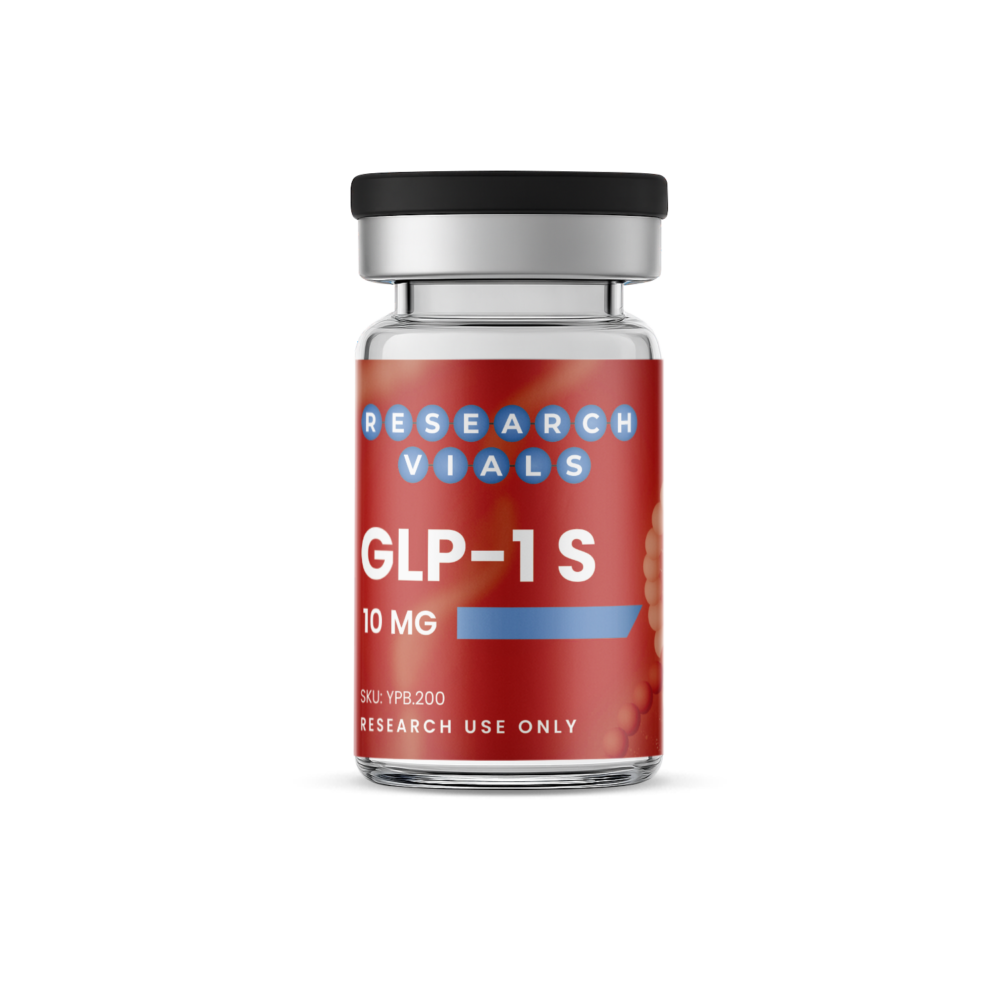
GLP-1 S 10mg
GLP-1 S (Glucagon-Like Peptide-1 Analogue)
Modified GLP-1(7-37) analogue
Overview
GLP-1 S is a GLP-1 receptor agonist research analogue. Native GLP-1 is an incretin hormone secreted by intestinal L-cells in response to nutrient ingestion. It acts on GLP-1 receptors in the pancreatic beta cells to stimulate glucose-dependent insulin secretion, in alpha cells to suppress inappropriate glucagon release, in the stomach to slow gastric emptying, and in the brain (particularly the hypothalamus and brainstem) to promote satiety and reduce food intake. The native GLP-1 peptide has an extremely short half-life of approximately 2 minutes due to rapid degradation by the enzyme dipeptidyl peptidase-4 (DPP-4). Therapeutic analogues incorporate structural modifications — such as amino acid substitutions, acylation with fatty acid side chains, and albumin binding — to dramatically extend the circulating half-life. Semaglutide, for example, uses an Aib substitution at position 8 (conferring DPP-4 resistance) and a C-18 fatty diacid chain that enables non-covalent albumin binding, extending its half-life to approximately 7 days. Beyond metabolic effects, GLP-1 receptor agonists have demonstrated cardiovascular benefits in large clinical trials. The SUSTAIN-6 and SELECT trials showed reduced major adverse cardiovascular events (MACE) independent of glycemic control, suggesting direct cardioprotective mechanisms possibly mediated through anti-inflammatory and anti-atherosclerotic effects.
Mechanism of Action
GLP-1 S is a GLP-1 receptor agonist research analogue. Native GLP-1 is an incretin hormone secreted by intestinal L-cells in response to nutrient ingestion. It acts on GLP-1 receptors in the pancreatic beta cells to stimulate glucose-dependent insulin secretion, in alpha cells to suppress inappropriate glucagon release, in the stomach to slow gastric emptying, and in the brain (particularly the hypothalamus and brainstem) to promote satiety and reduce food intake. The native GLP-1 peptide has an extremely short half-life of approximately 2 minutes due to rapid degradation by the enzyme dipeptidyl peptidase-4 (DPP-4). Therapeutic analogues incorporate structural modifications — such as amino acid substitutions, acylation with fatty acid side chains, and albumin binding — to dramatically extend the circulating half-life. Semaglutide, for example, uses an Aib substitution at position 8 (conferring DPP-4 resistance) and a C-18 fatty diacid chain that enables non-covalent albumin binding, extending its half-life to approximately 7 days. Beyond metabolic effects, GLP-1 receptor agonists have demonstrated cardiovascular benefits in large clinical trials. The SUSTAIN-6 and SELECT trials showed reduced major adverse cardiovascular events (MACE) independent of glycemic control, suggesting direct cardioprotective mechanisms possibly mediated through anti-inflammatory and anti-atherosclerotic effects.
Key Research Findings
- Marso et al. (2016) demonstrated in the SUSTAIN-6 trial that semaglutide reduced major adverse cardiovascular events by 26% compared to placebo in patients with type 2 diabetes.
- Wilding et al. (2021) showed once-weekly semaglutide 2.4 mg produced mean weight loss of 14.9% over 68 weeks in the STEP 1 trial.
- Drucker & Nauck (2006) reviewed the physiology of the incretin system and the therapeutic potential of GLP-1 receptor agonists for type 2 diabetes.
- Lincoff et al. (2023) demonstrated in the SELECT trial that semaglutide reduced cardiovascular events by 20% in overweight/obese adults without diabetes.
Citations & References
Semaglutide and cardiovascular outcomes in patients with type 2 diabetes
Marso SP, Bain SC, Consoli A, et al. — N Engl J Med (2016)
Once-weekly semaglutide in adults with overweight or obesity
Wilding JPH, Batterham RL, Calanna S, et al. — N Engl J Med (2021)
The incretin system: glucagon-like peptide-1 receptor agonists and dipeptidyl peptidase-4 inhibitors in type 2 diabetes
Drucker DJ, Nauck MA. — Lancet (2006)
Semaglutide and cardiovascular outcomes in obesity without diabetes
Lincoff AM, Brown-Frandsen K, Colhoun HM, et al. — N Engl J Med (2023)
Dosage in Research
Clinical trials of semaglutide used 0.25 mg to 2.4 mg weekly subcutaneous doses. Research analogues are studied at varying concentrations depending on specific modifications.
Dosage information is derived from published research literature and is presented for educational purposes only. This is not medical advice. All products are for laboratory research use only.
Storage & Handling
Store lyophilized (freeze-dried) powder at -20°C to 4°C in a dry environment protected from light. Unreconstituted peptide is stable for extended periods when stored properly.
Once reconstituted with bacteriostatic water or an appropriate solvent, store at 2-8°C and use within the timeframe specified on the Certificate of Analysis. Avoid repeated freeze-thaw cycles.
A Certificate of Analysis documenting purity, identity, and recommended storage conditions is included with every order.
Frequently Asked Questions
What is GLP-1 S 10mg?
What purity is your GLP-1 S 10mg?
How should I store GLP-1 S 10mg?
Is GLP-1 S 10mg for human use?
Where can I buy GLP-1 S 10mg?
Research Use Only
All products are intended for laboratory research and educational purposes only. Products have not been evaluated by the FDA and are not intended for human consumption, diagnosis, treatment, or prevention of any disease. Purchasers must be 21+ and confirm research use intent.