
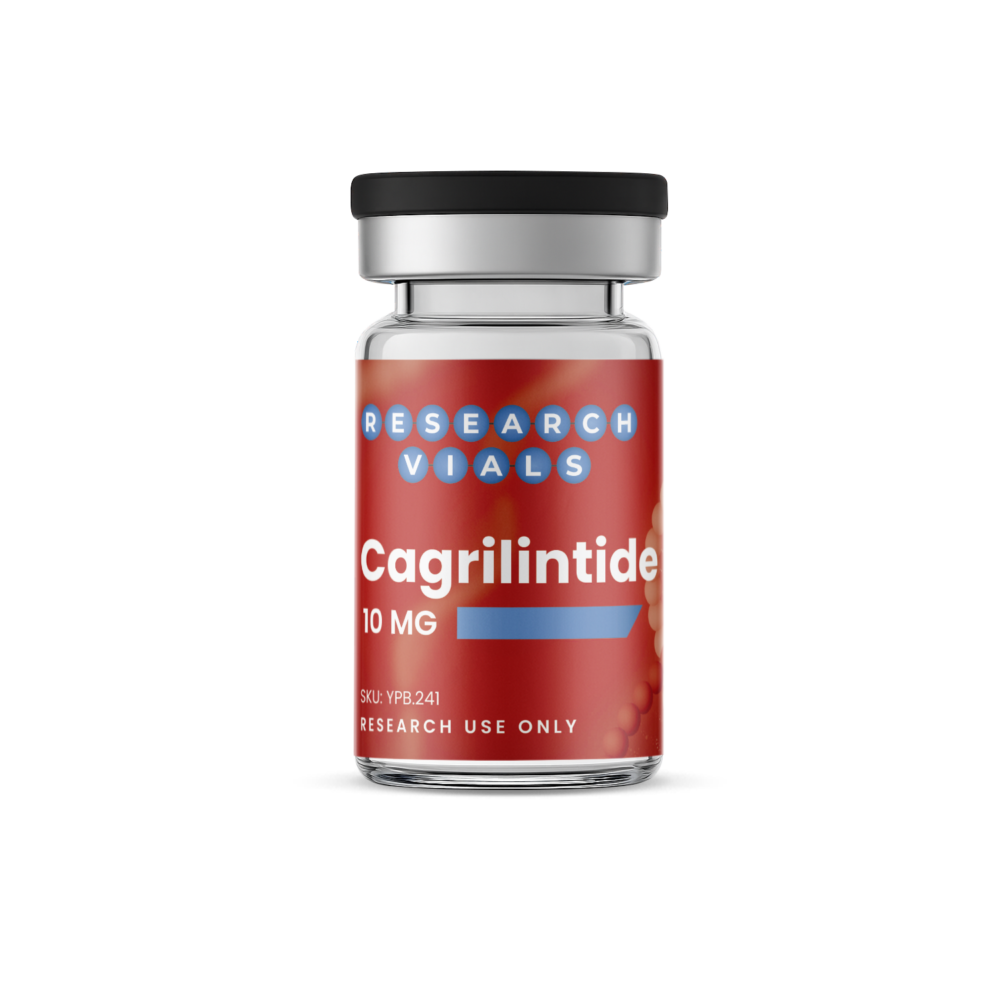
Cagrilintide 10mg
Cagrilintide
Acylated amylin analogue (proprietary modifications)
Overview
Cagrilintide is a long-acting acylated analogue of human amylin (islet amyloid polypeptide, IAPP), developed by Novo Nordisk. Amylin is a 37-amino-acid peptide hormone co-secreted with insulin from pancreatic beta cells in response to nutrient ingestion. Native amylin promotes satiety, slows gastric emptying, and suppresses postprandial glucagon release, but its extremely short half-life (~13 minutes) and tendency to aggregate limit its direct therapeutic application. Cagrilintide incorporates amino acid modifications and a fatty acid side chain (acylation) that enable albumin binding, extending the half-life to approximately 7 days and allowing once-weekly dosing. It activates the calcitonin receptor/receptor activity-modifying protein (RAMP) complex system, particularly CT receptor + RAMP1/2/3 heterodimers, in the area postrema and nucleus of the solitary tract — brainstem regions that integrate satiety signals. Phase II clinical trial results showed cagrilintide produced significant dose-dependent weight loss in adults with overweight or obesity. At the highest dose (4.5 mg weekly), participants lost approximately 10.8% of body weight over 26 weeks, compared to 3.0% with placebo. Cagrilintide is being developed both as a standalone agent and in combination with semaglutide (the CagriSema program).
Mechanism of Action
Cagrilintide is a long-acting acylated analogue of human amylin (islet amyloid polypeptide, IAPP), developed by Novo Nordisk. Amylin is a 37-amino-acid peptide hormone co-secreted with insulin from pancreatic beta cells in response to nutrient ingestion. Native amylin promotes satiety, slows gastric emptying, and suppresses postprandial glucagon release, but its extremely short half-life (~13 minutes) and tendency to aggregate limit its direct therapeutic application. Cagrilintide incorporates amino acid modifications and a fatty acid side chain (acylation) that enable albumin binding, extending the half-life to approximately 7 days and allowing once-weekly dosing. It activates the calcitonin receptor/receptor activity-modifying protein (RAMP) complex system, particularly CT receptor + RAMP1/2/3 heterodimers, in the area postrema and nucleus of the solitary tract — brainstem regions that integrate satiety signals. Phase II clinical trial results showed cagrilintide produced significant dose-dependent weight loss in adults with overweight or obesity. At the highest dose (4.5 mg weekly), participants lost approximately 10.8% of body weight over 26 weeks, compared to 3.0% with placebo. Cagrilintide is being developed both as a standalone agent and in combination with semaglutide (the CagriSema program).
Key Research Findings
- Lau et al. (2021) showed cagrilintide at 4.5 mg weekly produced 10.8% weight loss over 26 weeks in a Phase II trial, significantly exceeding placebo.
- Hay et al. (2015) comprehensively reviewed amylin receptor pharmacology and the calcitonin receptor/RAMP system that mediates amylin's effects.
- Lutz (2010) reviewed amylin's role in energy homeostasis and meal-size control, establishing the neurobiological basis for amylin-based therapeutics.
- Enebo et al. (2021) showed cagrilintide plus semaglutide produced greater weight loss than either agent alone.
Citations & References
Once-weekly cagrilintide for weight management in people with overweight and obesity
Lau DCW, Erichsen L, Francisco-Ziller N, et al. — Lancet (2021)
Amylin: pharmacology, physiology, and clinical potential
Hay DL, Chen S, Lutz TA, et al. — Pharmacol Rev (2015)
The role of amylin in the control of energy homeostasis
Lutz TA. — Am J Physiol Regul Integr Comp Physiol (2010)
Dosage in Research
Phase II trials studied 0.3-4.5 mg subcutaneously once weekly with dose escalation. The CagriSema program combines 2.4 mg cagrilintide + 2.4 mg semaglutide weekly.
Dosage information is derived from published research literature and is presented for educational purposes only. This is not medical advice. All products are for laboratory research use only.
Storage & Handling
Store lyophilized (freeze-dried) powder at -20°C to 4°C in a dry environment protected from light. Unreconstituted peptide is stable for extended periods when stored properly.
Once reconstituted with bacteriostatic water or an appropriate solvent, store at 2-8°C and use within the timeframe specified on the Certificate of Analysis. Avoid repeated freeze-thaw cycles.
A Certificate of Analysis documenting purity, identity, and recommended storage conditions is included with every order.
Frequently Asked Questions
What is Cagrilintide 10mg?
What purity is your Cagrilintide 10mg?
How should I store Cagrilintide 10mg?
Is Cagrilintide 10mg for human use?
Where can I buy Cagrilintide 10mg?
Research Use Only
All products are intended for laboratory research and educational purposes only. Products have not been evaluated by the FDA and are not intended for human consumption, diagnosis, treatment, or prevention of any disease. Purchasers must be 21+ and confirm research use intent.