
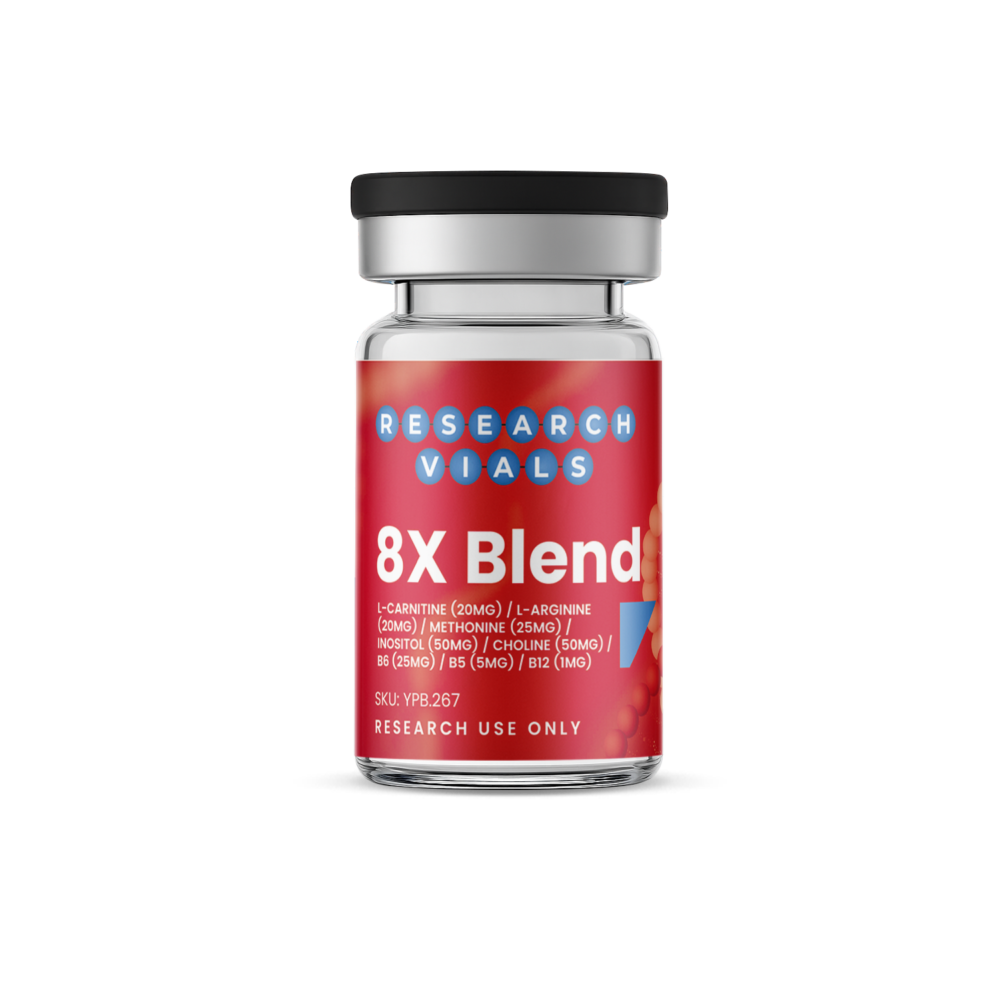
8X Blend (Carnitine/Arginine/Methionine/Inositol/Choline/B6/B5/B12)
8X Lipotropic Blend (L-Carnitine/L-Arginine/L-Methionine/Inositol/Choline/B6/B5/B12)
Blend of amino acids, vitamins, and lipotropic factors
Overview
This eight-component lipotropic blend combines amino acids and B-vitamins that support fat metabolism, methylation, and energy production through complementary biochemical pathways. Each component targets a specific metabolic bottleneck: L-Carnitine shuttles long-chain fatty acids across the inner mitochondrial membrane via the carnitine palmitoyltransferase (CPT) system, enabling beta-oxidation. Without adequate carnitine, fat cannot be efficiently converted to energy. L-Arginine serves as the substrate for nitric oxide synthase (NOS) and participates in the urea cycle; it also stimulates growth hormone release and improves vascular function. L-Methionine is an essential amino acid that donates methyl groups (via S-adenosylmethionine/SAM) for critical methylation reactions and is a lipotropic factor that prevents fatty liver. Inositol (a B-vitamin-like molecule) is a component of cell membranes and participates in insulin signaling as part of the phosphatidylinositol pathway. Choline is a lipotropic factor essential for VLDL assembly and hepatic fat export; deficiency causes fatty liver. Vitamin B6 (pyridoxine) is a cofactor for over 100 enzymes including those in amino acid metabolism. Vitamin B5 (pantothenic acid/dexpanthenol) is a precursor to Coenzyme A, essential for fatty acid synthesis and oxidation. Vitamin B12 is required for methionine synthase and methylmalonyl-CoA mutase, linking methylation and mitochondrial metabolism. The rationale for combining these eight components is that fat metabolism requires simultaneous support across transport (carnitine), oxidation (B5/CoA), methylation (methionine, B12, choline), and cellular signaling (inositol, arginine) pathways. A deficiency in any single component can bottleneck the entire process.
Mechanism of Action
This eight-component lipotropic blend combines amino acids and B-vitamins that support fat metabolism, methylation, and energy production through complementary biochemical pathways. Each component targets a specific metabolic bottleneck: L-Carnitine shuttles long-chain fatty acids across the inner mitochondrial membrane via the carnitine palmitoyltransferase (CPT) system, enabling beta-oxidation. Without adequate carnitine, fat cannot be efficiently converted to energy. L-Arginine serves as the substrate for nitric oxide synthase (NOS) and participates in the urea cycle; it also stimulates growth hormone release and improves vascular function. L-Methionine is an essential amino acid that donates methyl groups (via S-adenosylmethionine/SAM) for critical methylation reactions and is a lipotropic factor that prevents fatty liver. Inositol (a B-vitamin-like molecule) is a component of cell membranes and participates in insulin signaling as part of the phosphatidylinositol pathway. Choline is a lipotropic factor essential for VLDL assembly and hepatic fat export; deficiency causes fatty liver. Vitamin B6 (pyridoxine) is a cofactor for over 100 enzymes including those in amino acid metabolism. Vitamin B5 (pantothenic acid/dexpanthenol) is a precursor to Coenzyme A, essential for fatty acid synthesis and oxidation. Vitamin B12 is required for methionine synthase and methylmalonyl-CoA mutase, linking methylation and mitochondrial metabolism. The rationale for combining these eight components is that fat metabolism requires simultaneous support across transport (carnitine), oxidation (B5/CoA), methylation (methionine, B12, choline), and cellular signaling (inositol, arginine) pathways. A deficiency in any single component can bottleneck the entire process.
Key Research Findings
- Pekala et al. (2011) reviewed L-carnitine's essential role in mitochondrial fatty acid transport and its metabolic significance in energy production.
- Zeisel & da Costa (2009) demonstrated choline is essential for hepatic VLDL assembly and fat export, and that deficiency causes fatty liver in humans.
- Croze & Soulage (2013) reviewed inositol's role in insulin signaling and its potential therapeutic applications in metabolic syndrome.
- Brosnan & Brosnan (2006) reviewed methionine as a methyl donor and its role in the one-carbon metabolism cycle.
Citations & References
L-carnitine--metabolic functions and meaning in humans life
Pekala J, Patkowska-Sokola B, Bodkowski R, et al. — Curr Drug Metab (2011)
Choline: an essential nutrient for public health
Zeisel SH, da Costa KA. — Nutr Rev (2009)
Potential role and therapeutic interests of myo-inositol in metabolic diseases
Croze ML, Soulage CO. — Biochimie (2013)
Dosage in Research
Component doses vary by formulation. Typical lipotropic blend research references: L-carnitine 500-2000 mg, methionine 25-50 mg, choline 50-100 mg, inositol 50-100 mg, B12 1000 mcg, B6 50-100 mg, B5 50-100 mg per administration.
Dosage information is derived from published research literature and is presented for educational purposes only. This is not medical advice. All products are for laboratory research use only.
Storage & Handling
Store at 2-8°C (refrigerated). Keep away from direct light. Do not freeze unless specified. Check the Certificate of Analysis for batch-specific storage recommendations and expiration dating.
Frequently Asked Questions
What is 8X Blend (Carnitine/Arginine/Methionine/Inositol/Choline/B6/B5/B12)?
What purity is your 8X Blend (Carnitine/Arginine/Methionine/Inositol/Choline/B6/B5/B12)?
How should I store 8X Blend (Carnitine/Arginine/Methionine/Inositol/Choline/B6/B5/B12)?
Is 8X Blend (Carnitine/Arginine/Methionine/Inositol/Choline/B6/B5/B12) for human use?
Where can I buy 8X Blend (Carnitine/Arginine/Methionine/Inositol/Choline/B6/B5/B12)?
Research Use Only
All products are intended for laboratory research and educational purposes only. Products have not been evaluated by the FDA and are not intended for human consumption, diagnosis, treatment, or prevention of any disease. Purchasers must be 21+ and confirm research use intent.