
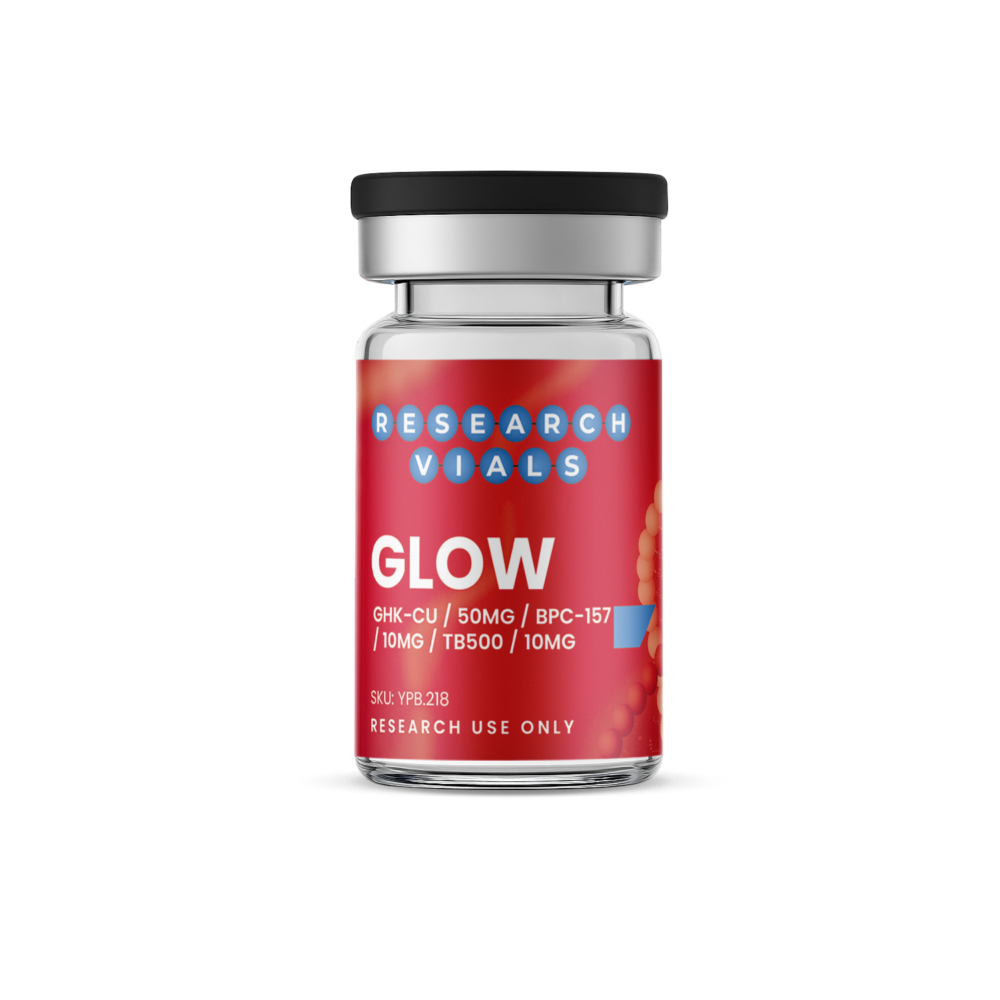
GLOW GHK-Cu (50mg) / BPC-157 (10mg) / TB500 (10mg)
Glow Blend (GHK-Cu / BPC-157 / TB-500)
Blend - multiple peptide sequences
Overview
The Glow Blend combines three peptides with complementary tissue-repair and skin-remodeling mechanisms. GHK-Cu (copper tripeptide-1) is the primary cosmetic-active component, directly stimulating collagen and glycosaminoglycan synthesis in dermal fibroblasts while modulating matrix metalloproteinases for organized tissue remodeling. Its gene expression effects span over 4,000 genes related to tissue repair, antioxidant defense, and inflammation suppression. BPC-157 adds a potent pro-angiogenic dimension to the blend. By upregulating VEGF and its receptors, BPC-157 promotes the formation of new blood vessels that are essential for delivering nutrients and oxygen to regenerating tissue. Its interaction with the nitric oxide system provides additional support for vascular function and tissue healing. BPC-157's broad cytoprotective properties complement GHK-Cu's remodeling activity. TB-500 (thymosin beta-4 fragment) contributes through its unique mechanism of sequestering G-actin monomers and promoting actin polymerization, which is the driving force behind cell migration. In wound healing, cell migration is often the rate-limiting step — keratinocytes and fibroblasts must physically move into the wound bed before repair can occur. TB-500 facilitates this migration while also exhibiting anti-inflammatory effects through suppression of NF-kB-mediated cytokine release. The combination of these three peptides addresses wound healing at multiple levels: vascular supply (BPC-157), matrix remodeling (GHK-Cu), and cellular migration (TB-500).
Mechanism of Action
The Glow Blend combines three peptides with complementary tissue-repair and skin-remodeling mechanisms. GHK-Cu (copper tripeptide-1) is the primary cosmetic-active component, directly stimulating collagen and glycosaminoglycan synthesis in dermal fibroblasts while modulating matrix metalloproteinases for organized tissue remodeling. Its gene expression effects span over 4,000 genes related to tissue repair, antioxidant defense, and inflammation suppression. BPC-157 adds a potent pro-angiogenic dimension to the blend. By upregulating VEGF and its receptors, BPC-157 promotes the formation of new blood vessels that are essential for delivering nutrients and oxygen to regenerating tissue. Its interaction with the nitric oxide system provides additional support for vascular function and tissue healing. BPC-157's broad cytoprotective properties complement GHK-Cu's remodeling activity. TB-500 (thymosin beta-4 fragment) contributes through its unique mechanism of sequestering G-actin monomers and promoting actin polymerization, which is the driving force behind cell migration. In wound healing, cell migration is often the rate-limiting step — keratinocytes and fibroblasts must physically move into the wound bed before repair can occur. TB-500 facilitates this migration while also exhibiting anti-inflammatory effects through suppression of NF-kB-mediated cytokine release. The combination of these three peptides addresses wound healing at multiple levels: vascular supply (BPC-157), matrix remodeling (GHK-Cu), and cellular migration (TB-500).
Key Research Findings
- Pickart et al. (2015) showed GHK-Cu resets gene expression patterns associated with tissue destruction toward regenerative profiles, affecting 4,048 genes.
- Sikiric et al. (2018) demonstrated BPC-157's broad cytoprotective and angiogenic effects through the NO system across multiple tissue types.
- Malinda et al. (1999) showed thymosin beta-4 promotes dermal wound healing by accelerating keratinocyte migration and reducing inflammation in full-thickness wound models.
- Siméon et al. (1999) demonstrated GHK-Cu modulates MMP expression in wounds, enabling organized remodeling rather than scar formation.
Citations & References
GHK peptide as a natural modulator of multiple cellular pathways in skin regeneration
Pickart L, Vasquez-Soltero JM, Margolina A. — Biomed Res Int (2015)
Thymosin beta4 accelerates wound healing
Malinda KM, Sidhu GS, Mani H, et al. — J Invest Dermatol (1999)
Stable gastric pentadecapeptide BPC 157 and wound healing
Sikiric P, Hahm KB, Blagaic AB, et al. — Front Pharmacol (2018)
Dosage in Research
As a blend, specific ratios vary by formulation. Individual component research doses: GHK-Cu at 1-10 micromolar topically; BPC-157 at 10 mcg/kg in animal models; TB-500 at 6 mg loading dose protocols in equine research.
Dosage information is derived from published research literature and is presented for educational purposes only. This is not medical advice. All products are for laboratory research use only.
Storage & Handling
Store lyophilized (freeze-dried) powder at -20°C to 4°C in a dry environment protected from light. Unreconstituted peptide is stable for extended periods when stored properly.
Once reconstituted with bacteriostatic water or an appropriate solvent, store at 2-8°C and use within the timeframe specified on the Certificate of Analysis. Avoid repeated freeze-thaw cycles.
A Certificate of Analysis documenting purity, identity, and recommended storage conditions is included with every order.
Frequently Asked Questions
What is GLOW GHK-Cu (50mg) / BPC-157 (10mg) / TB500 (10mg)?
What purity is your GLOW GHK-Cu (50mg) / BPC-157 (10mg) / TB500 (10mg)?
How should I store GLOW GHK-Cu (50mg) / BPC-157 (10mg) / TB500 (10mg)?
Is GLOW GHK-Cu (50mg) / BPC-157 (10mg) / TB500 (10mg) for human use?
Where can I buy GLOW GHK-Cu (50mg) / BPC-157 (10mg) / TB500 (10mg)?
Research Use Only
All products are intended for laboratory research and educational purposes only. Products have not been evaluated by the FDA and are not intended for human consumption, diagnosis, treatment, or prevention of any disease. Purchasers must be 21+ and confirm research use intent.