
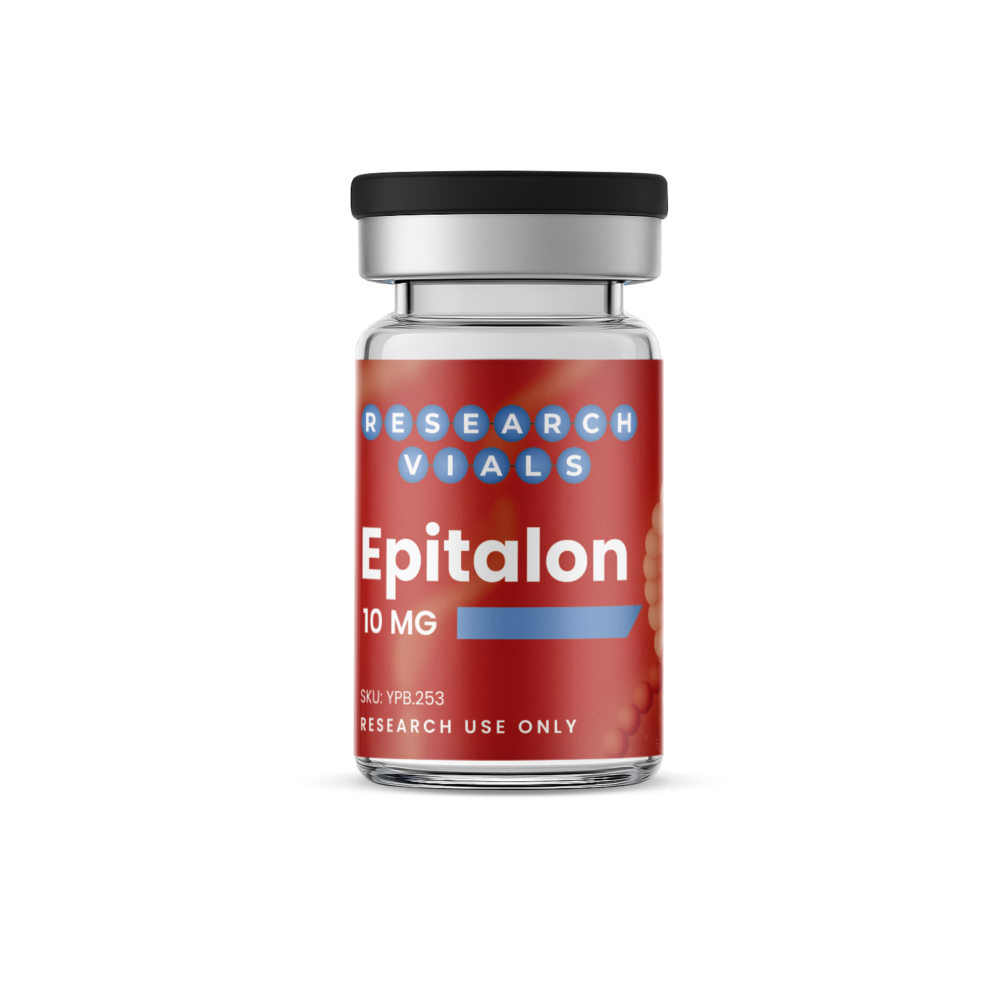
Epitalon
Epithalon (Epitalon)
Ala-Glu-Asp-Gly
Overview
Epitalon is a synthetic tetrapeptide based on the naturally occurring peptide epithalamin, which is extracted from the pineal gland. Developed by Professor Vladimir Khavinson at the St. Petersburg Institute of Bioregulation and Gerontology, epitalon is the most extensively studied of the Khavinson peptide bioregulators. Its primary mechanism of action involves activation of telomerase, the enzyme responsible for maintaining telomere length at chromosome ends. Telomeres shorten with each cell division, and this progressive shortening is considered a key hallmark of cellular aging. When telomeres become critically short, cells enter senescence or undergo apoptosis. Khavinson and colleagues demonstrated that epitalon can activate telomerase in human somatic cells, leading to elongation of telomeres and extension of cellular lifespan beyond the Hayflick limit. This was shown in human fetal fibroblast cultures where epitalon-treated cells underwent significantly more population doublings than controls. Epitalon also influences melatonin production. As a pineal bioregulator, it has been shown to restore the nocturnal melatonin peak in aged primates, which normally declines with age. This melatonin-related activity provides a secondary mechanism through which epitalon may affect aging processes, given melatonin's roles as an antioxidant and circadian regulator.
Mechanism of Action
Epitalon is a synthetic tetrapeptide based on the naturally occurring peptide epithalamin, which is extracted from the pineal gland. Developed by Professor Vladimir Khavinson at the St. Petersburg Institute of Bioregulation and Gerontology, epitalon is the most extensively studied of the Khavinson peptide bioregulators. Its primary mechanism of action involves activation of telomerase, the enzyme responsible for maintaining telomere length at chromosome ends. Telomeres shorten with each cell division, and this progressive shortening is considered a key hallmark of cellular aging. When telomeres become critically short, cells enter senescence or undergo apoptosis. Khavinson and colleagues demonstrated that epitalon can activate telomerase in human somatic cells, leading to elongation of telomeres and extension of cellular lifespan beyond the Hayflick limit. This was shown in human fetal fibroblast cultures where epitalon-treated cells underwent significantly more population doublings than controls. Epitalon also influences melatonin production. As a pineal bioregulator, it has been shown to restore the nocturnal melatonin peak in aged primates, which normally declines with age. This melatonin-related activity provides a secondary mechanism through which epitalon may affect aging processes, given melatonin's roles as an antioxidant and circadian regulator.
Key Research Findings
- Khavinson et al. (2003) demonstrated epitalon activated telomerase and elongated telomeres in human fetal fibroblasts, extending their replicative lifespan by 44%.
- Anisimov et al. (2001) showed chronic epitalon administration extended maximum lifespan and inhibited spontaneous tumor development in female mice.
- Khavinson & Morozov (2003) reported that long-term treatment with epithalamin (the natural extract) increased maximum lifespan in aged rhesus monkeys.
- Goncharova et al. (2005) demonstrated epitalon restored the nocturnal melatonin peak in old female macaques to levels comparable to young animals.
Citations & References
Epithalon peptide induces telomerase activity and telomere elongation in human somatic cells
Khavinson VKh, Bondarev IE, Butyugov AA. — Bull Exp Biol Med (2003)
Effect of Epitalon on biomarkers of aging, life span and spontaneous tumor incidence in female Swiss-derived SHR mice
Anisimov VN, Khavinson VKh, Popovich IG, et al. — Biogerontology (2003)
Pineal peptides restore the age-related disturbances in hormonal functions of the pineal gland and the pancreas
Goncharova ND, Vengerin AA, Khavinson VKh, Lapin BA. — Exp Gerontol (2005)
Peptides and ageing
Khavinson VKh. — Neuroendocrinol Lett (2002)
Dosage in Research
Animal studies have used doses of 0.1-1 mcg per animal in rodents. In primate studies, epithalamin was administered at doses equivalent to 10-20 mg of the natural extract. In vitro telomerase activation studies used micromolar concentrations.
Dosage information is derived from published research literature and is presented for educational purposes only. This is not medical advice. All products are for laboratory research use only.
Storage & Handling
Store lyophilized (freeze-dried) powder at -20°C to 4°C in a dry environment protected from light. Unreconstituted peptide is stable for extended periods when stored properly.
Once reconstituted with bacteriostatic water or an appropriate solvent, store at 2-8°C and use within the timeframe specified on the Certificate of Analysis. Avoid repeated freeze-thaw cycles.
A Certificate of Analysis documenting purity, identity, and recommended storage conditions is included with every order.
Frequently Asked Questions
What is Epitalon?
What purity is your Epitalon?
How should I store Epitalon?
Is Epitalon for human use?
Where can I buy Epitalon?
Research Use Only
All products are intended for laboratory research and educational purposes only. Products have not been evaluated by the FDA and are not intended for human consumption, diagnosis, treatment, or prevention of any disease. Purchasers must be 21+ and confirm research use intent.