5-amino-1mq
A selective NNMT (nicotinamide N-methyltransferase) inhibitor studied for its effects on NAD+ salvage pathways, energy metabolism, and adipocyte differentiation.
28 research-grade peptides with peer-reviewed citations, mechanisms of action, and comprehensive research profiles. All products available through Research Vials.
28 research peptides
Shop All
A selective NNMT (nicotinamide N-methyltransferase) inhibitor studied for its effects on NAD+ salvage pathways, energy metabolism, and adipocyte differentiation.
A modified fragment of human growth hormone (hGH 177-191) researched for its role in lipolytic activity without affecting IGF-1 levels or insulin resistance.
Vitamin B12 (cyanocobalamin/methylcobalamin) in solution form, an essential cofactor studied for its role in methylation pathways, red blood cell formation, and neurological function.
A pentadecapeptide derived from human gastric juice, extensively studied for its cytoprotective and wound-healing properties in gastrointestinal, tendon, and ligament tissue models.
A GHRH analog conjugated with a Drug Affinity Complex for extended half-life, researched for sustained growth hormone elevation and prolonged GHRH receptor activation.
A modified GRF(1-29) analog without the Drug Affinity Complex, studied for pulsatile GH release patterns and shorter half-life GHRH receptor activation.
A synthetic tetrapeptide (Ala-Glu-Asp-Gly) studied for its role in telomerase activation and pineal gland function, with research focusing on cellular senescence and longevity pathways.
A copper-binding tripeptide naturally found in human plasma, researched for its effects on collagen synthesis, wound healing, anti-inflammatory signaling, and gene expression modulation.
A three-peptide blend combining GHK-Cu, BPC-157, and TB-500, studied for potential synergistic effects on tissue repair, collagen remodeling, and regenerative signaling pathways.
Research-grade GLP-2 TZ for laboratory use. Available for qualified researchers.
A next-generation GLP receptor agonist compound studied in metabolic research for its effects on glucose homeostasis and incretin signaling.
A tripeptide (Glu-Cys-Gly) that is the primary intracellular antioxidant, studied for its role in oxidative stress defense, detoxification pathways, and immune cell function.
A selective growth hormone secretagogue that acts on the ghrelin receptor (GHS-R), studied for its ability to stimulate GH release without significantly affecting cortisol or prolactin levels.
A neuropeptide that activates the GPR54 receptor, studied for its critical role in GnRH neuron regulation, reproductive endocrinology, and puberty onset mechanisms.
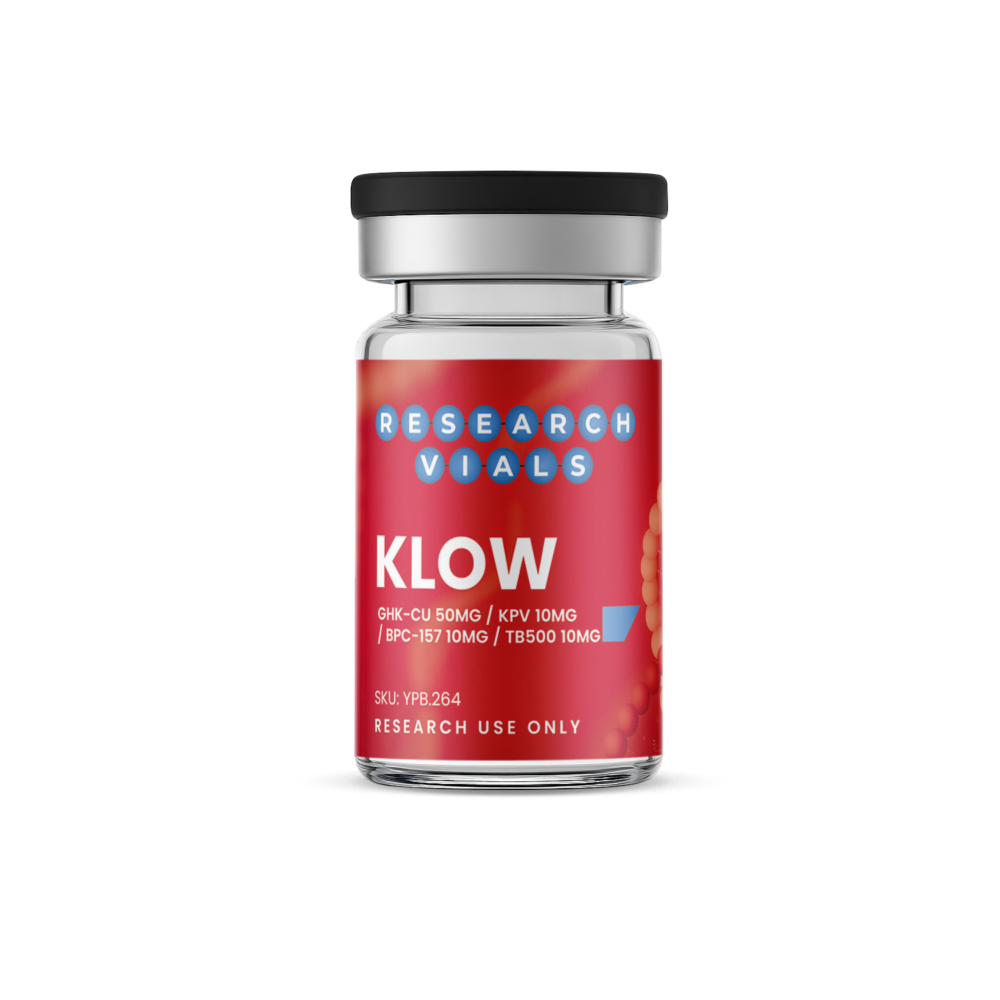
A four-peptide blend incorporating GHK-Cu, KPV, BPC-157, and TB-500, investigated for combined anti-inflammatory, tissue-repair, and regenerative research applications.
A human cathelicidin antimicrobial peptide studied for its broad-spectrum antimicrobial activity, immune cell chemotaxis, and role in innate immune defense mechanisms.
KPV tripeptide (Lys-Pro-Val), an alpha-MSH-derived fragment studied for anti-inflammatory activity through NF-kB pathway modulation and mucosal immune regulation.
A mitochondrial-derived peptide encoded in the 12S rRNA gene, studied for its role in metabolic homeostasis, AMPK activation, and exercise mimetic effects.
Nicotinamide adenine dinucleotide at standard research concentration, studied for its central role in redox reactions, mitochondrial function, and sirtuin-mediated pathways.
Sterile bacteriostatic water containing 0.9% benzyl alcohol as a preservative, used for reconstitution of lyophilized research compounds in laboratory settings.
A higher-dose formulation of the tuftsin-derived peptide Selank, investigated for nootropic, anxiolytic, and immunomodulatory activity in research models.
A synthetic ACTH(4-10) analog with a Pro-Gly-Pro C-terminal extension, studied for neurotrophic effects including BDNF upregulation, cognitive enhancement, and neuroprotection.
An ERR (estrogen-related receptor) agonist compound researched as an exercise mimetic, studied for its effects on mitochondrial biogenesis and endurance-related gene expression.
Elamipretide, a mitochondria-targeted peptide that concentrates at the inner mitochondrial membrane, studied for its role in cardiolipin stabilization and mitochondrial bioenergetics.
A synthetic GHRH analog studied for its effects on growth hormone secretion and reduction of visceral adipose tissue in research settings.
A thymic peptide bioregulator researched for its immunomodulatory effects and role in T-cell maturation, thymus function restoration, and neuroendocrine-immune interactions.
A lower-dose form of Thymosin Beta-4, studied for actin-binding activity, cell motility, and wound healing in tissue repair research.
A lower-dose BPC-157/TB-500 blend for research protocols requiring reduced peptide concentrations while maintaining dual-peptide synergistic study potential.