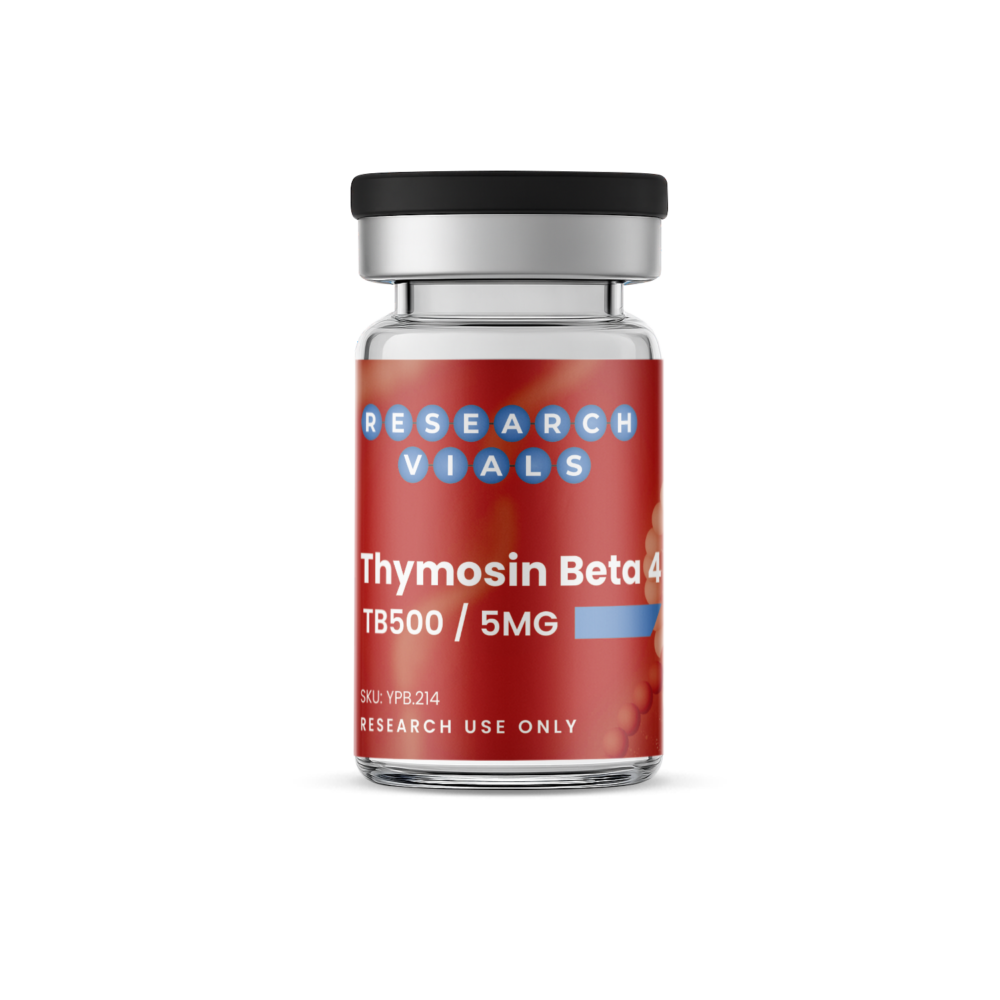
Thymosin Beta-4 (TB-500) ranks among the most studied peptides in tissue repair and regenerative research. As one of the most abundant actin-sequestering proteins in mammalian cells, its role in cell migration, angiogenesis, and anti-inflammatory signaling has attracted attention from researchers across cardiovascular, dermatological, ophthalmological, and musculoskeletal disciplines.
What Is Thymosin Beta-4?
Thymosin Beta-4 is a 43-amino acid peptide (molecular weight ~4,921 Da) first isolated from the thymus gland. Despite its name suggesting thymic origin, TB-4 is expressed in virtually all nucleated cells and is found at particularly high concentrations in platelets and wound fluid. Its primary intracellular function is sequestering monomeric G-actin, which regulates the polymerization dynamics of actin filaments — the structural backbone of cell motility.
The synthetic research compound TB-500 corresponds to the active region of Thymosin Beta-4 and is used in laboratory settings to study the peptide's biological activities in controlled experimental conditions.
How Does TB-500 Work in Research Models?
Actin Binding and Cell Migration
The central molecular function of TB-4 is binding to monomeric G-actin via its WH2 (WASP homology 2) domain. By sequestering G-actin, TB-4 prevents premature polymerization and maintains a pool of actin monomers available for directed assembly at the leading edge of migrating cells. This is critical during wound healing, where keratinocytes, endothelial cells, and fibroblasts must migrate into the injury site (Goldstein et al., 2005; PMID: 15642989).
Angiogenesis
Multiple studies have demonstrated that TB-4 promotes angiogenesis — the formation of new blood vessels from existing vasculature. In endothelial cell models, TB-4 stimulated tube formation, migration, and survival. In vivo, it promoted collateral vessel growth in ischemic tissue models, an effect linked to upregulation of VEGF and activation of the Akt/PI3K survival pathway (Malinda et al., 1999; PMID: 10464301).
Anti-Inflammatory Activity
TB-4 has demonstrated anti-inflammatory effects in multiple model systems. It downregulates pro-inflammatory cytokines including TNF-alpha and IL-1beta while upregulating anti-inflammatory mediators. In corneal alkali burn models, TB-4 reduced inflammatory cell infiltration and subsequent fibrosis (Sosne et al., 2002; PMID: 12091437).
Cardiac Repair Research
Some of the most compelling TB-4 research has focused on cardiac tissue. In mouse models of myocardial infarction, TB-4 administration reduced infarct size, decreased cardiac fibrosis, and improved ventricular function. The mechanism appears to involve activation of epicardial progenitor cells and promotion of their migration into damaged myocardium, where they can contribute to revascularization (Smart et al., 2007; PMID: 18046414).
A key finding was that TB-4 activates the Akt survival pathway in cardiomyocytes, protecting them from apoptosis during ischemic stress. This cardioprotective effect was observed when TB-4 was administered both before (preconditioning) and after the ischemic event.
Wound Healing and Dermatological Research
TB-4 accelerated wound closure in multiple rodent models, including full-thickness excisional wounds and burn injuries. The peptide promoted all phases of wound healing: inflammation resolution, granulation tissue formation, angiogenesis, and re-epithelialization. In diabetic wound models — where healing is pathologically impaired — TB-4 restored healing rates toward normal levels.
Hair follicle research has also identified TB-4 as a stimulator of hair follicle stem cell migration and differentiation, suggesting potential applications in dermatological research beyond wound healing.
Ophthalmic Research
TB-4 has been studied extensively in corneal injury models. In alkali-burn and mechanical debridement models, topical TB-4 accelerated corneal re-epithelialization, reduced inflammation, and decreased scar formation. RegeneRx Biopharmaceuticals developed RGN-259, a topical TB-4 formulation, which has been studied in human clinical trials for dry eye disease — making it one of the few TB-4 applications to reach clinical-stage investigation.
Research Limitations
While TB-4 research spans multiple organ systems and has reached clinical investigation in ophthalmology, the broader translational picture has limitations. Most musculoskeletal and cardiac data remains preclinical. The peptide's mechanism — modulating fundamental cellular processes like actin dynamics — raises questions about tissue specificity that require further investigation. Researchers should note that TB-500 is classified for research use only.
Sourcing TB-500
Research-grade TB-500 (Thymosin Beta-4) is available in 5mg and 10mg lyophilized vials at researchvials.com, with third-party COA documentation confirming purity and identity.
References
- Goldstein AL, et al. Thymosin beta4: actin-sequestering protein moonlights to repair injured tissues. Trends Mol Med. 2005;11(9):421-9. PMID: 16099219
- Malinda KM, et al. Thymosin beta4 accelerates wound healing. J Invest Dermatol. 1999;113(3):364-8. PMID: 10469334
- Smart N, et al. Thymosin beta4 induces adult epicardial progenitor mobilization and neovascularization. Nature. 2007;445(7124):177-82. PMID: 17108969
- Sosne G, et al. Thymosin beta 4 promotes corneal wound healing. Invest Ophthalmol Vis Sci. 2002;43(7):2163-8. PMID: 12091437
Frequently Asked Questions
Research Use Only Disclaimer: All products referenced in this article are sold exclusively for laboratory research purposes. They are not intended for human or veterinary use, food additive use, drug use, or household use. This article is educational content based on published preclinical literature and does not constitute medical advice.