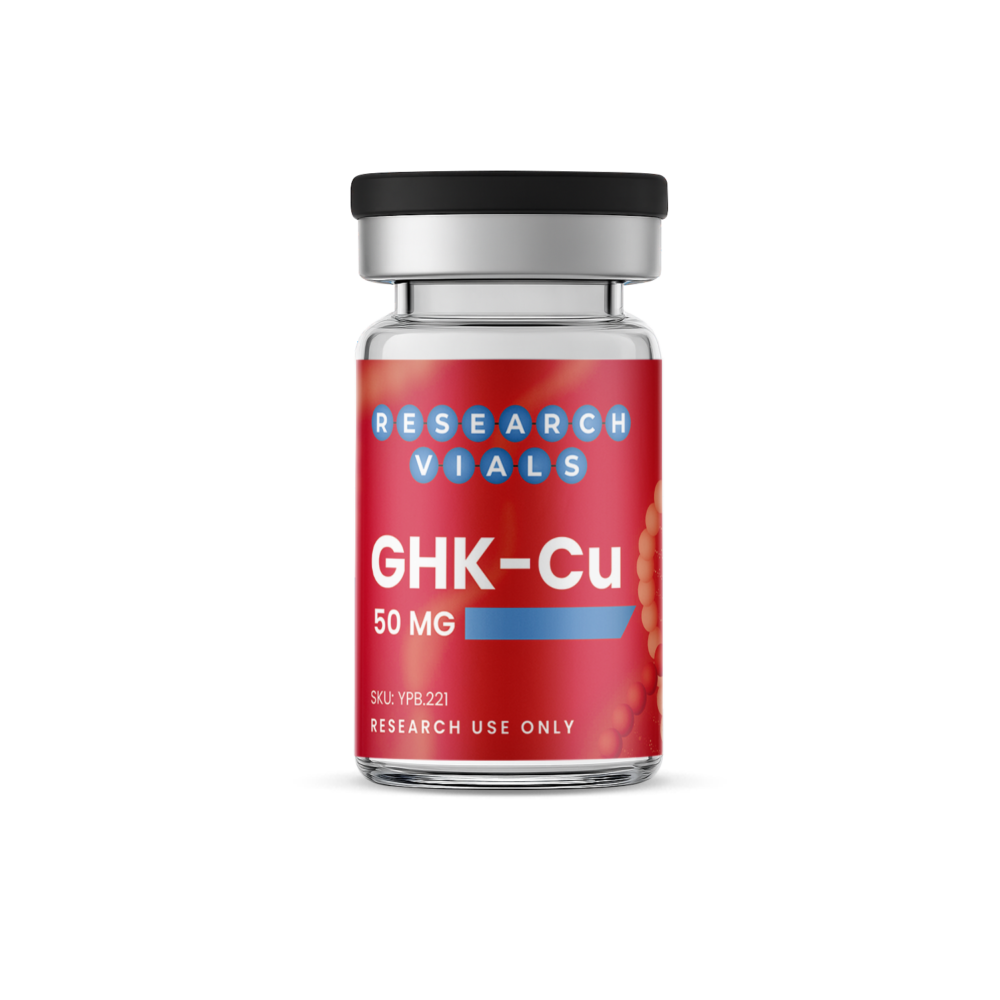
GHK-Cu (glycyl-L-histidyl-L-lysine copper complex) is a naturally occurring tripeptide-copper chelate that has generated substantial research interest since its discovery in human plasma by Loren Pickart in 1973. As one of the few endogenous peptides that declines significantly with age, GHK-Cu has become a focal point in wound healing, anti-aging, and regenerative research.
Molecular Structure and Copper Binding
GHK-Cu consists of three amino acids — glycine, histidine, and lysine — bound to a copper(II) ion with extremely high affinity (Kd ~10⁻¹⁶ M). The histidine residue provides the primary copper coordination site through its imidazole nitrogen. In human plasma, GHK-Cu concentration is approximately 200 ng/mL at age 20, declining to 80 ng/mL by age 60 — a 60% reduction that correlates temporally with diminished wound healing capacity (Pickart et al., 2012; PMID: 23019022).
Collagen Synthesis and Extracellular Matrix Remodeling
GHK-Cu's most established research area is its role in collagen metabolism. The peptide stimulates collagen synthesis in fibroblasts while simultaneously activating collagen-degrading enzymes (MMPs), resulting in a net effect of collagen remodeling rather than simple accumulation. This dual action promotes organized tissue repair rather than fibrotic scarring — a distinction with significant implications for wound healing research.
The copper ion is critical here: it serves as a cofactor for lysyl oxidase, the enzyme responsible for collagen cross-linking. By delivering copper directly to repair sites, GHK-Cu supports the enzymatic infrastructure needed for structurally sound new tissue formation.
Gene Expression Modulation: The Broad Spectrum Effect
A 2014 study by Pickart and colleagues used the Broad Institute's Connectivity Map to analyze GHK-Cu's effects on gene expression, identifying modulation of over 4,000 human genes — approximately 6% of the genome. Key findings included upregulation of genes involved in antioxidant defense, DNA repair, ubiquitin/proteasome system function, and nervous system support, alongside downregulation of genes associated with inflammation and tissue destruction (Pickart et al., 2014).
This exceptionally broad gene-expression profile distinguishes GHK-Cu from most research peptides and has prompted investigation across diverse fields beyond its original wound-healing domain.
Wound Healing Research
In rodent wound models, GHK-Cu has demonstrated acceleration of wound closure, increased granulation tissue formation, enhanced angiogenesis, and improved tensile strength of healed tissue. Notably, GHK-Cu promoted more organized collagen architecture in healed wounds compared to controls — a finding consistent with its dual role in collagen synthesis and remodeling.
Anti-Inflammatory and Antioxidant Properties
GHK-Cu suppresses inflammatory mediators including TGF-beta (at pro-fibrotic concentrations), TNF-alpha, and IL-6. It also upregulates antioxidant enzymes including superoxide dismutase (SOD) and inhibits iron-catalyzed lipid peroxidation through copper chelation effects. These dual anti-inflammatory and antioxidant properties position GHK-Cu as a multifunctional compound in tissue protection research.
Research-Grade GHK-Cu
GHK-Cu is available in 50mg and 100mg lyophilized vials at researchvials.com. Store at -20°C protected from light; reconstituted solutions should be used within 14 days.
References
- Pickart L, et al. The human tripeptide GHK-Cu in prevention of oxidative stress and degenerative conditions of aging. Oxid Med Cell Longev. 2012;2012:324832. PMID: 22666519
- Pickart L, et al. GHK peptide as a natural modulator of multiple cellular pathways in skin regeneration. Biomed Res Int. 2015;2015:648108. PMID: 25866808
Frequently Asked Questions
Research Use Only Disclaimer: All products referenced in this article are sold exclusively for laboratory research purposes. They are not intended for human or veterinary use, food additive use, drug use, or household use. This article is educational content based on published preclinical literature and does not constitute medical advice.