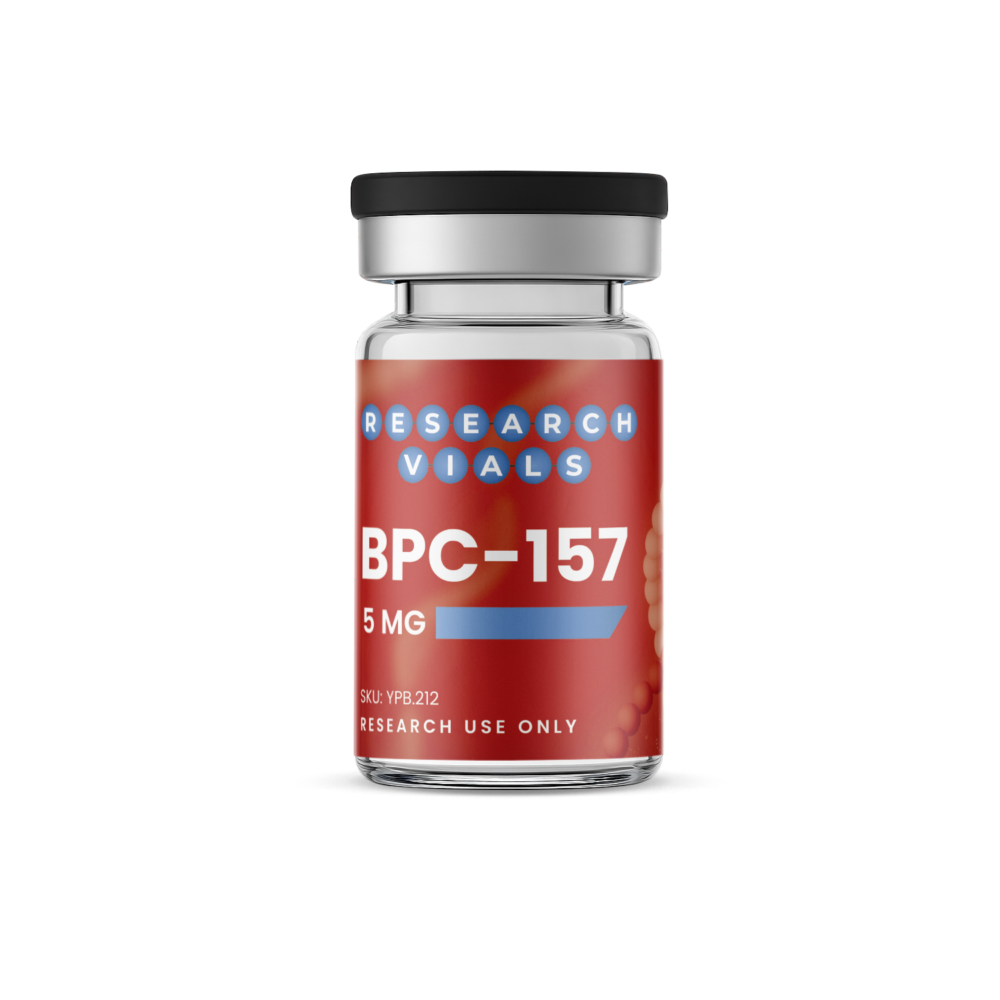
BPC-157, or Body Protection Compound-157, has become one of the most extensively studied cytoprotective peptides in the preclinical research literature. Derived from a naturally occurring protein in human gastric juice, this pentadecapeptide has demonstrated remarkable versatility across gastrointestinal, musculoskeletal, cardiovascular, and neurological research models. Here, we examine the compound from molecular structure through published findings, giving researchers a comprehensive reference point.
Molecular Profile and Structure
BPC-157 is a 15-amino acid peptide with the sequence Gly-Glu-Pro-Pro-Pro-Gly-Lys-Pro-Ala-Asp-Asp-Ala-Gly-Leu-Val and a molecular weight of approximately 1,419 Da. Its CAS number is 137525-51-0. Unlike many bioactive peptides that degrade rapidly in acidic environments, BPC-157 is notably stable in gastric juice — a property first characterized by Sikiric and colleagues at the University of Zagreb in the early 1990s.
This acid stability distinguishes BPC-157 from the vast majority of peptide therapeutics under investigation and has enabled researchers to study both parenteral and oral routes of administration, expanding its experimental utility beyond typical injectable-only compounds.
How Does BPC-157 Work? Proposed Mechanisms
Rather than acting through a single receptor-ligand interaction, BPC-157 appears to engage multiple signaling pathways simultaneously. The published literature identifies several key mechanisms:
VEGF Upregulation and Angiogenesis
Multiple independent studies have demonstrated that BPC-157 upregulates vascular endothelial growth factor (VEGF) and its receptor VEGFR2 at injury sites. This pro-angiogenic activity — the formation of new blood vessels — appears central to its tissue-repair effects. In rat models with ligated vessels, BPC-157 administration led to rapid neovascularization with dose-dependent increases in VEGF expression (Sikiric et al., 2014; PMID: 23755729).
Nitric Oxide System Modulation
BPC-157 interacts with the NO system in a bidirectional manner. In NO-depleted models (L-NAME treatment), it rescues impaired healing. In NO-excess models (L-arginine overload), it attenuates damage. This modulatory capacity suggests the peptide functions as an NO system homeostatic agent rather than a simple agonist or antagonist (Sikiric et al., 2018; PMID: 30574087).
Growth Factor Expression
Beyond VEGF, BPC-157 influences expression of EGF (epidermal growth factor), FGF (fibroblast growth factor), HGF (hepatocyte growth factor), and NGF (nerve growth factor). In tendon fibroblast cultures, it promoted cell survival and migration via FAK-paxillin pathway activation — critical for wound repair (Chang et al., 2011; PMID: 21030672).
Dopaminergic System Interactions
A growing body of preclinical work links BPC-157 to dopaminergic modulation. The peptide counteracts effects of both dopamine agonists and antagonists, functioning as a stabilizer of dopaminergic tone rather than a unidirectional agent. Similar modulatory effects have been observed in the serotonergic system.
Gastrointestinal Research: The Original Domain
Given its origin in gastric juice, the GI tract was the first research area for BPC-157 and remains the most deeply investigated. In rodent models of gastric ulceration induced by ethanol, aspirin, cysteamine, and stress, BPC-157 has consistently demonstrated cytoprotective and healing effects — often matching or exceeding standard treatments in efficacy metrics.
In experimental colitis models (TNBS-induced), BPC-157 reduced both macroscopic and microscopic damage scores, decreased TNF-alpha and IL-6 expression, and improved mucosal healing. These effects were observed with both injectable and oral administration, confirming the peptide's GI tract stability (Sikiric et al., 2011; PMID: 21548867).
Musculoskeletal and Tissue Repair
Tendon, ligament, muscle, and bone repair models constitute the second major research area. In Achilles tendon transection models, BPC-157 accelerated healing with earlier and more organized collagen deposition, improved biomechanical strength, and enhanced tendon-to-bone junction remodeling. Follow-up studies extended these findings to quadriceps tendon, patellar tendon, and medial collateral ligament injuries.
In muscle crush and transection injuries, the peptide promoted myofiber regeneration while reducing fibrotic scar formation. Notably, BPC-157 appeared to preserve neuromuscular junction integrity, suggesting a dual role in muscle and peripheral nerve repair.
Neuroprotection and CNS Research
Neuroprotective applications represent the newest growth area. In sciatic nerve transection models, BPC-157 improved regeneration as measured by electrophysiology and walking track analysis, with associated upregulation of NGF and GAP-43. In traumatic brain injury models, it reduced edema, improved neurological deficit scores, and decreased oxidative stress markers.
Key Limitations and Research Gaps
Despite the extensive preclinical literature, several critical limitations must be acknowledged:
- No human clinical trial data — The vast majority of studies are in rodent models. No large-scale RCTs have been published.
- Research group concentration — A significant portion originates from Prof. Sikiric's laboratory at the University of Zagreb. Broader independent replication would strengthen the evidence base.
- PK/PD gaps — Systematic pharmacokinetic profiling (half-life, bioavailability, tissue distribution) has not been extensively published.
- Long-term safety — While acute toxicology appears favorable, long-term safety data of the type required for clinical development is limited.
Sourcing BPC-157 for Research
When selecting a supplier for BPC-157, researchers should verify: peptide purity via HPLC (minimum 98%), mass spectrometry confirmation of molecular identity, and availability of a Certificate of Analysis for each batch. Research Vials provides BPC-157 in 5mg, 10mg, and 20mg vials with third-party testing documentation available at researchvials.com.
References
- Sikiric P, et al. Stable gastric pentadecapeptide BPC 157: novel therapy in gastrointestinal tract. Curr Pharm Des. 2011;17(16):1612-32. PMID: 21548867
- Chang CH, et al. The promoting effect of pentadecapeptide BPC 157 on tendon healing. J Appl Physiol. 2011;110(3):774-80. PMID: 21030672
- Sikiric P, et al. Stable gastric pentadecapeptide BPC 157-NO-system relation. Curr Pharm Des. 2014;20(7):1126-35. PMID: 23755729
- Sikiric P, et al. Robert's cytoprotection, adaptive cytoprotection. Front Pharmacol. 2018;9:1403. PMID: 30574087
Frequently Asked Questions
Research Use Only Disclaimer: All products referenced in this article are sold exclusively for laboratory research purposes. They are not intended for human or veterinary use, food additive use, drug use, or household use. This article is educational content based on published preclinical literature and does not constitute medical advice.