
In research peptide procurement, the phrase "third-party tested" is frequently used but rarely explained in depth. For researchers whose experimental results depend directly on compound purity and identity, understanding what third-party testing entails -- and how to verify it -- is not optional. This article dissects the analytical methods, explains how to interpret test results, and provides a practical verification framework.
Why Third-Party Testing Matters
The fundamental issue is conflict of interest. When a peptide supplier performs its own quality testing, there is an inherent financial incentive to report favorable results. Even with the best intentions, in-house testing lacks the independent verification that scientific rigor demands. Consider the analogy: published research requires independent peer review precisely because self-assessment is insufficient for establishing credibility.
Third-party testing addresses this by having an independent laboratory -- one that profits equally regardless of whether the sample passes or fails -- perform the analytical work. The testing lab has no financial interest in the result, making their assessment inherently more trustworthy.
HPLC Testing Explained
High-Performance Liquid Chromatography (HPLC) is the primary method for determining peptide purity. Here's how it works:
The Process
- The peptide sample is dissolved in a suitable solvent (typically water with 0.1% TFA or acetonitrile)
- The solution is injected into a column packed with stationary phase material (usually C18 reversed-phase)
- A mobile phase gradient (water/acetonitrile) flows through the column at high pressure
- Different components of the sample separate based on their hydrophobicity -- the target peptide and any impurities elute at different retention times
- A UV detector (typically at 214 nm or 220 nm wavelength, which detects peptide bonds) records the signal as each component elutes
- The resulting chromatogram shows peaks corresponding to each component, with peak area proportional to quantity
Reading the Chromatogram
A good HPLC chromatogram for a research peptide should show:
- Single dominant peak: The target peptide should appear as one major peak representing >= 98% of total peak area
- Flat baseline: The baseline between peaks should be flat, indicating good separation and low background noise
- Consistent retention time: The target peak should elute at a retention time consistent with the peptide's hydrophobicity
- Minor impurity peaks: Small peaks at different retention times represent impurities -- their total area should be <= 2% for 98%+ purity compounds
Mass Spectrometry: Identity Confirmation
While HPLC tells you how pure a sample is, mass spectrometry (MS) tells you what it is. This distinction is critical -- a sample could be 99% pure but contain the wrong peptide entirely.
Key MS Methods for Peptides
- MALDI-TOF: Matrix-Assisted Laser Desorption/Ionization Time-of-Flight. Fast, sensitive, and well-suited for peptides in the 500-5000 Da range. Provides accurate molecular weight measurement
- ESI-MS: Electrospray Ionization Mass Spectrometry. Produces multiply charged ions, useful for larger peptides. Often coupled with HPLC (LC-MS) for simultaneous separation and identification
Interpreting MS Data
The MS report should show the observed molecular weight matching the theoretical (calculated) molecular weight within acceptable tolerance:
- MALDI-TOF: Typically +/- 0.1% mass accuracy (e.g., for a 1500 Da peptide, observed mass should be within +/- 1.5 Da)
- ESI-MS: Often higher accuracy, especially with high-resolution instruments
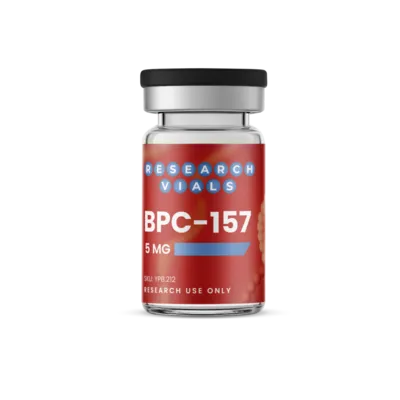
For example, BPC-157 has a theoretical molecular weight of 1419.53 Da. A valid MS report would show an observed mass of 1419.5 +/- 1.4 Da. If the observed mass differs significantly, the sample may not be the target peptide.
Anatomy of a Reliable COA
A Certificate of Analysis from a reputable testing laboratory should include all of the following elements:
| Element | What to Look For | Red Flag |
|---|---|---|
| Testing Lab Name | Identifiable, verifiable lab | Generic or unnamed lab |
| Date of Analysis | Recent date, specific to batch | No date or very old date |
| Batch/Lot Number | Matches your vial label | No batch number |
| HPLC Purity | >= 98% with chromatogram | No chromatogram attached |
| MS Data | Observed mass matching theory | No mass spec data |
| Appearance | White to off-white lyophilized powder | No appearance description |
Practical Verification Steps
Follow this checklist when verifying a peptide supplier's third-party testing claims:
- Locate the COA: It should be accessible on the product page or available immediately upon request. If you have to "email for COA," that is a minor red flag
- Identify the testing lab: Search for the lab independently. Do they have their own website? Do they appear in analytical laboratory directories?
- Cross-reference the batch: Does the lot number on your COA match the lot number printed on your product vial?
- Review the chromatogram: Does it show a clean, dominant peak? Is the purity calculation methodology clear (area normalization vs external standard)?
- Check mass spec data: Does the observed molecular weight match the expected value within instrument tolerance?
- Contact the lab (optional): For critical research, you can contact the testing laboratory directly to confirm they analyzed the stated batch
Research Vials Testing Standards
Research Vials subjects all products to third-party HPLC and mass spectrometry analysis at independent US laboratories. Batch-specific COAs are maintained for every product and are available to customers. This commitment to transparency extends to the educational resources on this site, where we aim to provide the same level of scientific rigor in our content as we demand in our product testing.
Conclusion
Third-party testing is not a marketing buzzword -- it is the minimum standard for credible research peptide quality assurance. By understanding the analytical methods, knowing how to read a COA, and following a systematic verification process, researchers can ensure that their compounds meet the quality standards their work demands. Never accept a supplier's purity claims at face value when the tools to verify them are readily available.
Frequently Asked Questions
Research Use Only Disclaimer: All products referenced in this article are sold exclusively for laboratory research purposes. They are not intended for human or veterinary use, food additive use, drug use, or household use. This article is educational content based on published preclinical literature and does not constitute medical advice.