
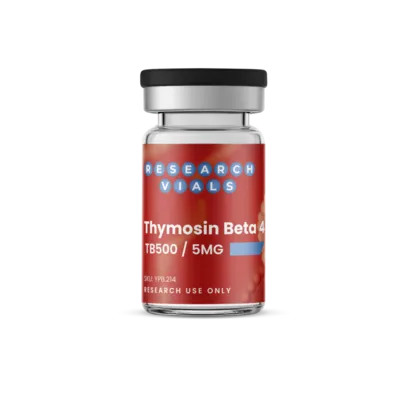
TB-500, the synthetic form of Thymosin Beta-4 (Tbeta4), is one of the most extensively studied peptides in cell biology and tissue repair research. As the primary intracellular G-actin sequestering protein, Tbeta4 plays a fundamental role in cytoskeletal dynamics -- the structural framework that enables cell migration, division, and morphological change. This guide provides a thorough examination of TB-500's molecular mechanism, published research, and practical information for laboratory procurement.
Molecular Biology of Thymosin Beta-4
Thymosin Beta-4 is a 43-amino acid peptide (molecular weight ~4,921 Da) originally isolated from calf thymus extract in the 1960s. Despite its name suggesting thymic origin, Tbeta4 is expressed ubiquitously -- it is found in virtually every mammalian cell type, with particularly high concentrations in platelets, macrophages, and neutrophils (cells that are among the first to arrive at sites of tissue injury).
Tbeta4 concentrations in human blood platelets reach approximately 560 mcM -- making it one of the most abundant peptides in the body. When platelets degranulate at wound sites, they release Tbeta4 into the extracellular space, initiating repair signaling cascades (Goldstein et al., 2005; PMID: 16190880).
The Actin-Sequestering Mechanism
TB-500's primary mechanism centers on its interaction with monomeric G-actin (globular actin). This interaction is mediated by the LKKTET motif within Tbeta4's sequence:
Actin Dynamics Primer
Actin exists in two forms: monomeric G-actin and polymerized F-actin (filamentous actin). The balance between these forms controls cell shape, movement, and division. At any given time, a typical cell maintains approximately 50% of its actin as G-actin (ready for rapid polymerization) and 50% as F-actin (providing structural support).
How TB-500 Regulates This Balance
TB-500 binds G-actin in a 1:1 complex via its WH2 (WASP Homology 2) domain, sequestering the monomer and preventing spontaneous polymerization. This creates a reservoir of readily available G-actin that can be rapidly mobilized for directed polymerization at the cell's leading edge. When a cell receives a migratory signal (e.g., from a wound), actin-releasing factors liberate G-actin from TB-500 complexes, and it is incorporated into new F-actin filaments precisely where needed (Safer et al., 1997; PMID: 9030542).
This mechanism directly supports cell migration -- the process by which keratinocytes, fibroblasts, and endothelial cells move into wound beds to initiate repair. Without sufficient G-actin reserves (maintained by TB-500), cells cannot generate the lamellipodia (leading-edge projections) required for directional movement.
Wound Healing Research
TB-500's wound healing effects have been demonstrated across multiple models:
Dermal Wound Models
In full-thickness excisional wound models in rats and mice, topical and systemic TB-500 accelerated wound closure, increased collagen deposition, and promoted angiogenesis. Philp et al. (2004; PMID: 15482502) demonstrated that Tbeta4-treated wounds showed increased keratinocyte migration and earlier re-epithelialization compared to controls, with effects apparent within 4-7 days.
Corneal Wound Models
Some of the earliest and most compelling TB-500 wound healing data comes from corneal injury models. In alkali-burned rat corneas, topical Tbeta4 promoted corneal re-epithelialization, reduced corneal opacity, and decreased inflammatory cell infiltration. These studies led to clinical evaluation in human dry eye disease, representing one of the few areas where Tbeta4 has been studied in human subjects (Sosne et al., 2012; PMID: 22427559).
Cardiac Repair
A particularly notable area of TB-500 research is cardiac repair. In mouse models of myocardial infarction, systemic Tbeta4 administration reduced scar formation, improved cardiac function (ejection fraction), and promoted vascular outgrowth from the epicardium. These effects were associated with activation of embryonic vascular progenitor cells (EPDCs) that differentiate into new endothelial cells and smooth muscle cells (Smart et al., 2007; PMID: 18046410).
Anti-Inflammatory Properties
Beyond its actin-mediated effects, TB-500 demonstrates direct anti-inflammatory activity:
- NF-kB modulation: Tbeta4 inhibits NF-kB signaling, reducing expression of pro-inflammatory cytokines (TNF-alpha, IL-1beta, IL-6) and chemokines
- Macrophage polarization: Evidence suggests Tbeta4 promotes M2 (anti-inflammatory/reparative) macrophage polarization over M1 (pro-inflammatory) polarization
- Oxidative stress reduction: Tbeta4 reduces reactive oxygen species (ROS) production in inflamed tissues
These anti-inflammatory effects complement the pro-migratory effects, creating a tissue microenvironment that simultaneously reduces damage and promotes repair.
TB-500 + BPC-157: The Combination Rationale
The scientific rationale for combining TB-500 with BPC-157 stems from their complementary mechanisms targeting different bottlenecks in tissue repair:
- BPC-157: Drives angiogenesis (VEGF), provides cytoprotection (NO system modulation), and upregulates growth factor expression
- TB-500: Enables cell migration (actin dynamics), provides anti-inflammatory effects (NF-kB), and promotes vascular progenitor activation
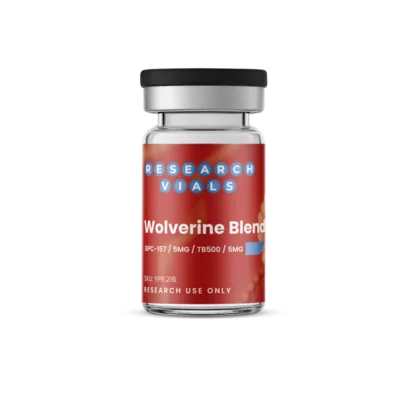
Together, these compounds address both the "infrastructure" (blood supply via BPC-157) and the "workforce" (cell migration via TB-500) requirements for tissue repair. This rationale underlies the Wolverine Blend, which combines both peptides in a single vial.
Buying TB-500: What to Look For
When purchasing TB-500 for research:
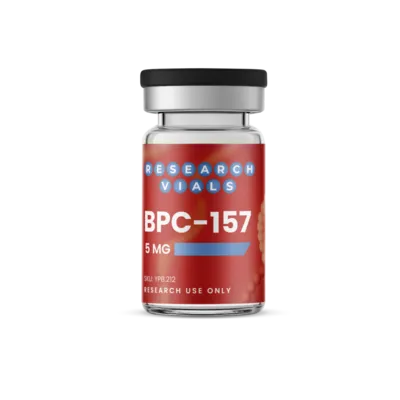
- Purity: Minimum 98% by HPLC; 99%+ preferred for quantitative research. Research Vials offers TB-500 at 99%+ purity
- Verification: Confirm molecular identity via mass spectrometry (expected MW ~4,921 Da)
- Reconstitution: TB-500 is soluble in bacteriostatic water. Typical reconstitution at 2-5 mg/mL concentration
- Storage: Lyophilized: -20C for 12+ months. Reconstituted: 2-8C, use within 3-4 weeks
- Price point: Research-grade TB-500 at $45 per vial from Research Vials
References
- Goldstein AL, Hannappel E, Kleinman HK. Thymosin beta-4: actin-sequestering protein moonlights to repair injured tissues. Trends Mol Med. 2005;11(9):421-429. PMID: 16099219
- Safer D, Elzinga M, Nachmias VT. Thymosin beta-4 and Fx, an actin-sequestering peptide, are indistinguishable. J Biol Chem. 1991;266(7):4029-4032. PMID: 1999398
- Philp D, Huff T, Gho YS, et al. The actin binding site on thymosin beta-4 promotes angiogenesis. FASEB J. 2003;17(14):2103-2105. PMID: 12958147
- Smart N, Risebro CA, Melville AAD, et al. Thymosin beta-4 induces adult epicardial progenitor mobilization and neovascularization. Nature. 2007;445(7124):177-182. PMID: 17108969
- Sosne G, Qiu P, Goldstein AL, Wheater M. Biological activities of thymosin beta-4 defined by active sites in short peptide sequences. FASEB J. 2010;24(7):2144-2151. PMID: 20179146
Frequently Asked Questions
Research Use Only Disclaimer: All products referenced in this article are sold exclusively for laboratory research purposes. They are not intended for human or veterinary use, food additive use, drug use, or household use. This article is educational content based on published preclinical literature and does not constitute medical advice.