
The comparison between semaglutide and tirzepatide represents the most clinically relevant head-to-head in modern metabolic research. As a GLP-1 single agonist vs a GLP-1/GIP dual agonist, these compounds allow researchers to isolate the contribution of GIP receptor co-engagement to metabolic outcomes. This article provides a detailed comparison based on published clinical data, receptor pharmacology, and practical research considerations.
Receptor Pharmacology: Single vs Dual
Semaglutide: GLP-1R Selective Agonist
Semaglutide is a GLP-1 analog with high selectivity for the GLP-1 receptor (Ki ~0.26 nM). It has no meaningful activity at GIPR or GCGR. Its 31-amino acid sequence with Aib8 substitution and C18 fatty diacid conjugation provides DPP-4 resistance and albumin binding for a ~7-day half-life (Lau et al., 2015; PMID: 25943054).
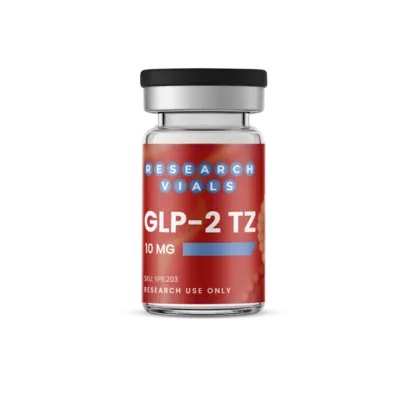
Tirzepatide (GLP-2 TZ Class): GIP-Preferring Dual Agonist
Tirzepatide is a 39-amino acid peptide with activity at both GLP-1R and GIPR. Critically, it is not a balanced dual agonist -- it has approximately 5-fold greater affinity for GIPR relative to GLP-1R. This "GIP-preferring" profile means its pharmacology is driven primarily by GIP receptor engagement, with GLP-1R activity as a complementary but secondary component (Coskun et al., 2018; PMID: 30397202).
This asymmetric receptor engagement profile has important implications: tirzepatide's effects cannot be attributed solely to "GLP-1 plus a little GIP." The GIP component is pharmacologically dominant, which helps explain why tirzepatide's clinical profile differs meaningfully from higher-dose semaglutide rather than simply matching it.
The SURPASS-2 Head-to-Head Trial
SURPASS-2 (N=1,879) is the definitive head-to-head comparison, randomizing adults with type 2 diabetes to tirzepatide 5, 10, or 15 mg vs semaglutide 1 mg, all once weekly for 40 weeks (Frias et al., 2021; PMID: 34170647).
| Outcome | Semaglutide 1mg | Tirzepatide 5mg | Tirzepatide 10mg | Tirzepatide 15mg |
|---|---|---|---|---|
| HbA1c Change | -1.86% | -2.01% | -2.24% | -2.30% |
| Weight Change | -5.7 kg | -7.6 kg | -9.3 kg | -11.2 kg |
| HbA1c < 5.7% | 19.6% | 29.3% | 44.7% | 51.7% |
| Nausea Rate | 17.9% | 12.2% | 13.4% | 17.0% |
All three tirzepatide doses achieved statistically significant superiority over semaglutide 1 mg for HbA1c reduction. For weight, tirzepatide 10 mg and 15 mg were superior to semaglutide. Notably, nausea rates were comparable or lower with tirzepatide despite greater metabolic efficacy -- consistent with GIP's proposed anti-emetic effects.
Important SURPASS-2 Caveats
SURPASS-2 compared tirzepatide to semaglutide 1 mg (the diabetes dose), not semaglutide 2.4 mg (the obesity dose). While this was appropriate for the diabetes indication being studied, it means the weight comparison does not represent semaglutide at its maximum approved dose for weight management.
Weight Efficacy: Cross-Trial Context
Comparing across trials (acknowledging limitations of cross-trial comparisons):
- Semaglutide 2.4 mg (STEP 1): -14.9% at 68 weeks in obesity without diabetes
- Tirzepatide 15 mg (SURMOUNT-1): -20.9% at 72 weeks in obesity without diabetes
This 6-percentage-point difference represents the approximate contribution of GIP receptor co-agonism to weight outcomes. However, confirmation requires the ongoing SURPASS-CVOT and SURMOUNT-MMO trials to provide long-term head-to-head cardiovascular and metabolic outcomes data.
Mechanistic Differences Beyond Receptor Binding
GI Motility
Semaglutide substantially delays gastric emptying -- a key contributor to both its appetite-suppressing and nausea-producing effects. Tirzepatide also delays gastric emptying, but the degree may be attenuated by GIPR activation, which has been shown to accelerate gastric emptying in some models. This may partially explain tirzepatide's improved GI tolerability despite greater overall metabolic efficacy.
Adipose Tissue Biology
GIPR is expressed on adipocytes and appears to promote healthy adipose tissue expansion and lipid buffering capacity. This is paradoxical from a weight loss perspective -- GIP promotes fat storage -- but may be metabolically beneficial by preventing ectopic lipid deposition in liver and muscle while adipose tissue is being reduced.
Beta-Cell Function
Both GLP-1 and GIP are incretins that enhance glucose-dependent insulin secretion, but through partially non-overlapping intracellular pathways. Dual receptor activation produces greater insulinotropic responses than either alone, explaining tirzepatide's superior glycemic control in SURPASS-2.
Cardiovascular Evidence Gap
As of early 2026, semaglutide has a significant evidence advantage in cardiovascular outcomes. The SELECT trial demonstrated a 20% MACE reduction with semaglutide 2.4 mg in people with obesity and established CVD (PMID: 37952131). Tirzepatide's cardiovascular outcomes trial (SURPASS-CVOT) is ongoing, and results are anticipated in 2027-2028. Until this data is available, semaglutide remains the evidence-based choice for cardiovascular-focused metabolic research.
Choosing Between Compounds for Research
The choice between semaglutide-class and tirzepatide-class compounds depends on the research question:
- Isolating GLP-1R effects: Use semaglutide or a GLP-1-selective agonist
- Studying incretin synergy: Use both semaglutide and GLP-2 TZ in parallel to compare single vs dual receptor activation
- Maximizing metabolic outcomes: GLP-2 TZ provides the strongest published Phase 3 data for weight and glycemic endpoints
- GIP receptor research: GLP-2 TZ's GIP-preferring profile makes it a useful tool for studying GIPR-mediated effects
- Complete receptor comparison: Adding GLP-3 RT allows three-way comparison of single, dual, and triple agonism
References
- Lau J, Bloch P, Schaffer L, et al. Discovery of the once-weekly GLP-1 analogue semaglutide. J Med Chem. 2015;58(18):7370-7380. PMID: 25943054
- Coskun T, Sloop KW, Loghin C, et al. LY3298176, a novel dual GIP and GLP-1 receptor agonist. Mol Metab. 2018;18:3-14. PMID: 30397202
- Frias JP, Davies MJ, Rosenstock J, et al. Tirzepatide versus semaglutide once weekly in patients with type 2 diabetes. N Engl J Med. 2021;385(6):503-515. PMID: 34170647
- Wilding JPH, Batterham RL, Calanna S, et al. Once-weekly semaglutide in adults with overweight or obesity. N Engl J Med. 2021;384(11):989-1002. PMID: 33567185
- Jastreboff AM, Aronne LJ, Ahmad NN, et al. Tirzepatide once weekly for the treatment of obesity. N Engl J Med. 2022;387(3):205-216. PMID: 35658024
- Lincoff AM, Brown-Frandsen K, Colhoun HM, et al. Semaglutide and cardiovascular outcomes in obesity without diabetes. N Engl J Med. 2023;389(24):2221-2232. PMID: 37952131
Frequently Asked Questions
Research Use Only Disclaimer: All products referenced in this article are sold exclusively for laboratory research purposes. They are not intended for human or veterinary use, food additive use, drug use, or household use. This article is educational content based on published preclinical literature and does not constitute medical advice.