Semaglutide has become the most intensively studied GLP-1 receptor agonist in both clinical and preclinical research settings. Originally developed by Novo Nordisk as a type 2 diabetes treatment, it has since demonstrated remarkable efficacy across metabolic, cardiovascular, renal, and even neurological disease models. This article provides a comprehensive review of semaglutide's molecular pharmacology, pivotal clinical data, and its role as a benchmark compound in modern metabolic research.
Molecular Pharmacology and Design
Semaglutide is a 31-amino acid peptide analog of native human GLP-1(7-37). Three key modifications distinguish it from the endogenous hormone:
- Aib8 substitution: Alpha-aminoisobutyric acid at position 8 confers resistance to DPP-4 cleavage, the primary degradation pathway that limits native GLP-1's half-life to 2-3 minutes
- Arg34 substitution: Replacement of lysine at position 34 prevents fatty acid conjugation at an undesired site
- C18 fatty diacid at Lys26: A linker-attached octadecandioic acid at position 26 enables high-affinity albumin binding (>99% bound), creating a circulating depot that extends the elimination half-life to approximately 165 hours (Lau et al., 2015; PMID: 25943054)
The resulting compound binds GLP-1R with an affinity of Ki ~0.26 nM -- comparable to native GLP-1 but with dramatically improved pharmacokinetics. Time to maximum concentration (Tmax) is approximately 1-3 days after subcutaneous injection, and steady-state is reached after 4-5 weeks of weekly dosing.
GLP-1 Receptor Signaling Cascade
Upon binding GLP-1R, semaglutide activates several intracellular signaling pathways:
Canonical cAMP-PKA Pathway
GLP-1R is a Gs-coupled GPCR. Agonist binding stimulates adenylyl cyclase, increasing intracellular cAMP. In pancreatic beta cells, this activates protein kinase A (PKA) and exchange protein directly activated by cAMP (Epac2), potentiating glucose-dependent insulin exocytosis. Importantly, this insulinotropic mechanism is glucose-dependent -- minimizing hypoglycemia risk in research models (Drucker, 2018; PMID: 29848532).
Beta-Arrestin Recruitment
Semaglutide also recruits beta-arrestin-1 to the GLP-1R complex, initiating receptor internalization and distinct signaling through ERK1/2 and p38 MAPK pathways. The relative balance of G-protein vs beta-arrestin signaling (biased agonism) may influence therapeutic vs adverse effect profiles -- an active area of research (Jones et al., 2018; PMID: 29439862).
Central Nervous System Effects
GLP-1R is widely expressed in the hypothalamus, brainstem (nucleus tractus solitarius, area postrema), and mesolimbic reward circuits. Semaglutide's appetite-suppressing effects are primarily mediated through:
- Activation of POMC/CART anorexigenic neurons in the arcuate nucleus
- Inhibition of NPY/AgRP orexigenic neurons
- Direct activation of NTS neurons reducing meal size
- Modulation of dopaminergic reward signaling -- potentially reducing hedonic eating (Gabery et al., 2020; PMID: 32479601)
The STEP Trial Program: Landmark Clinical Data
The Semaglutide Treatment Effect in People with obesity (STEP) program comprises the most comprehensive clinical dataset for any anti-obesity compound. Key trials include:
STEP 1 (N=1,961)
Semaglutide 2.4 mg weekly vs placebo in adults with BMI >= 30 (or >= 27 with comorbidities) without diabetes. At 68 weeks, semaglutide produced mean weight loss of 14.9% vs 2.4% placebo. 86.4% achieved >= 5% weight loss; 69.1% achieved >= 10%; and 50.5% achieved >= 15%. GI adverse events (nausea, diarrhea, vomiting) occurred in 74.2% of the semaglutide group vs 47.9% placebo, though most were mild-to-moderate and transient (Wilding et al., 2021; PMID: 33567185).
STEP 2 (N=1,210)
Semaglutide vs placebo in adults with type 2 diabetes and BMI >= 27. Mean weight loss was 9.6% vs 3.4% placebo at 68 weeks, with concurrent HbA1c reductions of 1.6 percentage points. The attenuated weight loss compared to STEP 1 is attributed to the metabolic effects of diabetes itself (Davies et al., 2021; PMID: 33667417).
STEP 3 and STEP 4
STEP 3 combined semaglutide with intensive behavioral therapy, achieving 16.0% weight loss. STEP 4 demonstrated that discontinuing semaglutide after 20 weeks led to regain of approximately two-thirds of lost weight within 48 weeks -- highlighting the importance of continued treatment and the neurobiological nature of obesity (Rubino et al., 2021; PMID: 33755728).
Cardiovascular Outcomes: The SELECT Trial
The SELECT trial (N=17,604) evaluated semaglutide 2.4 mg in adults with established cardiovascular disease and BMI >= 27, without diabetes. At a mean follow-up of 39.8 months, semaglutide reduced the primary composite endpoint (cardiovascular death, non-fatal MI, non-fatal stroke) by 20% (HR 0.80, 95% CI 0.72-0.90). This represents the first demonstration that a weight-management therapy reduces cardiovascular events in a population without diabetes (Lincoff et al., 2023; PMID: 37952131).
Mechanistically, the cardiovascular benefits likely extend beyond weight loss. Semaglutide reduced C-reactive protein by 37.8%, improved lipid profiles, and lowered systolic blood pressure by ~4 mmHg -- suggesting direct anti-inflammatory and vascular effects of GLP-1R activation.
Beyond Metabolic Research: Emerging Applications
MASLD/MASH
Semaglutide demonstrated MASH resolution without worsening fibrosis in 59% of treated patients vs 17% placebo in a Phase 2 trial (Newsome et al., 2021; PMID: 33185364). This has spawned Phase 3 development for liver disease indications.
Neurodegenerative Disease
Preclinical data suggests GLP-1R agonism has neuroprotective effects in models of Alzheimer's disease, Parkinson's disease, and traumatic brain injury. GLP-1R activation reduces neuroinflammation, enhances neuronal survival, and improves mitochondrial function. Clinical trials evaluating semaglutide in early Alzheimer's disease are now underway.
Chronic Kidney Disease
The FLOW trial demonstrated that semaglutide 1.0 mg reduced the risk of major kidney disease events by 24% in adults with type 2 diabetes and CKD -- the first GLP-1RA to show renal protection in a dedicated outcomes trial.
Semaglutide in the Research Context
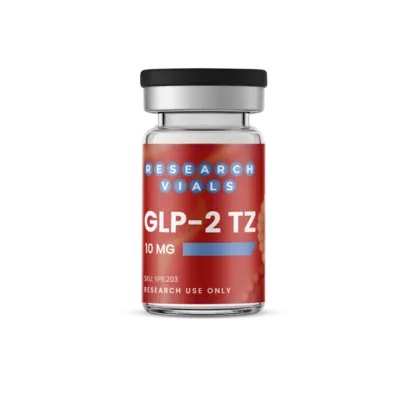
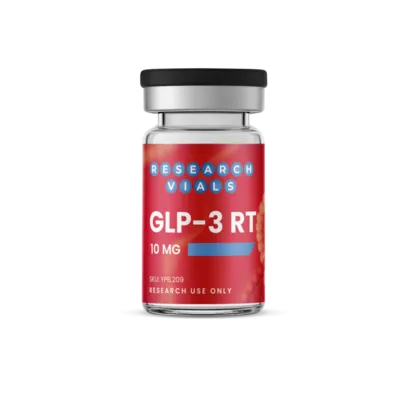
For researchers, semaglutide serves as the reference GLP-1R agonist against which newer dual and triple agonists are compared. When designing metabolic studies, researchers can use semaglutide data as a benchmark while investigating the additional benefits of GIP and glucagon receptor co-engagement available with GLP-2 TZ and GLP-3 RT research compounds.
Pharmacokinetic Summary
| Parameter | Value |
|---|---|
| Molecular Weight | 4,113.58 Da |
| Half-life | ~165 hours (6.9 days) |
| Bioavailability (SC) | ~89% |
| Protein Binding | >99% (albumin) |
| Tmax | 1-3 days |
| GLP-1R Ki | ~0.26 nM |
| Steady State | 4-5 weeks |
References
- Lau J, Bloch P, Schaffer L, et al. Discovery of the once-weekly GLP-1 analogue semaglutide. J Med Chem. 2015;58(18):7370-7380. PMID: 25943054
- Drucker DJ. Mechanisms of action and therapeutic application of glucagon-like peptide-1. Cell Metab. 2018;27(4):740-756. PMID: 29617641
- Gabery S, Salinas CG, Paulsen SJ, et al. Semaglutide lowers body weight in rodents via distributed neural pathways. JCI Insight. 2020;5(6):e133429. PMID: 32479601
- Wilding JPH, Batterham RL, Calanna S, et al. Once-weekly semaglutide in adults with overweight or obesity. N Engl J Med. 2021;384(11):989-1002. PMID: 33567185
- Davies M, Faisal F, Garvey WT, et al. Semaglutide 2.4 mg once a week in adults with overweight or obesity, and type 2 diabetes (STEP 2). Lancet. 2021;397(10278):971-984. PMID: 33667417
- Rubino D, Abrahamsson N, Davies M, et al. Effect of continued weekly subcutaneous semaglutide vs placebo on weight loss maintenance. JAMA. 2021;325(14):1414-1425. PMID: 33755728
- Lincoff AM, Brown-Frandsen K, Colhoun HM, et al. Semaglutide and cardiovascular outcomes in obesity without diabetes. N Engl J Med. 2023;389(24):2221-2232. PMID: 37952131
- Newsome PN, Buchholtz K, Cusi K, et al. A placebo-controlled trial of subcutaneous semaglutide in nonalcoholic steatohepatitis. N Engl J Med. 2021;384(12):1113-1124. PMID: 33185364
- Jones B, Buenaventura T, Kanda N, et al. Targeting GLP-1 receptor trafficking to improve agonist efficacy. Nat Commun. 2018;9(1):1602. PMID: 29686402
Frequently Asked Questions
Research Use Only Disclaimer: All products referenced in this article are sold exclusively for laboratory research purposes. They are not intended for human or veterinary use, food additive use, drug use, or household use. This article is educational content based on published preclinical literature and does not constitute medical advice.