Proper reconstitution is a critical step that bridges peptide storage and experimental use. Incorrect technique — too vigorous mixing, wrong solvent, improper storage — can degrade the peptide before it reaches the assay plate. This protocol covers best practices from vial opening through reconstituted storage.
Materials Needed
- Lyophilized peptide vial
- Bacteriostatic water (0.9% benzyl alcohol) or sterile water
- Alcohol swabs (70% isopropanol)
- Insulin syringes (1mL, 29-31 gauge)
- Clean work surface (laminar flow hood preferred)
Step 1: Temperature Equilibration
Remove the peptide vial from frozen storage (-20°C) and allow it to equilibrate to room temperature for 5-10 minutes before opening. This prevents condensation from forming on the lyophilized powder, which can cause localized degradation. Do not attempt to speed warming — simply leave the sealed vial on the bench.
Step 2: Prepare the Solvent
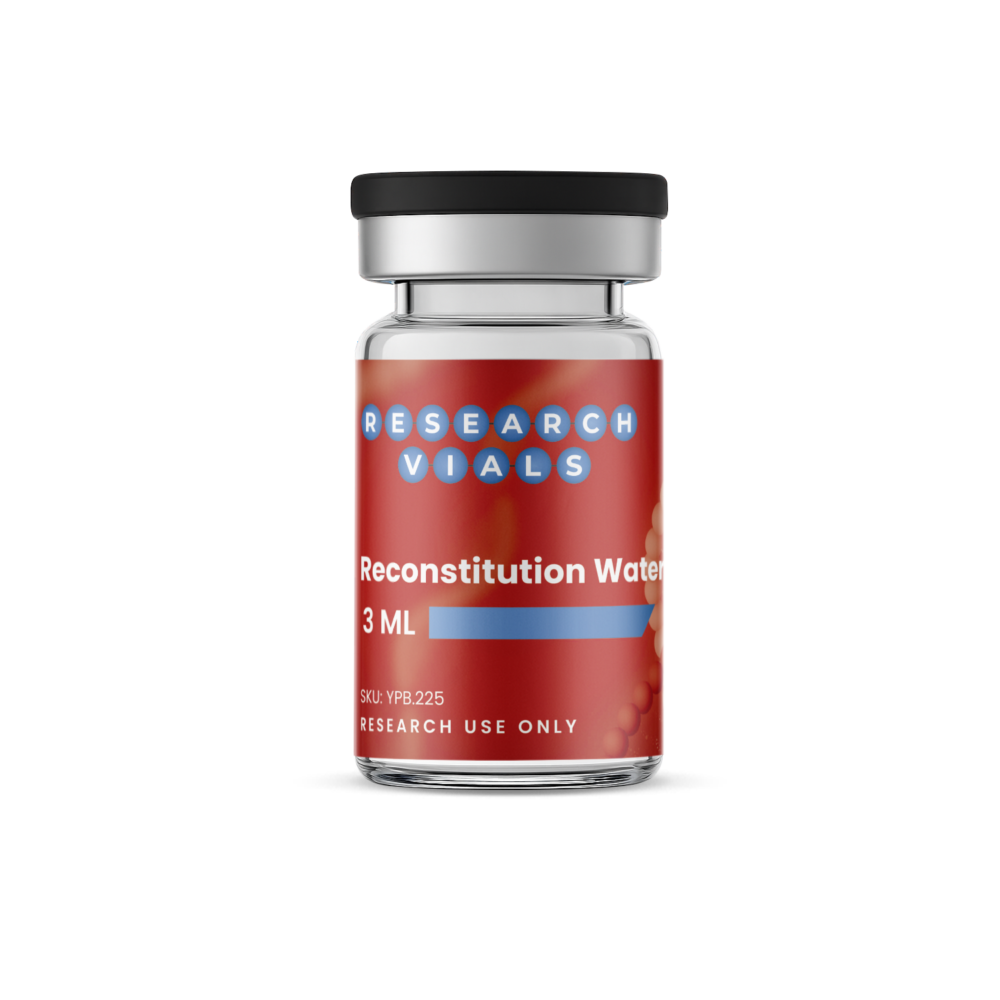
Bacteriostatic water (BAC water) is the recommended solvent for peptides that will be stored and used over multiple sessions. The 0.9% benzyl alcohol preservative inhibits microbial growth. For single-use preparations, sterile water for injection (SWFI) may be used. Calculate the desired volume based on your target concentration:
Concentration = Peptide mass / Solvent volume
Example: 10mg peptide + 2mL BAC water = 5mg/mL (5,000 mcg/mL)
Step 3: Clean and Inject
Swab both the peptide vial stopper and bacteriostatic water vial stopper with alcohol. Draw the calculated volume of BAC water into the syringe. Insert the needle through the peptide vial stopper at an angle, directing the water stream along the inside wall of the vial — not directly onto the lyophilized cake.
Step 4: Dissolve Gently
Do not shake, vortex, or vigorously agitate. Peptides are susceptible to shear-force degradation and aggregation at air-water interfaces. Instead, allow the water to flow down the vial wall and let the peptide dissolve passively. If needed, gently roll the vial between your palms. Most research peptides dissolve within 1-3 minutes. A clear, colorless solution indicates complete dissolution.
Step 5: Storage After Reconstitution
Store reconstituted peptide at 2-8°C (standard refrigerator). Avoid freezing reconstituted solutions — freeze-thaw cycles cause aggregation and degradation. With bacteriostatic water, reconstituted peptides typically remain stable for 14-28 days. Without preservative (sterile water), use within 48 hours.
Common Mistakes to Avoid
- Shaking the vial: Creates foam and degrades peptide at air-water interfaces
- Spraying water directly onto powder: Can splash peptide out of solution
- Freezing reconstituted solution: Freeze-thaw destroys peptide structure
- Using non-sterile water: Bacterial contamination degrades the peptide
- Multiple needle punctures: Each puncture introduces potential contaminants through the stopper
Use Our Reconstitution Calculator
For precise concentration calculations based on your peptide mass and desired dosing, use the Research Vials Reconstitution Calculator. Bacteriostatic water is available at researchvials.com.
Frequently Asked Questions
Research Use Only Disclaimer: All products referenced in this article are sold exclusively for laboratory research purposes. They are not intended for human or veterinary use, food additive use, drug use, or household use. This article is educational content based on published preclinical literature and does not constitute medical advice.