
The glucagon-like peptide (GLP) receptor agonist landscape has evolved dramatically since the first GLP-1 receptor agonists entered clinical development. Today, researchers work with three distinct generations of incretin-based compounds: single GLP-1 receptor agonists, dual GLP-1/GIP agonists (the GLP-2 TZ class), and triple GLP-1/GIP/glucagon agonists (the GLP-3 RT class). This article provides a comprehensive comparison of all three classes, examining receptor pharmacology, preclinical and clinical evidence, and practical considerations for research compound selection.
The Incretin System: Foundation for GLP Research
The incretin effect -- the observation that oral glucose produces a greater insulin response than intravenous glucose at equivalent blood glucose levels -- was first described in the 1960s. Two hormones account for the majority of this effect: glucagon-like peptide-1 (GLP-1) and glucose-dependent insulinotropic polypeptide (GIP, formerly gastric inhibitory polypeptide). Both are secreted by enteroendocrine cells in the gut following nutrient ingestion.
GLP-1 is produced primarily by L-cells in the distal ileum and colon. It binds the GLP-1 receptor (GLP-1R), a class B G-protein-coupled receptor expressed in pancreatic beta cells, the hypothalamus, brainstem, vagal afferents, heart, and kidney. Native GLP-1 has a half-life of approximately 2-3 minutes due to rapid degradation by dipeptidyl peptidase-4 (DPP-4) (Holst, 2007; PMID: 17498508).
GIP is produced by K-cells in the duodenum and jejunum. The GIP receptor (GIPR) shares structural homology with GLP-1R but has distinct tissue distribution and downstream signaling. GIP was historically considered less therapeutically relevant due to apparent GIP resistance in type 2 diabetes, but this view has been substantially revised by tirzepatide clinical data (Nauck & Meier, 2018; PMID: 29848537).
Glucagon, produced by pancreatic alpha cells, acts on the glucagon receptor (GCGR). While it opposes insulin's glucose-lowering effects, glucagon also increases energy expenditure, promotes lipolysis, and suppresses appetite through central mechanisms -- properties now being exploited in triple agonist design.
GLP-1 Receptor Agonists (First Generation)
GLP-1 receptor agonists represent the most established class. Semaglutide, the most extensively studied member, was engineered with a C18 fatty diacid chain and amino acid modifications that extend its half-life to approximately 7 days -- enabling once-weekly dosing. It binds GLP-1R with high affinity (Ki ~0.26 nM) and resists DPP-4 degradation (Lau et al., 2015; PMID: 25943054).
Key Research Findings
The STEP trial program established semaglutide 2.4 mg weekly as producing mean body weight reductions of 14.9% vs 2.4% placebo at 68 weeks in adults with obesity (Wilding et al., 2021; PMID: 33567185). The SELECT cardiovascular outcomes trial demonstrated a 20% reduction in major adverse cardiovascular events independent of diabetes status (Lincoff et al., 2023; PMID: 37952131). Mechanistically, semaglutide's weight effects derive from hypothalamic appetite suppression (POMC/CART neuron activation, NPY/AgRP inhibition), delayed gastric emptying, and potential effects on food reward circuitry.
Limitations of Single-Target Approach
Despite impressive clinical results, GLP-1-only agonists face several limitations: dose-dependent GI adverse effects (nausea, vomiting), a plateau effect where further GLP-1R stimulation yields diminishing returns, and loss of lean mass alongside fat mass during weight reduction.
GLP-2 TZ: Dual GLP-1/GIP Agonists (Second Generation)
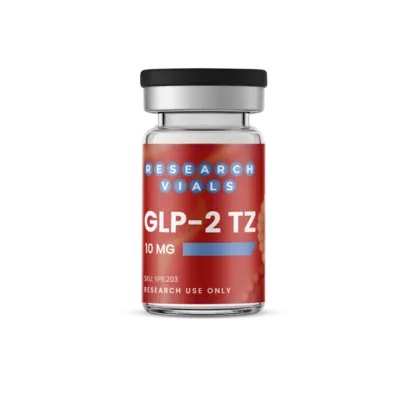
Tirzepatide (and the research analog GLP-2 TZ) represents the dual agonist approach, simultaneously engaging both GLP-1 and GIP receptors. Tirzepatide is a 39-amino acid peptide with a C20 fatty diacid moiety enabling once-weekly dosing (half-life ~5 days). Crucially, it has approximately 5-fold greater GIP receptor affinity relative to its GLP-1R affinity -- making it a "GIP-preferring" dual agonist rather than a balanced one (Coskun et al., 2018; PMID: 30397202).
Why Add GIP?
The rationale for GIP receptor co-agonism was initially controversial. GIP was known to promote fat storage in adipose tissue, leading many researchers to assume GIPR agonism would be counterproductive for metabolic research. However, several lines of evidence support the dual approach:
- Central appetite effects: GIPR activation in the hypothalamus reduces food intake independently of GLP-1R signaling
- Adipose tissue remodeling: GIP promotes healthy adipose tissue expansion and lipid buffering capacity, potentially reducing ectopic fat deposition
- Beta-cell function: GIP and GLP-1 activate complementary intracellular signaling cascades in beta cells, producing synergistic insulin secretion
- Improved tolerability: GIP may attenuate GLP-1-mediated nausea through brainstem mechanisms
Clinical Evidence for Dual Agonism
The SURMOUNT-1 trial established tirzepatide 15 mg as producing mean weight reductions of 20.9% vs 3.1% placebo at 72 weeks -- exceeding semaglutide's results in cross-trial comparisons (Jastreboff et al., 2022; PMID: 35658024). The SURPASS-2 head-to-head trial directly confirmed tirzepatide's superiority over semaglutide 1 mg for both weight and glycemic endpoints (Frias et al., 2021; PMID: 34170647).
GLP-3 RT: Triple GLP-1/GIP/Glucagon Agonists (Third Generation)
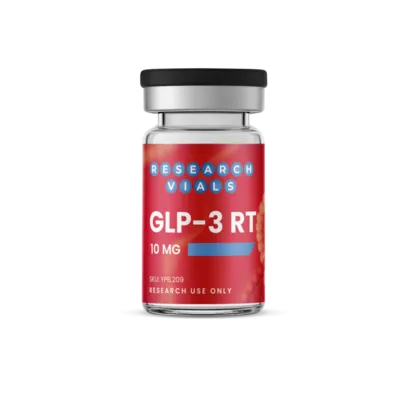
Retatrutide (and the research analog GLP-3 RT) represents the cutting edge: simultaneous agonism of GLP-1, GIP, and glucagon receptors. This 39-amino acid peptide incorporates balanced activity at all three receptors with a pharmacokinetic profile supporting once-weekly administration (Rosenstock et al., 2023; PMID: 37351564).
The Glucagon Paradox
Adding glucagon receptor agonism to a metabolic compound initially seems paradoxical -- glucagon raises blood glucose. However, glucagon's metabolic effects extend far beyond glycemia:
- Energy expenditure: GCGR activation increases basal metabolic rate by 15-20% through brown adipose tissue thermogenesis and hepatic substrate cycling
- Lipolysis: Glucagon promotes hepatic and adipose tissue fat oxidation, accelerating lipid clearance
- Appetite suppression: Central GCGR activation in the hypothalamus provides an additional anorexigenic signal
- Hepatic fat reduction: Glucagon reduces hepatic lipid content through increased fatty acid oxidation -- particularly relevant for MASLD/MASH research
When glucagon is combined with GLP-1 and GIP agonism, the hyperglycemic effect is offset by the potent insulinotropic actions of the other two incretins, while the thermogenic, lipolytic, and hepatoprotective effects are preserved.
Clinical Evidence for Triple Agonism
Phase 2 data for retatrutide demonstrated dose-dependent weight reductions up to 24.2% at 48 weeks with the highest dose -- the largest reductions reported for any anti-obesity compound in controlled trials at that time (Jastreboff et al., 2023; PMID: 37351564). Notably, a sub-study using MRI showed hepatic steatosis resolution in approximately 90% of participants with baseline MASLD.
Head-to-Head Comparison Table
| Parameter | GLP-1 (Semaglutide) | GLP-2 TZ (Tirzepatide class) | GLP-3 RT (Retatrutide class) |
|---|---|---|---|
| Receptor Targets | GLP-1R only | GLP-1R + GIPR | GLP-1R + GIPR + GCGR |
| Peak Weight Loss (trials) | ~15-17% | ~21-23% | ~24% (Phase 2) |
| Hepatic Fat Reduction | Moderate | Significant | ~90% resolution |
| GI Tolerability | Moderate nausea | Better tolerated | Comparable to dual |
| Energy Expenditure Effect | Minimal | Mild increase | Significant increase |
| Lean Mass Preservation | Poor | Better than GLP-1 | Under investigation |
| Research Availability | Widely available | Available ($73) | Available ($71) |
Selecting the Right Compound for Your Research
The choice between GLP-1, dual, and triple agonists depends on the specific research question being addressed:
- Glucose homeostasis studies: All three classes are appropriate, but single GLP-1R agonists offer the most established comparator data
- Metabolic syndrome / obesity models: Dual and triple agonists provide more comprehensive metabolic effects and are better suited for multi-parameter metabolic research
- MASLD/MASH research: Triple agonists (GLP-3 RT) offer the strongest hepatic fat reduction based on available data
- Cardiovascular research: GLP-1 agonists have the most robust CV outcomes data; dual and triple agonist CV trials are ongoing
- Mechanism dissection: Using all three classes in parallel allows researchers to isolate the contributions of GIP and glucagon receptor engagement
References
- Holst JJ. The physiology of glucagon-like peptide 1. Physiol Rev. 2007;87(4):1409-1439. PMID: 17928588
- Nauck MA, Meier JJ. Incretin hormones: their role in health and disease. Diabetes Obes Metab. 2018;20 Suppl 1:5-21. PMID: 29364588
- Lau J, Bloch P, Schaffer L, et al. Discovery of the once-weekly glucagon-like peptide-1 (GLP-1) analogue semaglutide. J Med Chem. 2015;58(18):7370-7380. PMID: 25943054
- Wilding JPH, Batterham RL, Calanna S, et al. Once-weekly semaglutide in adults with overweight or obesity. N Engl J Med. 2021;384(11):989-1002. PMID: 33567185
- Lincoff AM, Brown-Frandsen K, Colhoun HM, et al. Semaglutide and cardiovascular outcomes in obesity without diabetes. N Engl J Med. 2023;389(24):2221-2232. PMID: 37952131
- Coskun T, Sloop KW, Loghin C, et al. LY3298176, a novel dual GIP and GLP-1 receptor agonist for the treatment of type 2 diabetes mellitus. Mol Metab. 2018;18:3-14. PMID: 30397202
- Jastreboff AM, Aronne LJ, Ahmad NN, et al. Tirzepatide once weekly for the treatment of obesity. N Engl J Med. 2022;387(3):205-216. PMID: 35658024
- Frias JP, Davies MJ, Rosenstock J, et al. Tirzepatide versus semaglutide once weekly in patients with type 2 diabetes. N Engl J Med. 2021;385(6):503-515. PMID: 34170647
- Rosenstock J, Frias J, Jastreboff AM, et al. Retatrutide, a GIP, GLP-1 and glucagon receptor agonist, for people with type 2 diabetes: a randomised, double-blind, placebo and active-comparator-controlled, parallel-group, phase 2 trial. Lancet. 2023;402(10401):529-544. PMID: 37385280
- Jastreboff AM, Kaplan LM, Frias JP, et al. Triple-hormone-receptor agonist retatrutide for obesity. N Engl J Med. 2023;389(6):514-526. PMID: 37351564
Frequently Asked Questions
Research Use Only Disclaimer: All products referenced in this article are sold exclusively for laboratory research purposes. They are not intended for human or veterinary use, food additive use, drug use, or household use. This article is educational content based on published preclinical literature and does not constitute medical advice.