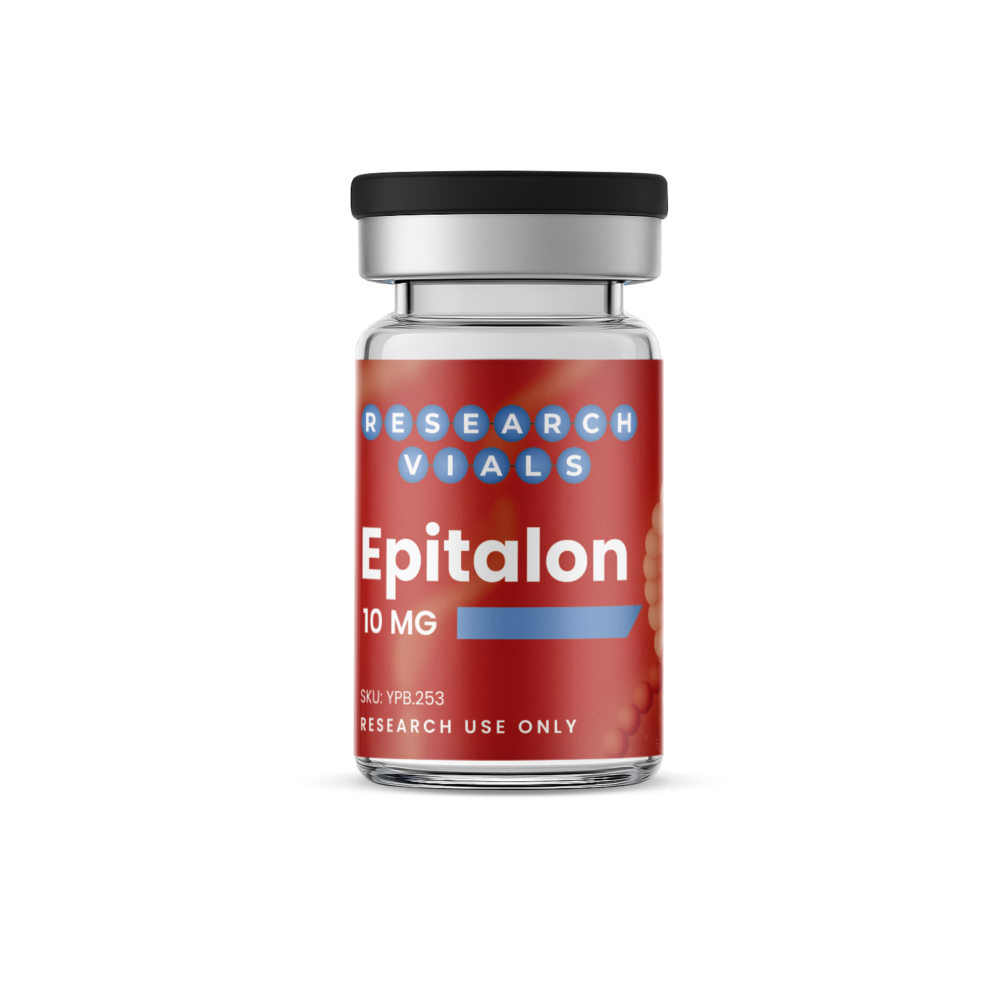
Epitalon (also written Epithalon) occupies a unique position in peptide research as one of the only synthetic compounds demonstrated to activate telomerase in human somatic cells. Developed through decades of work by Professor Vladimir Khavinson at the St. Petersburg Institute of Bioregulation and Gerontology, this tetrapeptide has been studied in the context of cellular aging, pineal gland function, and longevity.
What Is Epitalon?
Epitalon is a synthetic tetrapeptide with the sequence Ala-Glu-Asp-Gly. It is the synthetic analog of Epithalamin, a peptide extract originally derived from bovine pineal glands. Khavinson's group first characterized Epithalamin in the 1980s and subsequently developed the fully synthetic Epitalon to enable controlled research without the variability inherent in tissue extracts.
Telomerase Activation
The landmark finding for Epitalon came when Khavinson and colleagues demonstrated that the peptide activated telomerase — the ribonucleoprotein enzyme responsible for maintaining telomere length — in human pulmonary fibroblasts and other somatic cell lines. Telomeres, the protective caps at chromosome ends, shorten with each cell division and their erosion is a fundamental mechanism of cellular aging.
In Khavinson's 2003 study, Epitalon-treated human fetal fibroblast cultures showed telomerase activation and underwent significantly more population doublings than untreated controls — effectively extending their replicative lifespan beyond the Hayflick limit (Khavinson et al., 2003; PMID: 14523363). These findings were supported by telomere length measurements showing preservation or elongation in treated cells.
Pineal Gland and Melatonin Research
Epitalon's origins in pineal gland research are reflected in its documented effects on melatonin production. In aged rodent models, where pineal function and melatonin output are naturally degraded, Epitalon administration restored the circadian melatonin rhythm toward patterns seen in younger animals. This pineal-restorative effect is significant because melatonin is a potent antioxidant and circadian regulator with broad implications for immune function and cellular protection.
Anisimov et al. (2001) demonstrated that chronic Epitalon administration in aging mice improved circadian cortisol rhythms, restored immune function parameters, and increased maximum lifespan by 13.3% compared to controls (Anisimov et al., 2001; PMID: 11524631).
Longevity and Anti-Aging Research
The combination of telomerase activation, pineal function restoration, and improved immune parameters positions Epitalon as one of the most studied peptides in gerontological research. In multiple rodent lifespan studies, Epitalon-treated animals showed both increased mean lifespan and — more notably — increased maximum lifespan, suggesting effects on fundamental aging processes rather than simple disease prevention.
The Bioregulator Framework
Epitalon belongs to a class of short peptides (2-4 amino acids) that Khavinson terms "bioregulators" — peptides hypothesized to interact directly with DNA and regulate gene expression at the transcriptional level. This proposed mechanism — peptide-DNA interaction modulating specific gene programs — is distinct from classical receptor-mediated peptide signaling and remains an area of active investigation.
Research-Grade Epitalon
Epitalon is available in 10mg and 50mg lyophilized vials at researchvials.com.
References
- Khavinson VKh, et al. Peptide Epitalon activates chromatin at the old age. Neuro Endocrinol Lett. 2003;24(5):329-33. PMID: 14647006
- Anisimov VN, et al. Effect of Epitalon on biomarkers of aging, life span and spontaneous tumor incidence in female Swiss-derived SHR mice. Biogerontology. 2003;4(4):193-202. PMID: 14501183
Frequently Asked Questions
Research Use Only Disclaimer: All products referenced in this article are sold exclusively for laboratory research purposes. They are not intended for human or veterinary use, food additive use, drug use, or household use. This article is educational content based on published preclinical literature and does not constitute medical advice.