
Purchasing research peptides online has become the standard procurement method for laboratories worldwide. However, the online marketplace presents unique challenges -- quality variation between suppliers is significant, and the consequences of receiving impure or misidentified compounds can invalidate months of research. This comprehensive guide walks researchers through every aspect of the online peptide purchasing process, from legal considerations to quality verification to post-delivery testing.
Legal Framework for Research Peptide Purchase
Research peptides are legal to purchase, possess, and use in laboratory settings in the United States. They are classified as research chemicals rather than controlled substances (with limited compound-specific exceptions). However, several important legal boundaries apply:
- Research use only: Peptides sold for research are explicitly not for human consumption, veterinary use, or food additive use
- No therapeutic claims: Legitimate suppliers do not make therapeutic claims about their products
- Import considerations: International purchases may be subject to customs inspection. US-based suppliers eliminate this variable
- Institutional requirements: Academic and institutional researchers may need to purchase through approved vendor lists or procurement systems
Understanding Purity Standards
Peptide purity, typically reported as a percentage from HPLC analysis, is the most critical quality parameter. Here's what different purity levels mean for your research:
| Purity Range | Suitable For | Notes |
|---|---|---|
| >99% | All research applications | Highest grade; minimal impurities |
| 98-99% | Most research applications | Standard research grade |
| 95-98% | Screening, preliminary studies | Acceptable for initial testing |
| <95% | Not recommended | Significant impurity risk |
Common Impurities in Synthetic Peptides
Understanding potential impurities helps researchers interpret purity data:
- Deletion peptides: Sequences missing one or more amino acids from incomplete coupling reactions during solid-phase synthesis
- Truncated sequences: Incomplete peptides from premature chain termination
- Oxidized species: Methionine and cysteine residues are susceptible to oxidation during synthesis and storage
- TFA salts: Residual trifluoroacetic acid from the cleavage and purification process
- Counterion content: TFA or acetate salt forms affect the effective peptide content per milligram of weighed material
Step-by-Step Supplier Evaluation
Step 1: Check for Third-Party Testing
The single most important quality indicator. Does the supplier use independent, third-party laboratories for HPLC and mass spectrometry testing? In-house testing alone is insufficient because of inherent conflict-of-interest concerns. Research Vials, for example, provides third-party COAs for all products with lot-specific traceability.
Step 2: Verify Business Legitimacy
Look for: verifiable US business registration, physical address (not just a PO box), named personnel or team, professional website with educational content, and clear contact information with responsive support.
Step 3: Evaluate Product Information
Each product listing should include: peptide sequence, molecular weight, CAS number (where applicable), purity specification, storage instructions, reconstitution guidance, and COA availability.
Step 4: Review Pricing Context
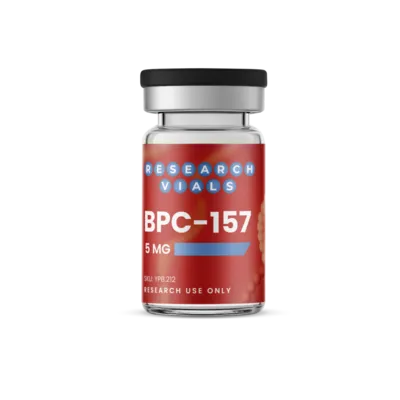
Price should be evaluated in context. A 5mg vial of BPC-157 at 99%+ purity typically ranges from $30-50 at reputable suppliers. Prices far below this range suggest compromised purity. Prices far above suggest inflated margins without additional quality justification.
Your First Research Peptide Order: Best Practices
For researchers making their first peptide purchase, we recommend the following approach:
- Start with a well-characterized peptide: BPC-157, TB-500, or Ipamorelin have extensive published literature, making it easier to verify that your compound behaves as expected in standard assays
- Order a single vial first: Before committing to bulk purchases, validate a single vial by reviewing the COA, checking reconstitution behavior, and running a positive-control experiment
- Document everything: Record the lot number, COA data, reconstitution date, storage conditions, and any observations about solubility or appearance
- Independent verification: If your laboratory has HPLC or MS capability, running your own analysis on the received product provides the strongest quality assurance
Post-Purchase: Storage and Handling
Proper storage directly impacts compound integrity:
- Lyophilized peptides: Store at -20C in a sealed container. Most lyophilized peptides are stable for 12+ months at this temperature
- Reconstituted solutions: Store at 2-8C (standard refrigerator). Use within 2-4 weeks for most peptides. Bacteriostatic water (containing 0.9% benzyl alcohol) extends reconstituted stability vs sterile water alone
- Avoid freeze-thaw cycles: Repeated freezing and thawing degrades peptides. Aliquot reconstituted solutions into single-use volumes
- Protect from light: Some peptides are photosensitive. Amber vials or foil wrapping provides additional protection
Recommended Starting Products
For researchers building a peptide research program, these compounds offer the best combination of evidence base, reliability, and value:
- BPC-157 ($35): The most published cytoprotective peptide with 100+ preclinical studies. Ideal starting point for tissue repair research
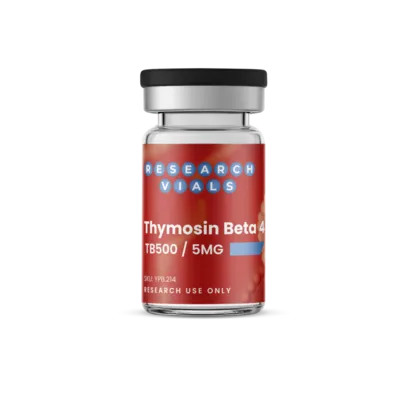
- TB-500 ($45): Thymosin beta-4 fragment with established actin-sequestering mechanism. Well-characterized and widely cited
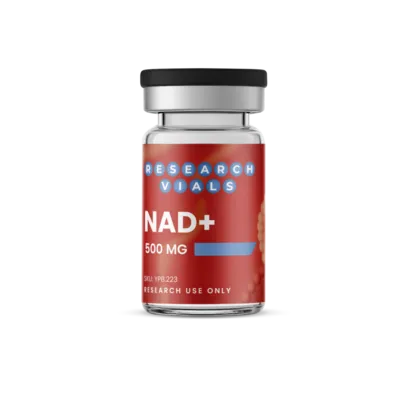
- NAD+ ($55): Central to the sirtuin longevity pathway. Excellent for metabolic and aging research
All three are available from Research Vials with third-party COAs and free shipping on qualifying orders.
Frequently Asked Questions
Research Use Only Disclaimer: All products referenced in this article are sold exclusively for laboratory research purposes. They are not intended for human or veterinary use, food additive use, drug use, or household use. This article is educational content based on published preclinical literature and does not constitute medical advice.