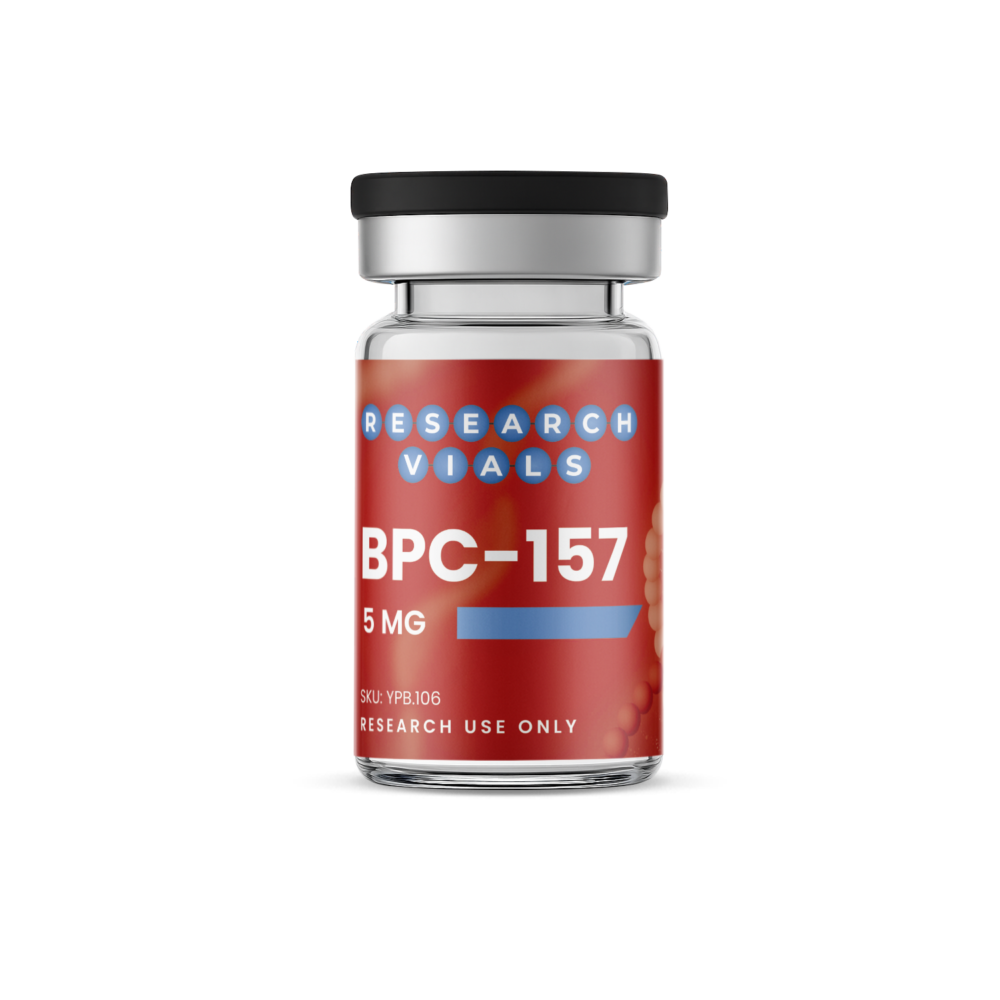
BPC-157 has emerged as one of the most studied cytoprotective peptides in preclinical research over the past three decades. With more than 100 published studies -- the vast majority conducted in animal models -- this pentadecapeptide has demonstrated an unusually broad range of biological activities across gastrointestinal, musculoskeletal, cardiovascular, and neurological systems. This article examines what the research actually shows, where the evidence is robust, and where significant gaps remain.
What Is BPC-157?
BPC-157, formally known as Body Protection Compound-157, is a synthetic pentadecapeptide consisting of 15 amino acids with the sequence Gly-Glu-Pro-Pro-Pro-Gly-Lys-Pro-Ala-Asp-Asp-Ala-Gly-Leu-Val (molecular weight approximately 1419 Da). It is derived from a segment of the human gastric juice protein known as Body Protection Compound, which was first isolated and characterized by Sikiric and colleagues at the University of Zagreb in the early 1990s [1].
Unlike many bioactive peptides that degrade rapidly in acidic environments, BPC-157 demonstrates notable stability in gastric juice. This property is central to its research profile because it suggests the peptide can maintain structural integrity across a range of pH conditions -- a characteristic that has facilitated studies using both parenteral and oral routes of administration [2].
It is critical to note at the outset that BPC-157 is not approved by the FDA or any regulatory body for therapeutic use. The compound is classified for research use only. The overwhelming majority of published data comes from animal models, primarily rodents. While these studies have produced consistent and often striking results, the absence of rigorous human clinical trial data means that translational conclusions must be drawn with extreme caution.
Mechanism of Action
One of the most remarkable aspects of BPC-157 research is the breadth of proposed mechanisms through which it appears to exert biological effects. Rather than operating through a single receptor-ligand interaction -- as most small-molecule drugs do -- BPC-157 appears to engage multiple signaling systems simultaneously.
VEGF and Angiogenesis
Multiple studies have demonstrated that BPC-157 upregulates vascular endothelial growth factor (VEGF) and its primary receptor VEGFR2 (also known as Flk-1) in injured tissues. In a 2006 study by Sikiric et al., BPC-157 treatment in rats with ligated vessels led to rapid formation of new blood vessels at the injury site, with significantly elevated VEGF expression compared to controls [3]. This angiogenic effect appears to be dose-dependent and has been replicated across wound healing, tendon injury, and muscle crush injury models.
Nitric Oxide System
The nitric oxide (NO) system represents another key pathway modulated by BPC-157. Research has shown that BPC-157 interacts with both constitutive NOS (eNOS, nNOS) and inducible NOS (iNOS), and importantly, appears to modulate the NO system differently depending on the pathological context. In models of NO depletion, BPC-157 rescued the associated tissue damage; in models of NO excess, it attenuated the damage. This bidirectional modulatory capacity has been described as a "NO system homeostatic" effect by Sikiric and colleagues [4].
Growth Factor Modulation
Beyond VEGF, BPC-157 has been shown to influence the expression of several other growth factors relevant to tissue repair, including epidermal growth factor (EGF), fibroblast growth factor (FGF), hepatocyte growth factor (HGF), and nerve growth factor (NGF). In tendon fibroblast cultures, BPC-157 promoted cell survival and migration through activation of the FAK-paxillin signaling pathway, a critical mediator of cell adhesion and motility [5].
Dopaminergic and Serotonergic Interactions
A growing body of preclinical evidence links BPC-157 to modulation of the dopaminergic system. Studies by Sikiric and colleagues have demonstrated that BPC-157 can counteract the effects of both dopamine agonists and antagonists, suggesting it functions as a stabilizer of dopaminergic tone rather than a simple stimulant or blocker. Similar modulatory effects have been observed in the serotonergic system, particularly in models of amphetamine-induced behavioral changes [6].
Gastrointestinal Research
The gastrointestinal tract is where BPC-157 research began, and it remains the area with the deepest evidence base. Given that the peptide is derived from gastric juice, there is a logical biological rationale for GI-protective effects.
Gastric Ulcer Models
In rodent models of gastric ulceration -- including those induced by ethanol, aspirin, cysteamine, and restraint stress -- BPC-157 has consistently demonstrated protective and healing effects. In a landmark 1999 study, Sikiric et al. showed that both systemic (intraperitoneal) and local (intragastric) BPC-157 administration significantly accelerated gastric ulcer healing in rats, with concomitant increases in VEGF expression and new blood vessel formation at the ulcer bed [1].
Inflammatory Bowel Disease Models
Several studies have examined BPC-157 in experimental colitis models. In TNBS-induced colitis in rats, BPC-157 reduced macroscopic and microscopic damage scores, decreased inflammatory cytokine expression (including TNF-alpha and IL-6), and improved mucosal healing parameters. Importantly, these effects were observed with both parenteral and oral (in-drinking-water) administration, supporting the peptide's stability in the GI tract [2].
Esophageal and Intestinal Lesions
BPC-157 has also shown protective effects against esophageal lesions in reflux models and against intestinal damage induced by NSAIDs. In models of short bowel syndrome, BPC-157 promoted adaptive intestinal growth and improved functional absorption parameters. The consistency of these gastrointestinal findings across multiple injury models and multiple research groups (though predominantly from the Zagreb group) strengthens the evidence for genuine GI-protective activity.
Musculoskeletal Research
The musculoskeletal system has become one of the most actively investigated areas for BPC-157, with studies spanning tendon, ligament, muscle, and bone tissue repair.
Tendon Healing
In a pivotal 2003 study by Staresinic et al., BPC-157 significantly accelerated healing in a rat Achilles tendon transection model. Treated animals showed earlier and more organized collagen deposition, improved biomechanical strength at 14 and 28 days post-injury, and enhanced tendon-to-bone junction remodeling. Mechanistically, BPC-157 increased expression of growth hormone receptor (GHR) and FAK in healing tendon tissue [5].
Follow-up studies from the same group extended these findings to the quadriceps tendon, patellar tendon, and medial collateral ligament models, with consistent improvements in both histological scores and functional outcomes. The tendon-healing data is among the most replicated in the BPC-157 literature.
Muscle Healing
In muscle crush and transection injury models, BPC-157 promoted myofiber regeneration, reduced fibrotic scar formation, and accelerated functional recovery as measured by grip strength and gait analysis. Notably, BPC-157 appeared to preserve neuromuscular junction integrity in these models, suggesting a potential dual role in both muscle and peripheral nerve repair [7].
Bone Healing
More recent investigations have examined BPC-157 in fracture healing and segmental bone defect models. Preliminary results suggest enhanced callus formation and accelerated bone union, though this area of research is less mature than the tendon and muscle literature and requires further replication.
Neuroprotection Research
The neuroprotective properties of BPC-157 represent a newer but rapidly growing area of investigation. The peptide has been studied in models of traumatic brain injury, peripheral nerve damage, spinal cord injury, and various neurotoxicity paradigms.
Peripheral Nerve Repair
In sciatic nerve transection models in rats, BPC-157 treatment improved nerve regeneration as measured by electrophysiology, walking track analysis, and histomorphometric assessment of regenerating axons. These effects appear to involve upregulation of NGF and GAP-43 (growth-associated protein 43), both critical mediators of axonal regrowth [8].
Central Nervous System Models
In models of traumatic brain injury (TBI), BPC-157 reduced brain edema, improved neurological deficit scores, and decreased markers of oxidative stress. In MPTP-induced dopaminergic neurotoxicity -- a model relevant to Parkinson's disease research -- BPC-157 attenuated the loss of tyrosine hydroxylase-positive neurons in the substantia nigra, an effect linked to its interaction with the dopaminergic system [6].
Gut-Brain Axis
Perhaps most intriguingly, some researchers have proposed that BPC-157's neuroprotective effects may be partially mediated through the gut-brain axis. As a gastric juice-derived peptide that can be administered orally, BPC-157 may influence central nervous system function through vagal afferent signaling and/or modulation of the enteric nervous system. This hypothesis remains speculative but is being actively investigated.
Key Clinical Considerations and Limitations
While the preclinical literature on BPC-157 is extensive and largely consistent, it is essential to maintain scientific rigor in evaluating these findings. Several important considerations temper the enthusiasm:
1. Predominantly Animal Data
The vast majority of BPC-157 studies have been conducted in rats and mice. As of 2026, no large-scale, randomized, double-blind, placebo-controlled human clinical trials have been published in peer-reviewed journals. This is the single largest gap in the BPC-157 evidence base. History is replete with preclinical successes that failed to translate to human medicine.
2. Research Group Concentration
A significant proportion of BPC-157 research originates from the laboratory of Professor Predrag Sikiric and colleagues at the University of Zagreb, Croatia. While their work is published in reputable peer-reviewed journals and has been replicated by other groups in some models, the field would benefit from broader independent replication across more laboratories and institutions.
3. Mechanism Complexity
The sheer breadth of reported activities -- from GI protection to tendon healing to neuroprotection to cardiovascular effects -- raises legitimate questions about specificity. Some researchers have suggested BPC-157 may function as a "master regulator" that coordinates multiple repair pathways; others view the breadth of effects with appropriate skepticism, noting that a peptide that does everything may warrant extra scrutiny.
4. Dose-Response Characterization
While dose-response relationships have been established in several models, systematic pharmacokinetic and pharmacodynamic profiling -- the kind that would be required for IND (Investigational New Drug) applications -- has not been extensively published. Basic PK parameters like half-life, bioavailability by route, tissue distribution, and metabolic fate require further characterization.
5. Long-Term Safety Data
Published toxicology data suggests BPC-157 has a favorable safety profile in animal studies, with no reported organ toxicity at standard experimental doses. However, long-term safety studies of the type required for clinical development have not been published. The compound's angiogenic properties, while beneficial for wound healing, warrant careful evaluation in the context of conditions where angiogenesis could be harmful.
Cited Studies
- Sikiric P, Seiwerth S, Rucman R, et al. Stable gastric pentadecapeptide BPC 157: novel therapy in gastrointestinal tract. Curr Pharm Des. 1999;5(8):597-611. PMID: 10469895
- Sikiric P, Seiwerth S, Rucman R, et al. Toxicity by NSAIDs. Counteraction by stable gastric pentadecapeptide BPC 157. Curr Pharm Des. 2013;19(1):76-83. PMID: 22950498
- Sikiric P, Seiwerth S, Rucman R, et al. Stable gastric pentadecapeptide BPC 157-NO-system relation. Curr Pharm Des. 2014;20(7):1126-1135. PMID: 23755729
- Seiwerth S, Sikiric P, Grabarevic Z, et al. BPC 157's effect on healing. J Physiol Paris. 1997;91(3-5):173-178. PMID: 9457668
- Staresinic M, Petrovic I, Novinscak T, et al. Effective therapy of transected quadriceps muscle in rat: Gastric pentadecapeptide BPC 157. J Orthop Res. 2006;24(5):1109-1117. PMID: 16609970
- Sikiric P, Rucman R, Turkovic B, et al. Novel cytoprotective mediator, stable gastric pentadecapeptide BPC 157. Vascular recruitment and gastrointestinal tract healing. Curr Pharm Des. 2018;24(18):1990-2001. PMID: 29737246
- Chang CH, Tsai WC, Lin MS, et al. The promoting effect of pentadecapeptide BPC 157 on tendon healing involves tendon outgrowth, cell survival, and cell migration. J Appl Physiol. 2011;110(3):774-780. PMID: 21030672
- Perovic D, Kolenc D, Bilic V, et al. Stable gastric pentadecapeptide BPC 157 can improve the healing course of spinal cord injury and lead to functional recovery in rats. J Orthop Surg Res. 2019;14(1):199. PMID: 31262320
- Sikiric P, Hahm KB, Blagaic AB, et al. Stable gastric pentadecapeptide BPC 157, Robert's cytoprotection, adaptive cytoprotection, and Selye's stress coping response. Dig Dis Sci. 2020;65(5):1298-1315. PMID: 32006236
- Vukojevic J, Siroglavic M, Kasnik K, et al. Rat inferior caval vein (ICV) ligature and BPC 157. Vascular recruitment. Microvasc Res. 2018;118:137-144. PMID: 29559253
Research Use Only Disclaimer: BPC-157 is sold exclusively for laboratory research purposes. It is not intended for human or veterinary use, food additive use, drug use, or household use. This article is educational content based on published preclinical literature and does not constitute medical advice.