
BPC-157 is the most widely purchased research peptide for tissue repair studies, with over 100 published preclinical studies investigating its cytoprotective and regenerative properties. However, not all BPC-157 products are equivalent. This buyer's guide covers everything researchers need to make an informed purchase decision: salt forms, purity grades, dosing data from published literature, reconstitution protocols, and supplier verification.
Understanding BPC-157: Quick Profile
BPC-157 (Body Protection Compound-157) is a synthetic pentadecapeptide with the sequence Gly-Glu-Pro-Pro-Pro-Gly-Lys-Pro-Ala-Asp-Asp-Ala-Gly-Leu-Val. Key characteristics:
- Molecular weight: 1,419.53 Da (free acid)
- CAS number: 137525-51-0
- Origin: Derived from human gastric juice protein BPC
- Stability: Uniquely stable in gastric juice -- unlike most peptides
- Primary mechanisms: VEGF upregulation, NO system modulation, FAK-paxillin activation, growth factor expression
- Research areas: GI protection, tendon/ligament repair, muscle healing, neuroprotection
Salt Forms: Acetate vs Free Base
BPC-157 Acetate (Most Common)
The acetate salt form is produced when BPC-157 is purified using HPLC with a TFA/acetate buffer system and then lyophilized. Key characteristics:
- Excellent water solubility
- Stable as lyophilized powder at -20C for 12+ months
- Counter-ion content means the actual peptide mass is approximately 75-85% of weighed mass
- Most commonly available and most widely used in published research
BPC-157 Arginine Salt
An alternative formulation using arginine as the counter-ion. Proponents suggest improved stability, though head-to-head stability comparison data is limited. Less commonly available from suppliers.
Which to Choose?
For most research applications, BPC-157 acetate is the standard choice. It is the form used in the majority of published studies, making it easier to compare your results with existing literature. If you're replicating a specific published protocol, match the salt form used in that study.
Purity Grades and What They Mean
BPC-157 is commercially available at several purity levels:
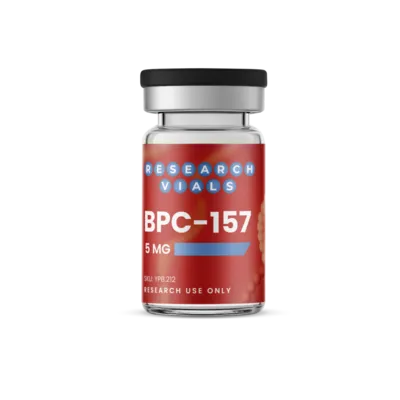
- 99%+ (Research Premium): Highest quality available. Suitable for all research applications including quantitative binding assays and publication-grade work. This is the purity level offered by Research Vials
- 98-99% (Research Standard): Appropriate for most preclinical research applications
- 95-98% (Research Economy): Suitable for preliminary screening studies but may contain enough impurities to affect sensitive assays
- Below 95%: Not recommended for any research application
Dosing Data from Published Literature
Published preclinical studies have used BPC-157 across a range of doses and administration routes. For researchers designing protocols, the following table summarizes the most commonly cited dosing parameters:
| Research Model | Route | Dose Range | Citation |
|---|---|---|---|
| Gastric ulcer (rat) | IP / IG | 10 mcg/kg | PMID: 10469895 |
| Tendon repair (rat) | IP / local | 10 mcg/kg | PMID: 16609970 |
| Colitis model (rat) | IP / oral | 10-50 mcg/kg | PMID: 21548867 |
| Muscle injury (rat) | IP | 10 mcg/kg | PMID: 21030672 |
| Nerve repair (rat) | IP | 10 mcg/kg | PMID: 29737246 |
The dose of 10 mcg/kg administered intraperitoneally (IP) is the most frequently used across published studies and serves as the standard reference dose for BPC-157 preclinical research.
Reconstitution Protocol
Proper reconstitution is essential for maintaining peptide activity. Follow this standard protocol:
- Solvent selection: Bacteriostatic water (BAC water, 0.9% benzyl alcohol) is recommended for research reconstitution. It provides antimicrobial preservation that extends solution stability
- Preparation: Allow the lyophilized vial to reach room temperature before opening. Direct the solvent stream against the vial wall, not directly onto the powder cake
- Volume: For a 5 mg vial, adding 2 mL of BAC water yields a concentration of 2.5 mg/mL (2,500 mcg/mL). Use the Research Vials reconstitution calculator for precise volume calculations
- Mixing: Gently swirl the vial to dissolve. Do not shake vigorously -- excessive agitation can denature peptides through shear stress and foaming
- Storage: Reconstituted BPC-157 in BAC water should be stored at 2-8C and used within 3-4 weeks
BPC-157 + TB-500 Combination
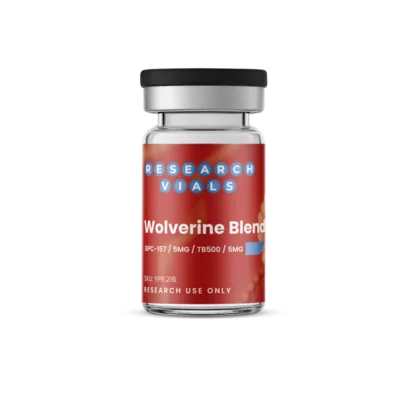
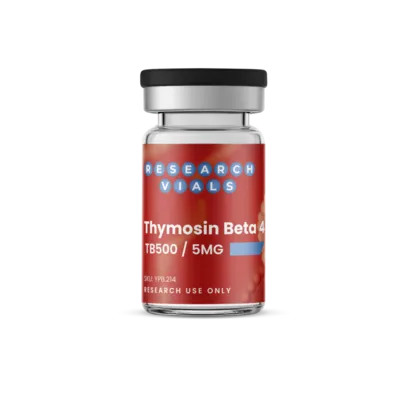
A growing body of research examines the combined use of BPC-157 with TB-500 (thymosin beta-4 fragment). The rationale is complementary mechanisms: BPC-157 promotes angiogenesis via VEGF while TB-500 enhances cell migration via actin dynamics. Research Vials offers these both individually and as the pre-formulated Wolverine Blend.
Where to Buy BPC-157
Research Vials offers BPC-157 at 99%+ purity with the following specifications:
- Third-party HPLC and mass spectrometry testing
- Batch-specific COA with chromatogram
- Available in 5mg vials at $35
- USA-based shipping with cold-chain protocols
- Free shipping on qualifying orders
Purchase BPC-157 directly at researchvials.com.
References
- Sikiric P, Seiwerth S, Rucman R, et al. Stable gastric pentadecapeptide BPC 157: novel therapy in gastrointestinal tract. Curr Pharm Des. 1999;5(8):597-611. PMID: 10469895
- Staresinic M, Petrovic I, Novinscak T, et al. Effective therapy of transected quadriceps muscle in rat: Gastric pentadecapeptide BPC 157. J Orthop Res. 2006;24(5):1109-1117. PMID: 16609970
- Chang CH, Tsai WC, Lin MS, et al. The promoting effect of pentadecapeptide BPC 157 on tendon healing. J Appl Physiol. 2011;110(3):774-780. PMID: 21030672
- Sikiric P, Rucman R, Turkovic B, et al. Novel cytoprotective mediator, stable gastric pentadecapeptide BPC 157. Curr Pharm Des. 2018;24(18):1990-2001. PMID: 29737246
Frequently Asked Questions
Research Use Only Disclaimer: All products referenced in this article are sold exclusively for laboratory research purposes. They are not intended for human or veterinary use, food additive use, drug use, or household use. This article is educational content based on published preclinical literature and does not constitute medical advice.