
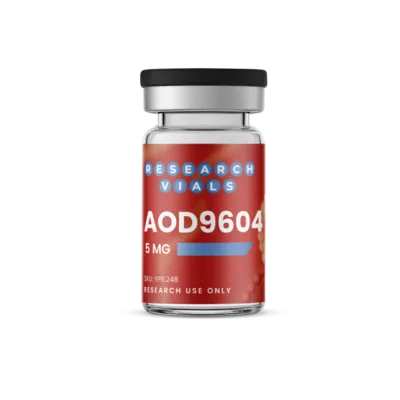
AOD-9604 and semaglutide represent two fundamentally different approaches to metabolic research. One is a modified fragment of human growth hormone that targets peripheral fat metabolism; the other is a GLP-1 receptor agonist that acts centrally on appetite circuits. Comparing them reveals the breadth of metabolic peptide research and helps researchers select the most appropriate tool for their specific questions.
Mechanism of Action: Completely Different Pathways
AOD-9604: The hGH Fragment Approach
AOD-9604 is a modified fragment corresponding to amino acids 177-191 of human growth hormone (hGH), with an added tyrosine residue at the N-terminus. Its development was based on the observation that the lipolytic activity of hGH could be isolated to this C-terminal fragment, separate from the growth-promoting and diabetogenic effects mediated by the full-length hormone.
Key mechanistic features:
- Lipolysis stimulation: AOD-9604 enhances lipolysis (fat breakdown) in adipose tissue, primarily through beta-3 adrenergic receptor signaling pathways
- Lipogenesis inhibition: It inhibits lipogenic enzymes including fatty acid synthase (FAS) and acetyl-CoA carboxylase (ACC), reducing new fat synthesis
- No GH receptor binding: Critically, AOD-9604 does not bind the growth hormone receptor and does not increase IGF-1 levels. This eliminates the growth-promoting and potentially diabetogenic effects of full-length GH
- No appetite effects: AOD-9604 does not suppress appetite. Its metabolic effects are entirely peripheral -- occurring in adipose tissue without central nervous system involvement
Semaglutide: The GLP-1 Receptor Agonist
Semaglutide is a 31-amino acid GLP-1 analog that acts centrally and peripherally through the GLP-1 receptor. Its metabolic effects include:
- Central appetite suppression: Activation of POMC/CART neurons and inhibition of NPY/AgRP neurons in the hypothalamus
- Delayed gastric emptying: Reduces the rate of nutrient delivery to the small intestine, prolonging satiety
- Enhanced insulin secretion: Glucose-dependent insulinotropic effects on pancreatic beta cells
- Glucagon suppression: Reduces inappropriate glucagon release, improving glycemic control
- Cardiovascular effects: Anti-inflammatory and direct cardioprotective effects via GLP-1R in the heart
Evidence Comparison
| Parameter | AOD-9604 | Semaglutide |
|---|---|---|
| Mechanism | Peripheral lipolysis (hGH fragment) | Central appetite suppression (GLP-1R) |
| Human Clinical Data | Limited (early phase) | Extensive (Phase 3, outcomes trials) |
| Weight Loss Evidence | Modest in early trials | ~15% at 68 weeks (STEP 1) |
| FDA Approval | No (GRAS for food use) | Yes (Wegovy, Ozempic) |
| CV Outcomes Data | None | 20% MACE reduction (SELECT) |
| Appetite Effect | None (peripheral only) | Strong suppression |
| GI Side Effects | Minimal | Common (nausea, vomiting) |
| Research Price | $120 | N/A (not sold as research peptide) |
AOD-9604: What the Evidence Shows
The preclinical evidence base for AOD-9604 includes several key findings:
- In obese Zucker rats, chronic AOD-9604 treatment reduced body weight gain without affecting linear growth or lean mass (Heffernan et al., 2001; PMID: 11673764)
- In vitro studies in human adipose tissue demonstrated increased lipolysis and decreased lipogenesis at micromolar concentrations
- AOD-9604 did not affect insulin sensitivity, glucose tolerance, or IGF-1 levels in any published model -- confirming its selective metabolic profile
- A small Phase 2 clinical trial showed modest but statistically significant weight reduction over 12 weeks, though the magnitude was smaller than later GLP-1 agonist trials
- AOD-9604 received GRAS (Generally Recognized as Safe) status from the FDA as a food ingredient in 2014
Semaglutide: The Clinical Gold Standard
Semaglutide's evidence base is orders of magnitude larger:
- STEP 1 (N=1,961): 14.9% weight loss at 68 weeks (PMID: 33567185)
- SELECT (N=17,604): 20% cardiovascular event reduction (PMID: 37952131)
- Multiple Phase 3 trials across diabetes, obesity, cardiovascular disease, MASH, and CKD
- Two FDA approvals: Ozempic (diabetes) and Wegovy (weight management)
Research Application Differences
These compounds serve different research niches:
When to Use AOD-9604
- Investigating peripheral fat metabolism pathways independent of appetite changes
- Studying lipolysis mechanisms in adipose tissue models
- Research requiring a metabolic intervention without GI side effects or appetite confounders
- Studying the lipolytic domain of growth hormone in isolation from its growth-promoting effects
- Combination studies where you need a non-appetite metabolic compound alongside a centrally-acting agent
When to Use GLP-Receptor Agonist Research Compounds
- Studying incretin biology and GLP-1R/GIPR/GCGR signaling
- Research requiring maximal metabolic efficacy with clinical translation potential
- Investigating appetite regulation, food reward, or central metabolic circuits
- Metabolic syndrome models requiring comprehensive metabolic improvement (glucose, lipids, blood pressure, body weight)
Complementary Use in Research
Rather than viewing AOD-9604 and GLP-agonists as competitors, researchers can use them as complementary tools. By testing a metabolic outcome with both AOD-9604 (peripheral only, no appetite effect) and a GLP-receptor agonist (primarily central appetite suppression), researchers can dissect whether observed effects are driven by reduced caloric intake, enhanced peripheral metabolism, or both.
This dual-compound approach is particularly valuable for body composition studies, where the relative contributions of appetite suppression vs enhanced fat oxidation to fat loss are difficult to separate using a single compound.
References
- Heffernan MA, Thorburn AW, Fam B, et al. Increase of fat oxidation and weight loss in obese mice by chronic treatment with human growth hormone or a modified C-terminal fragment. Int J Obes. 2001;25(10):1442-1449. PMID: 11673764
- Wilding JPH, Batterham RL, Calanna S, et al. Once-weekly semaglutide in adults with overweight or obesity. N Engl J Med. 2021;384(11):989-1002. PMID: 33567185
- Lincoff AM, Brown-Frandsen K, Colhoun HM, et al. Semaglutide and cardiovascular outcomes in obesity without diabetes. N Engl J Med. 2023;389(24):2221-2232. PMID: 37952131
Frequently Asked Questions
Research Use Only Disclaimer: All products referenced in this article are sold exclusively for laboratory research purposes. They are not intended for human or veterinary use, food additive use, drug use, or household use. This article is educational content based on published preclinical literature and does not constitute medical advice.